



Hair and beard transplant into scars
Grafts placed into scar tissue where hair no longer grows after an injury, accident, operation or burn, planned around the scar's blood supply and the donor capacity.

How is a transplant into a scar assessed?
Scar tissue left by childhood injuries, accidents, surgery or other trauma can cause the hair and beard roots in that area to be lost permanently, so that hair stops growing there.
A hair or beard transplant into scar tissue is a specialised procedure considered, in suitable patients, to restore hair in these areas.
At HED Health, the process is assessed taking into account the structure of the scar tissue, its blood supply, the features of the surrounding tissue and the capacity of the donor area. Before the operation, the area is analysed for suitability and an individual anatomical plan is made.
The aim is to restore the look of hair or beard in the scarred area and to achieve a more natural result that blends with the surrounding tissue.
What determines whether grafts take in a scar?
The blood supply of scar tissue is unpredictable; grafts in the middle of a wide scar sit far from healthy vessels. That is why dense grafting is not recommended in scar tissue; studies mention a low density of around 15–20 grafts per square centimetre.
The result depends on the tissue: the same plan can take differently in different scars. In some narrow scars, surgically removing the scar may be a better option than a transplant.
Why may a test session and a staged plan be needed?
The scar needs to have matured: at least 6 months should have passed since it formed. To see how grafts take, a small test session may be done first, followed by a wait of about 6 months.
Because the scar's blood supply improves after the first session, the second is usually planned 9–12 months later. This way the scar is filled in stages without being strained in one go.
How is a transplant into a beard scar planned?
For a beard scar, grafts are usually taken one by one from the back of the scalp, preferably as single-hair grafts. The sites are made at a very flat angle so that the hairs follow the natural direction of the beard.
Facial skin is thinner and more mobile, so placement needs care. Survival again depends on the scar's blood supply; a second session is planned if needed.
When is micropigmentation considered instead of a transplant?
A wide scar, or tissue whose blood supply is not enough for a transplant, can be made less noticeable with scalp micropigmentation (SMP). Micropigmentation is not surgery and needs no grafts from the donor area. More than one session may be needed.
Micropigmentation does not grow hair; it only gives the look of closely cropped hair. Which route suits you depends on where the scar is, how wide it is and the state of the tissue.

In what stages is a scar grafted?


- 1
The scar is examined
The structure of the scar, its blood supply and the surrounding tissue are assessed; the scar needs to have matured.
- 2
A test session if needed
A small number of grafts is placed first, and about 6 months are allowed to see how they take.
- 3
A first session at low density
Grafts are spaced so that they do not strain the scar's blood supply.
- 4
A second session
Because the scar's blood supply improves after the first session, the second is usually planned 9–12 months later.
Who is it for?

May be suitable
- Hair no longer grows in a scar from a childhood injury, an accident, an operation or trauma
- A scar on the scalp or in the beard
- A scar that has matured (at least 6 months old)
- Enough grafts in the donor area

May not be suitable
- A scar that has not yet matured
- A scarring hair condition that has been active recently
- A tendency to keloid or thick scars without a test session first
- Not enough grafts in the donor area
Representative images
Your doctor decides whether it suits you after an examination.
Surgery day
Five steps in one day. The state of the earlier transplant and the donor area shapes the plan; a test transplant comes first if needed.
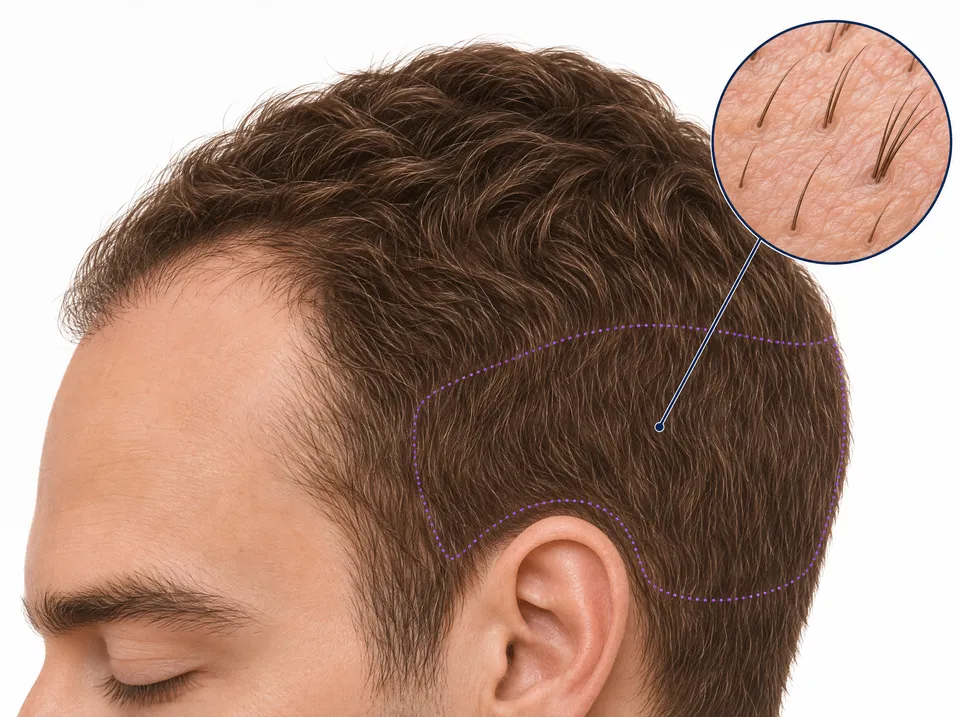 Step 1 · 45 min
Assessment
The structure of the scar tissue, its blood supply, the surrounding tissue and the donor capacity are examined. Your scalp is checked with a hair analysis device, and blood tests are done if needed.
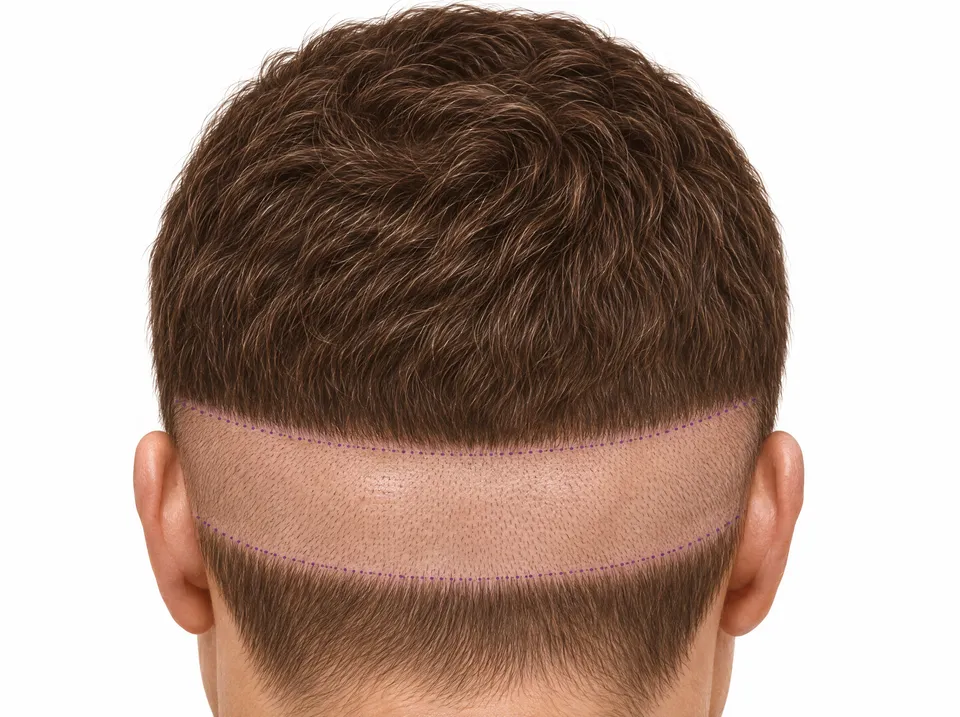 Step 2 · 20 min
Local anaesthesia
The donor and recipient areas are numbed; you stay awake throughout.
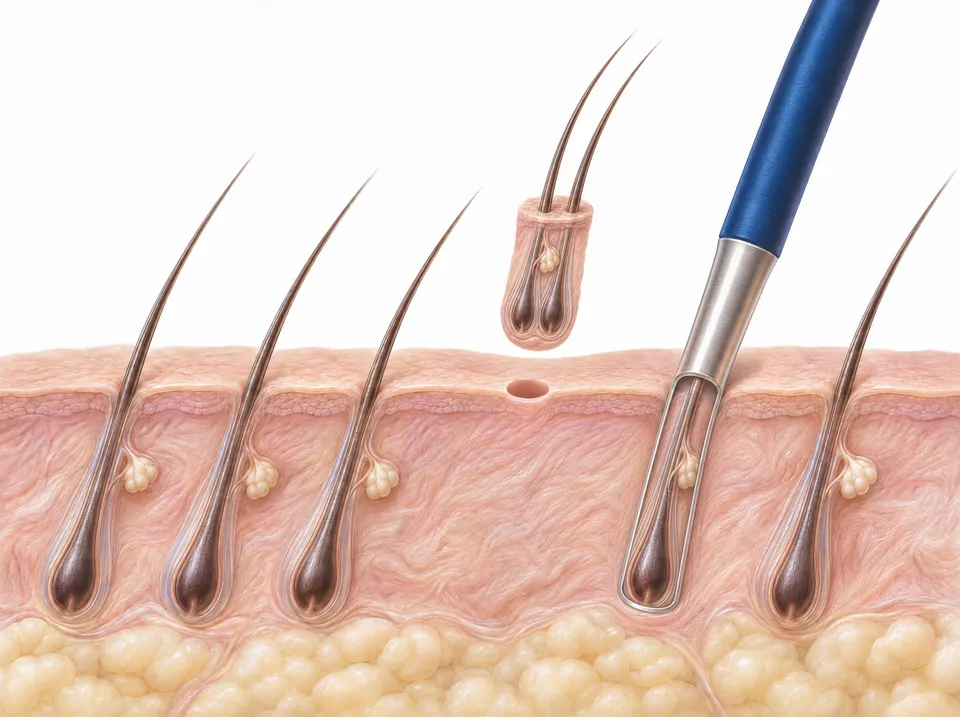 Step 3 · Depends on graft count
Graft extraction
Grafts are extracted one by one from the donor area.
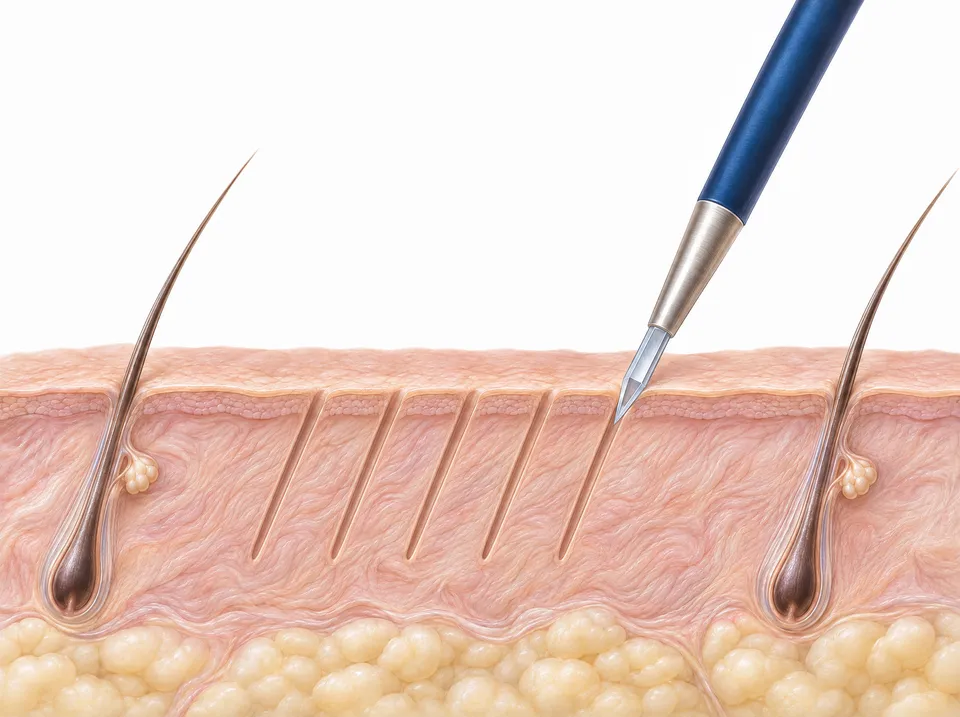 Step 4 · Depends on graft count
Placing grafts without straining scar tissue
Grafts are placed in their natural direction and at a natural angle, and more sparsely in scar tissue.
 Step 5 · 30 min
Aftercare and discharge
A dressing is applied; you receive an aftercare kit and written instructions.


Representative images
The images are illustrations; no surgery photos are used.
Recovery timeline
The first two weeks
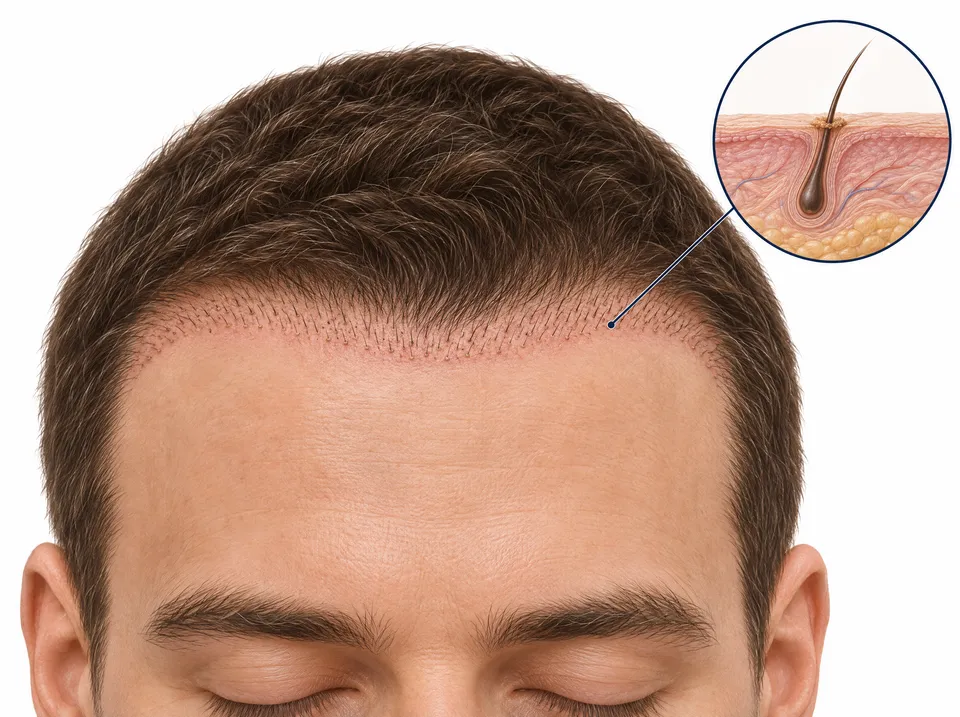
Surgery
You leave at the end of the day with written aftercare instructions.
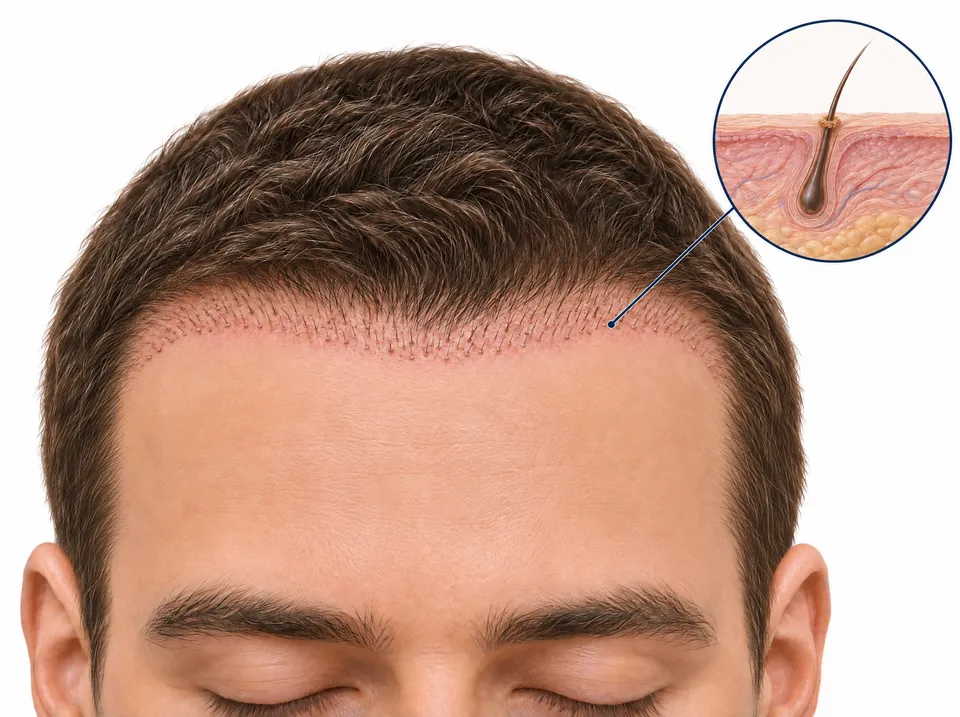
Dressing and check-up
The dressing comes off; the grafted area and any scar tissue are checked.
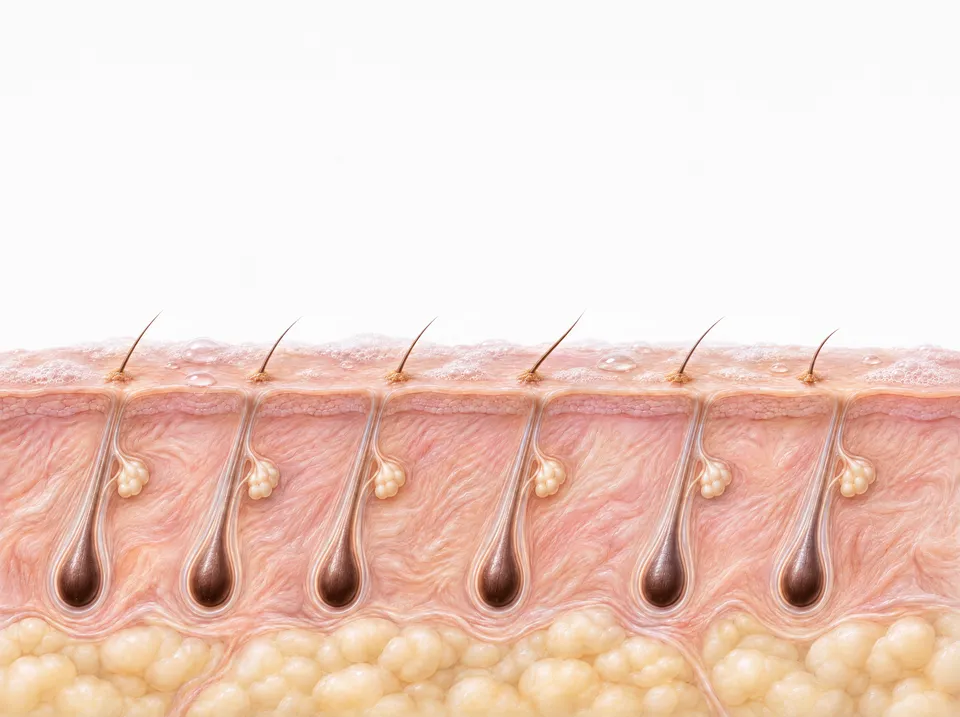
First wash
The first wash is done, and you are shown how to wash your hair at home.
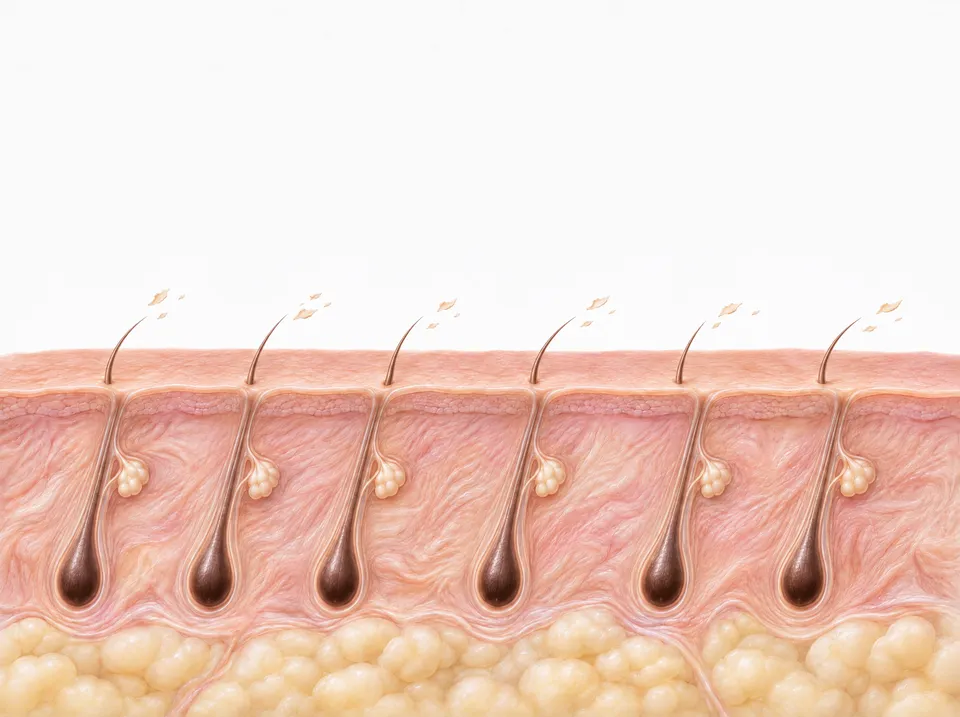
Scab wash
The scabs are washed off; redness starts to fade.
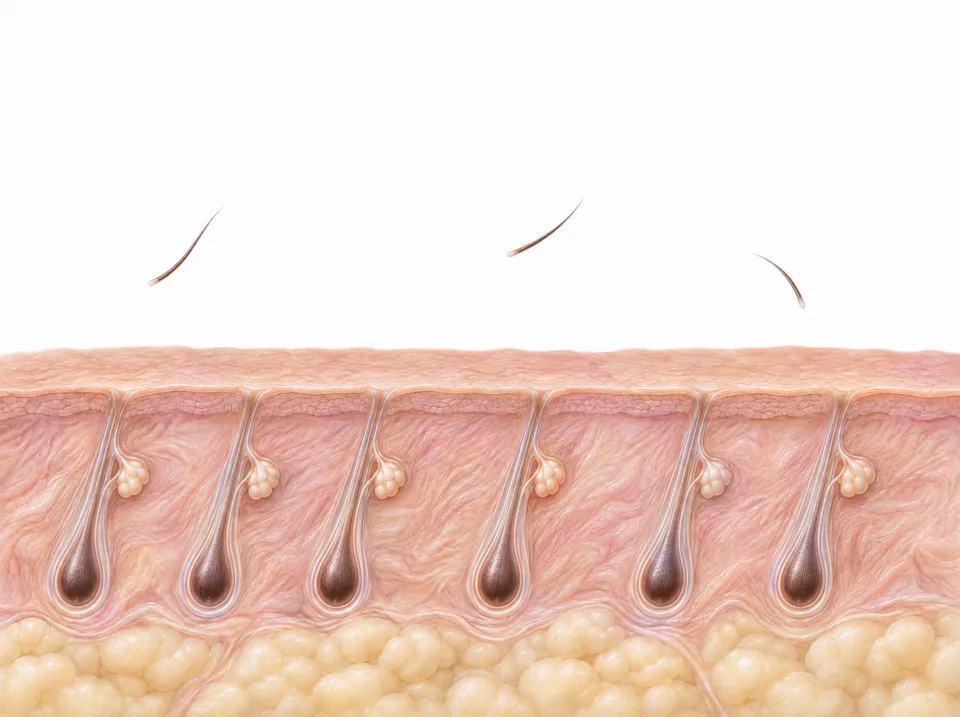
Shedding of transplanted hair
Some transplanted hairs may shed; the follicles stay under the skin.


Over the months
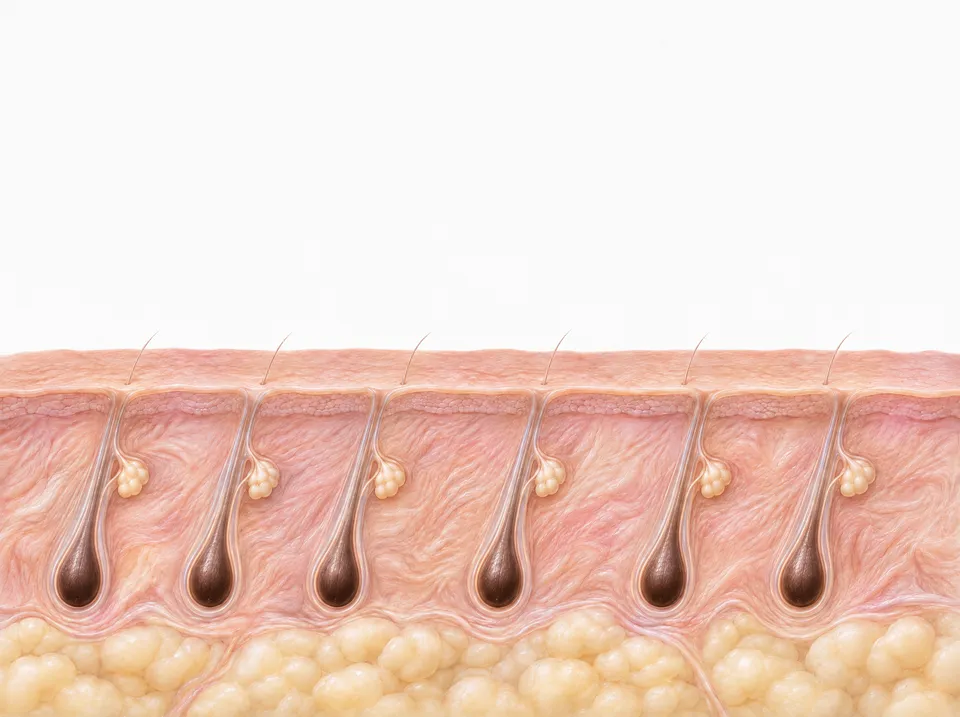
First growth
New hairs start to appear.
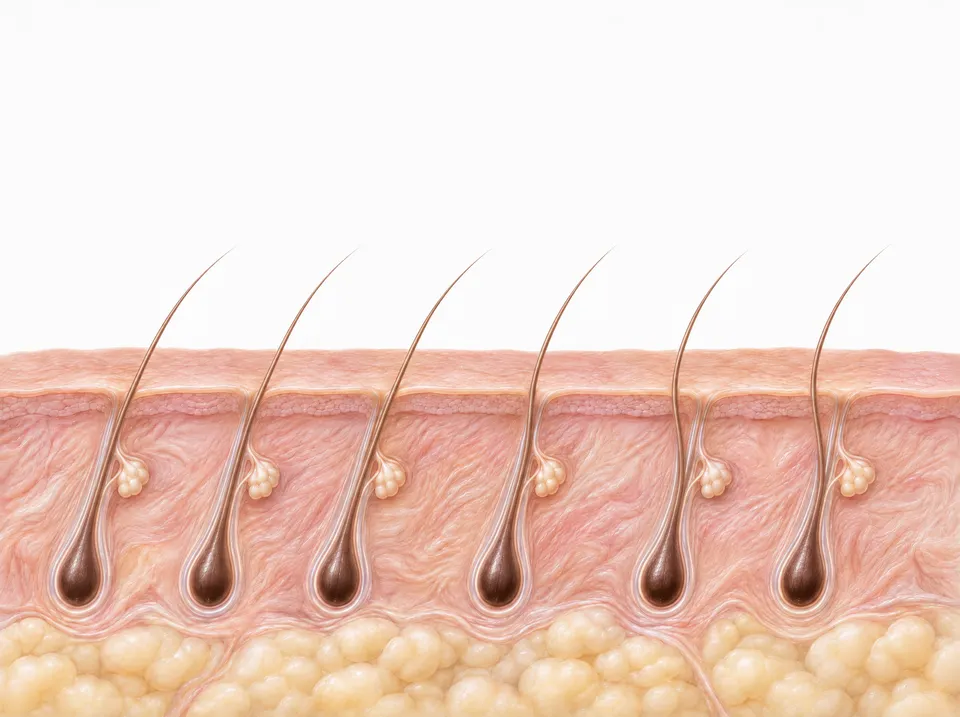
Visible growth
The hair grows longer; graft survival in scar tissue starts to become clear in these months.
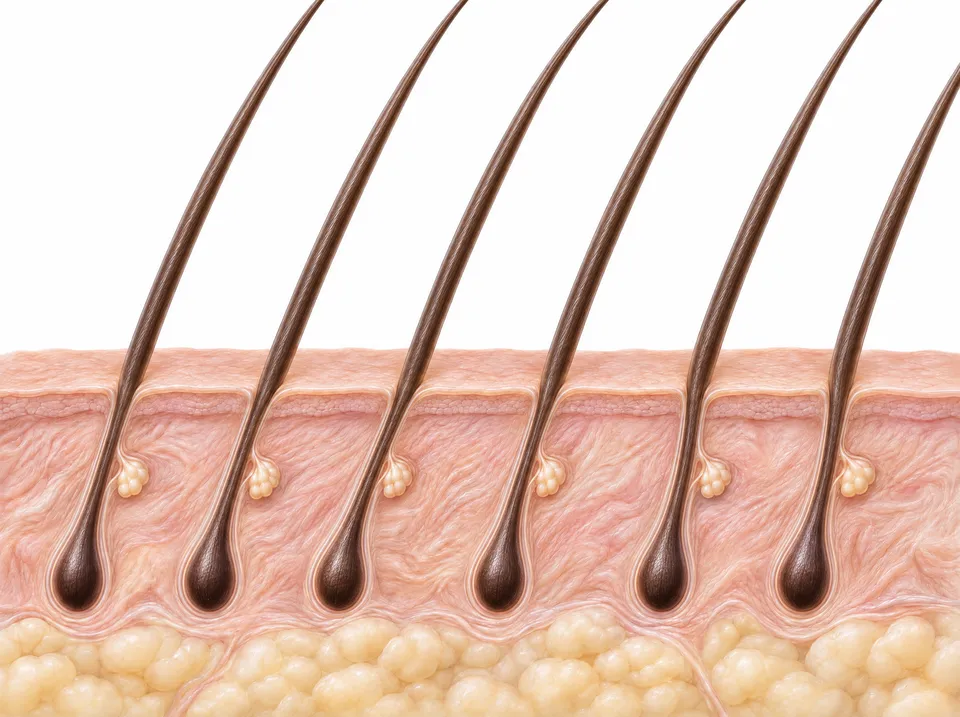
Density builds
Density increases. When grafting into scars, a second session is usually planned after this period.
Final assessment
The result is assessed with photos taken at the same angle and in the same light; the next step is discussed if needed.


Representative images
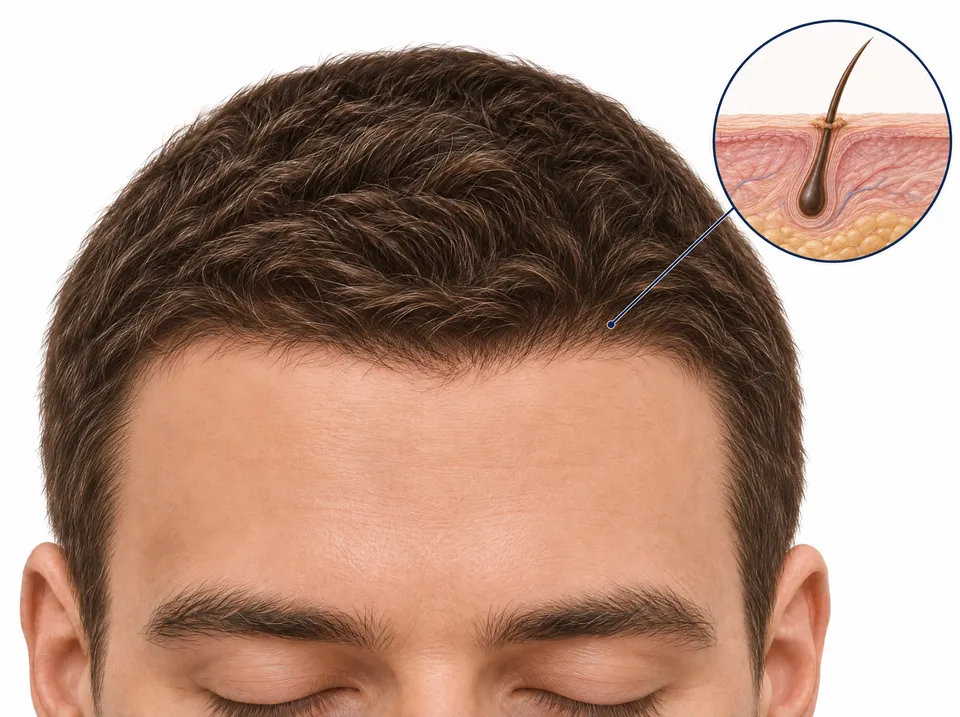
Timings are averages and vary from person to person. The drawings are schematic sections of the scalp.
Risks and side effects
Every procedure carries risks. Most are temporary; your doctor goes through each one with you before surgery.
Lower graft survival in scar tissue
The blood supply of scar tissue is unpredictable, so survival can be lower than in healthy skin. That is why low density is used and more than one session may be needed.
Infection and poor blood supply
Where scar tissue has weak blood flow, infection and problems with tissue nourishment are more likely. If you have a fever, increasing redness or discharge, message us without delay.
Thick scars and uneven surface
Thick scarring can develop in scar tissue, and bumps or dips may appear around grafts. These often improve with time. If you have had keloids, a test session is recommended first.
Curled hairs
Because scar tissue is tight, some hairs may grow out curled.
Flare-up of a scarring condition
If you have a scarring hair condition, a transplant can trigger it again, even in a quiet phase, and transplanted hairs may be lost.
Swelling
There may be swelling around the treated area; it usually settles on its own within a week.
Frequently asked questions
Will hair transplanted into a scar take?
Survival depends on the scar's blood supply and cannot be known for certain in advance. That is why a small test session followed by a wait of about 6 months may be recommended.
When can a scar be grafted?
The scar needs to have matured: at least 6 months should have passed since it formed. For scars from a scarring hair condition, the condition must have been quiet for a long time; studies mention about 2 years.
How many sessions are needed?
Grafting into a scar often needs more than one session. The second is usually planned 9–12 months after the first; in that time the scar's blood supply also improves.
Can a scar in the beard be grafted?
Yes, in suitable cases. Grafts are usually taken one by one from the back of the scalp and placed at a very flat angle that follows the direction of the beard hairs. Survival again depends on the scar's blood supply.
Can a burn scar be grafted?
A transplant can be considered in burn scars too, but burned tissue often has a weaker blood supply. Your doctor decides after the examination whether a transplant is suitable and whether any preparation is needed.
When is scalp micropigmentation considered instead?
If the scar is wide or its blood supply is not enough for a transplant, scalp micropigmentation can make it less noticeable. It does not grow hair; it only gives the look of closely cropped hair.
References
- 1.Singh S, Muthuvel K. Role of hair transplantation in scarring alopecia: to do or not to do. Indian J Plast Surg. 2021;54(4):501–506.
- 2.Dahdah MJ, Iorizzo M. The role of hair restoration surgery in primary cicatricial alopecia. Skin Appendage Disord. 2016;2(1–2):57–60.
- 3.Madura C, Vinay N, Kusuma MR, Harsha S, Chandrashekar BS. The assessment of hair transplantation outcomes in cicatricial alopecia. Int J Trichology. 2020;12(4):164–167.
- 4.Thakur BK, Verma S. Is hair transplantation always successful in secondary cicatricial alopecia? Int J Trichology. 2015;7(1):43–44.
- 5.Dua K, Verma V, Dua A. Beard and moustache reconstruction. Indian J Plast Surg. 2021;54(4):483–488.
- 6.Kerure AS, Patwardhan N. Complications in hair transplantation. J Cutan Aesthet Surg. 2018;11(4):182–189.
- 7.Garg AK, Garg S. Complications of hair transplant procedures: causes and management. Indian J Plast Surg. 2021;54(4):477–482.
- 8.Rassman WR, Pak JP, Kim J, Estrin NF. Scalp micropigmentation: a concealer for hair and scalp deformities. J Clin Aesthet Dermatol. 2015;8(3):35–42.
- 9.American Academy of Dermatology (AAD). Hair loss: hair transplant. Accessed 21 October 2026.
Let's review yourhair together.
Tell us about your hair in three short steps, and your hair transplant specialist will get back to you.
- Address
- Ataköy 7-8-9-10. Kısım Mahallesi, Çobançeşme E-5 Yan Yol Caddesi No: 20/1, Ataköy Towers A Blok, 5. Kat, Ofis No: 96, Bakırköy / İstanbul
- Opening hours
- 24/7, every day of the week
- Phone
- +90 (545) 209 55 51