



Hair transplant for women
Planned once the cause of thinning is clear from an examination and tests, and usually placed between your existing hair without shaving.

Why is a hair transplant for women planned differently?


The technique is the same for women as for men: grafts are taken from the back and sides of the head and placed in the thinning area. The difference lies in the pattern of hair loss and in the planning that follows from it.
In men, hair loss usually starts with a receding front hairline and has clear edges. In women it is more often a diffuse thinning, most noticeable on the crown and along the parting. This thinning is graded into stages using scales such as the Ludwig scale.
Why is the cause of hair loss investigated first?
Genetics play a strong part in female pattern hair loss, but not every diffuse hair loss is of this type. Chronic telogen effluvium (temporary shedding), for example, is often mistaken for female pattern hair loss, and it is treated differently. In some women hair loss comes with irregular periods, acne or increased body hair; these signs suggest a hormonal cause.
That is why the cause of hair loss is confirmed before a transplant, through an examination and blood tests where needed. A first assessment can also be done online with photos and, if needed, test results; at the clinic your scalp is examined in detail with a hair analysis device.
Why does the donor area matter so much?
Because hair loss in women is often diffuse, the hair at the back and sides may also have thinned. This directly affects the quality of the grafts that can be taken. A transplant does not create new hair; it moves the hair you already have, so a transplant is not recommended when the donor area is not sufficient.
How does an unshaven transplant work?
For women, a transplant is usually planned without shaving: the hair in the recipient area is not cut, and grafts are placed between your existing hair. Usually only a small patch of the donor area is trimmed to take the grafts. Working unshaven takes longer; in return you do not have to cut your hair short. You can read more about placement with an implanter pen on our DHI page.
Can the hairline be brought forward?
Women with a high forehead also have transplants to bring the hairline forward. The female hairline differs from the male one: there is often a small, pointed peak in the middle and gentle mounds on either side. That is why a female hairline is planned to its own measurements.
A transplant or scalp micropigmentation?
Depending on how advanced the thinning is, scalp micropigmentation (SMP) may be considered instead of a transplant for some women. A study comparing the two in female pattern hair loss found that the deciding factor was the existing hair density in the thinning area: where density was relatively high, pigmentation was favoured; where it was low, a transplant was.
Representative images
Who is it for?

May be suitable
- Thinning in a defined area (the parting, the crown or the front hairline)
- A donor area (back and sides) with enough density
- A cause of hair loss confirmed through an examination and tests
- A high forehead and a wish to bring the hairline forward

May not be suitable
- Thinning across the whole scalp, with the donor area also thinned
- Hair loss whose cause is still unknown, or active, temporary shedding
- An uncontrolled hormonal or chronic condition (needs a doctor's assessment)
- A bleeding tendency or blood-thinning medication (needs a doctor's assessment)
Representative images
Your doctor decides whether it suits you after an examination.
Surgery day
Five steps in one day. Your existing hair stays in place; grafts go between it.
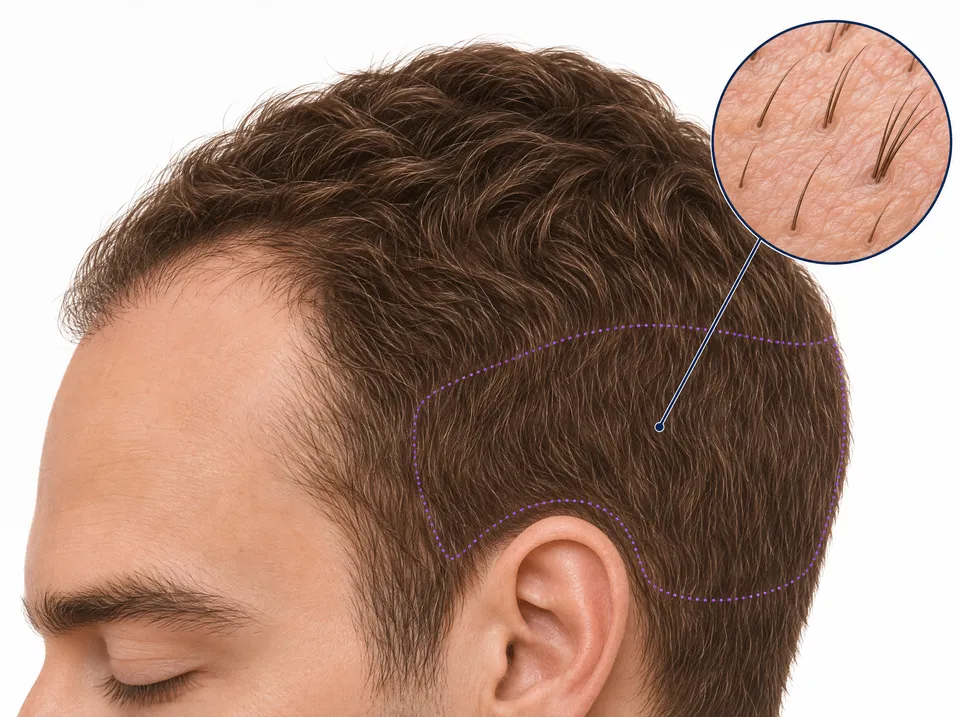 Step 1 · 45 min
Examination and the cause of hair loss
Assessment with a hair analysis device and blood tests if needed; the cause of thinning and the area to treat are confirmed.
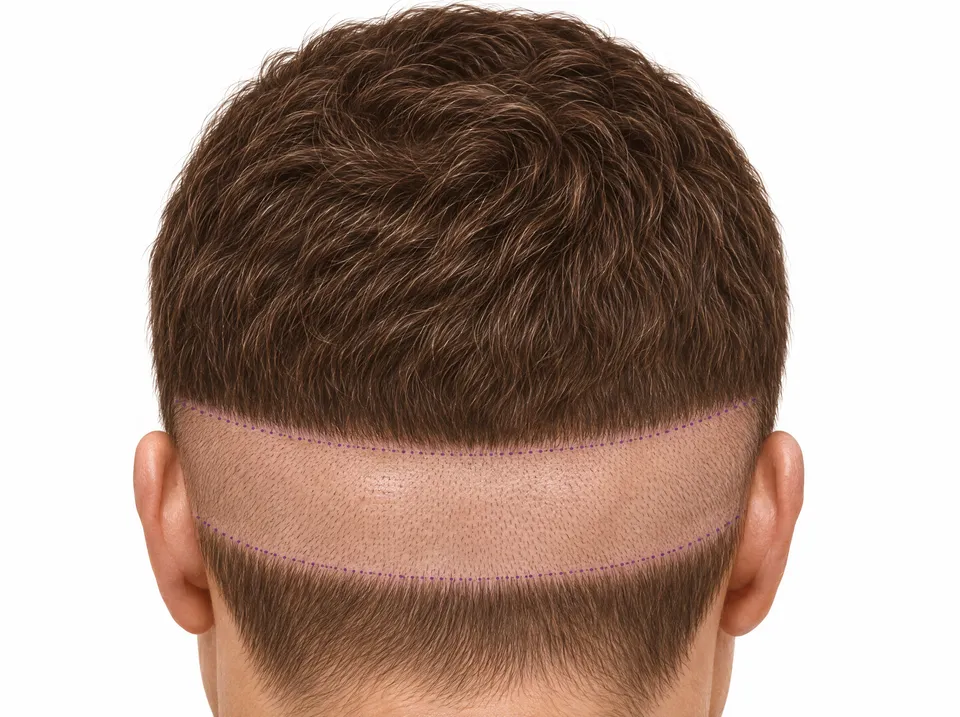 Step 2 · 20 min
Local anaesthesia
The donor and recipient areas are numbed; you stay awake throughout.
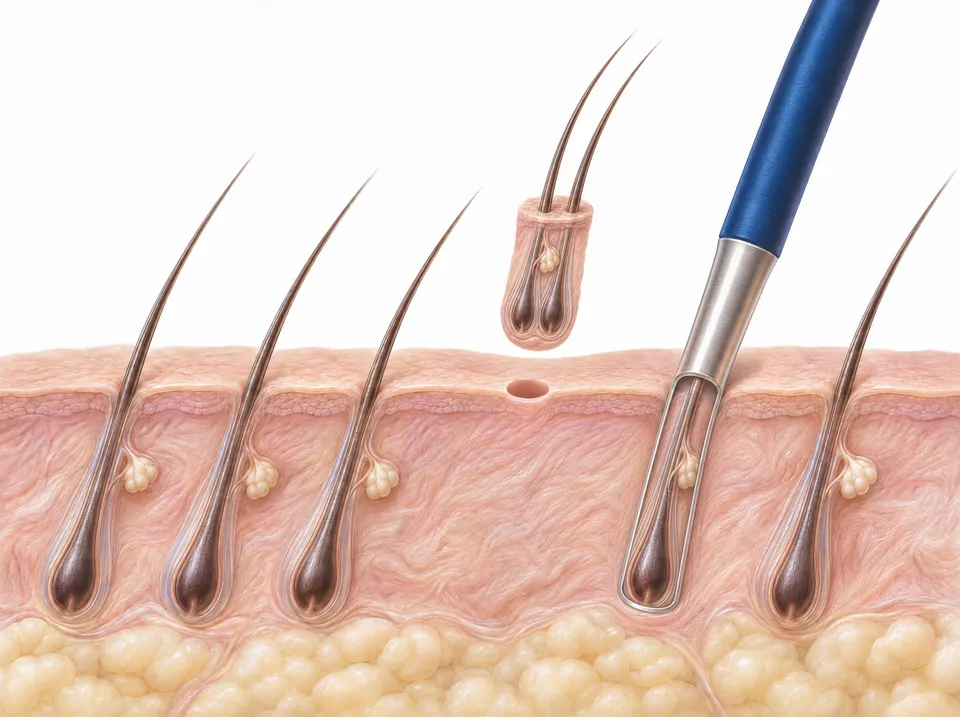 Step 3 · 2–3 hours
Graft extraction
Grafts are taken one by one from the back and sides of the head. In unshaven plans only a small patch of the donor area is trimmed.
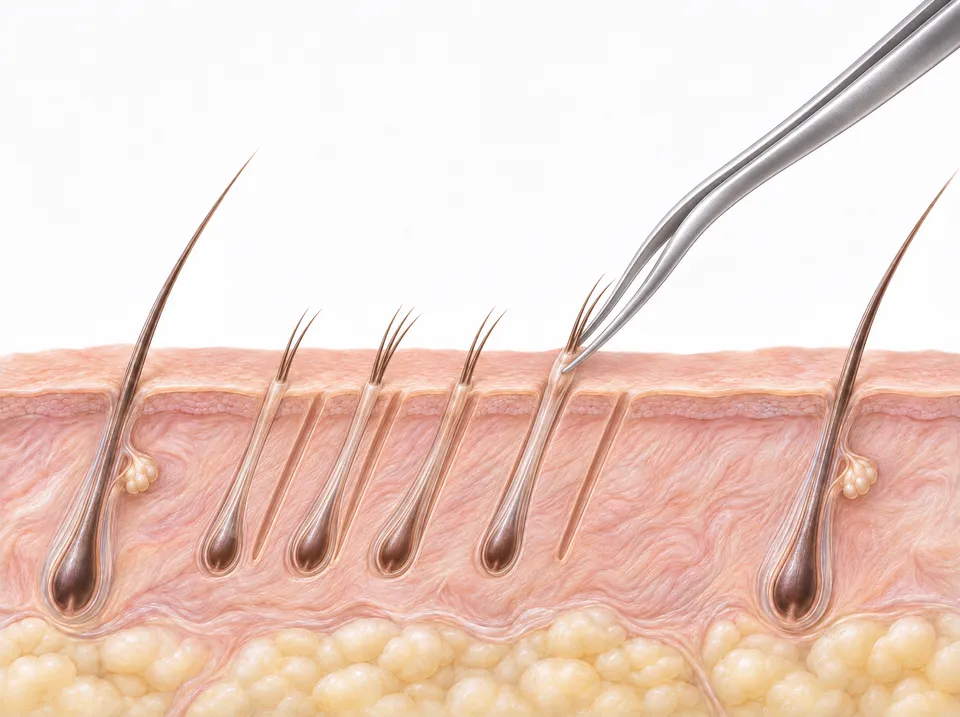 Step 4 · Depends on graft count
Placing grafts between existing hair
Grafts are placed between your existing hair, with an implanter pen or into fine channels opened beforehand.
 Step 5 · 30 min
Aftercare and discharge
A dressing is applied; you receive an aftercare kit and written instructions.


Representative images
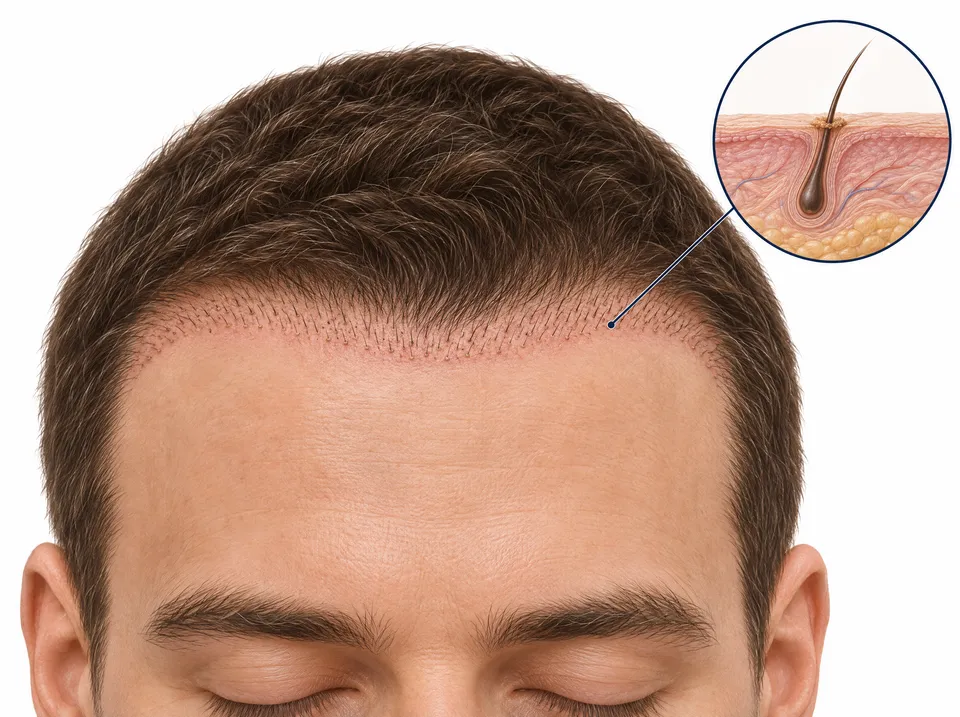
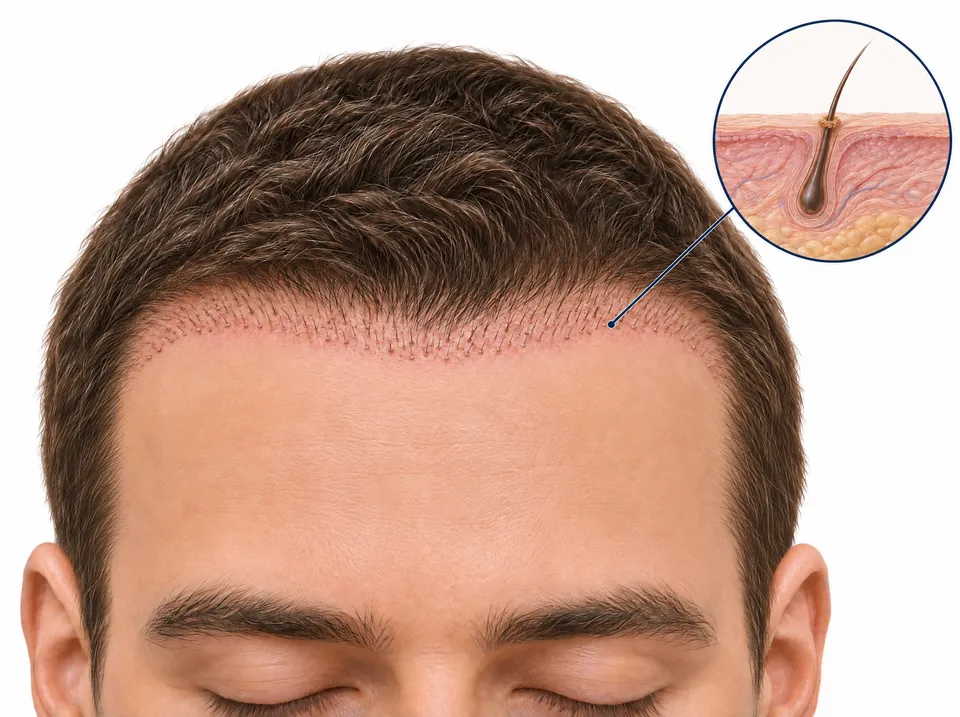
The images are illustrations; no surgery photos are used.
Recovery timeline
The first two weeks
Surgery
You leave at the end of the day with written aftercare instructions.
Dressing and check-up
The dressing comes off; the recipient and donor areas are checked.
First wash
The first wash is done; you are shown how to wash your scalp when your hair is long.
Scab wash
Scabs are washed off; redness starts to fade.
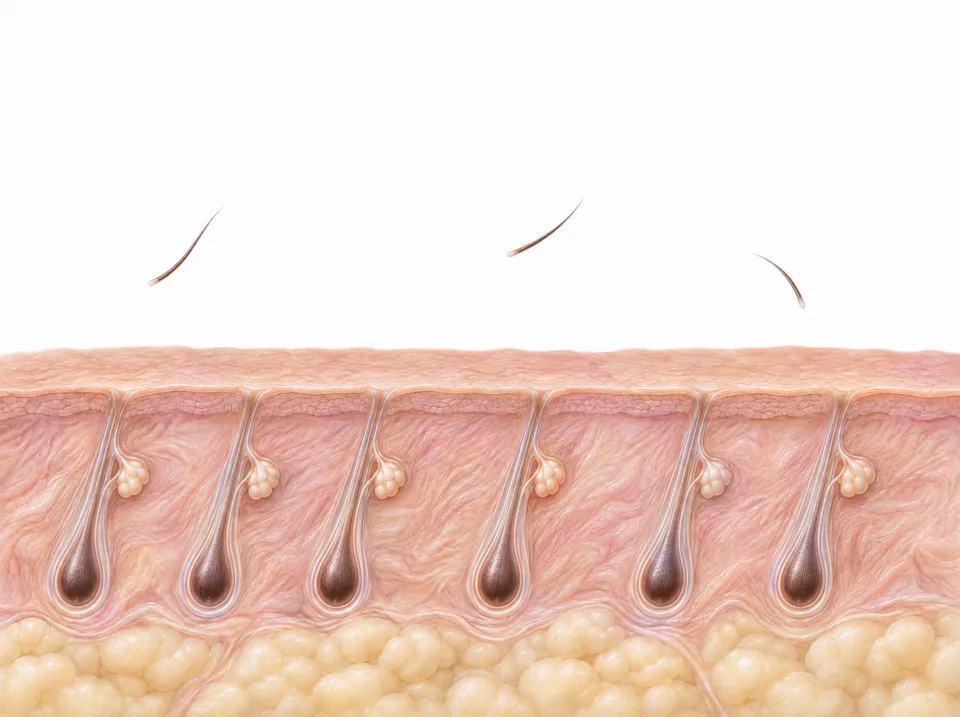
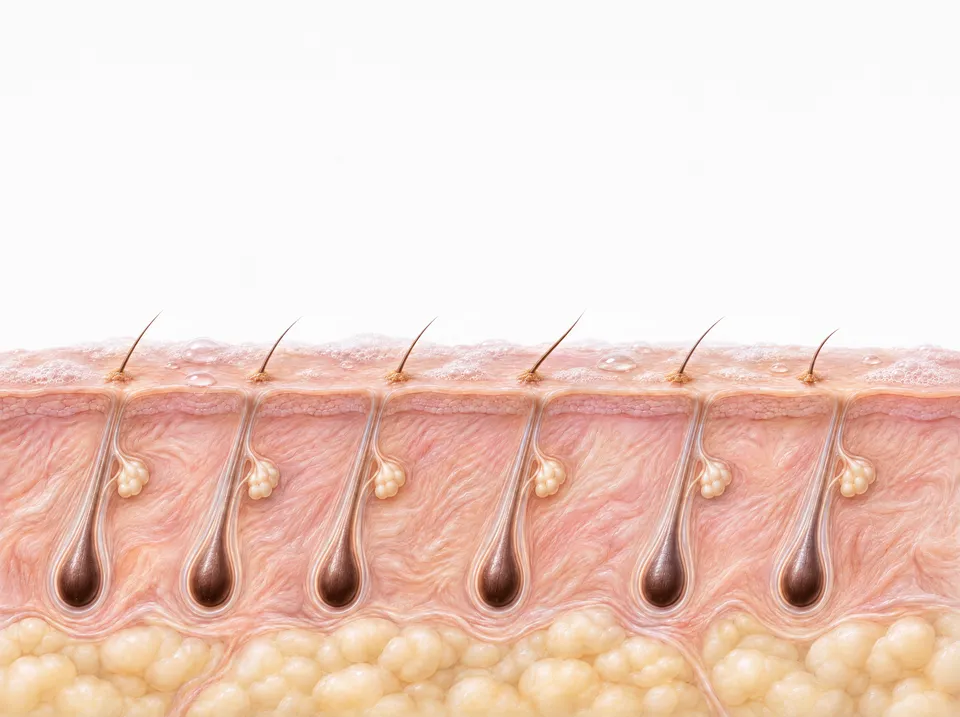
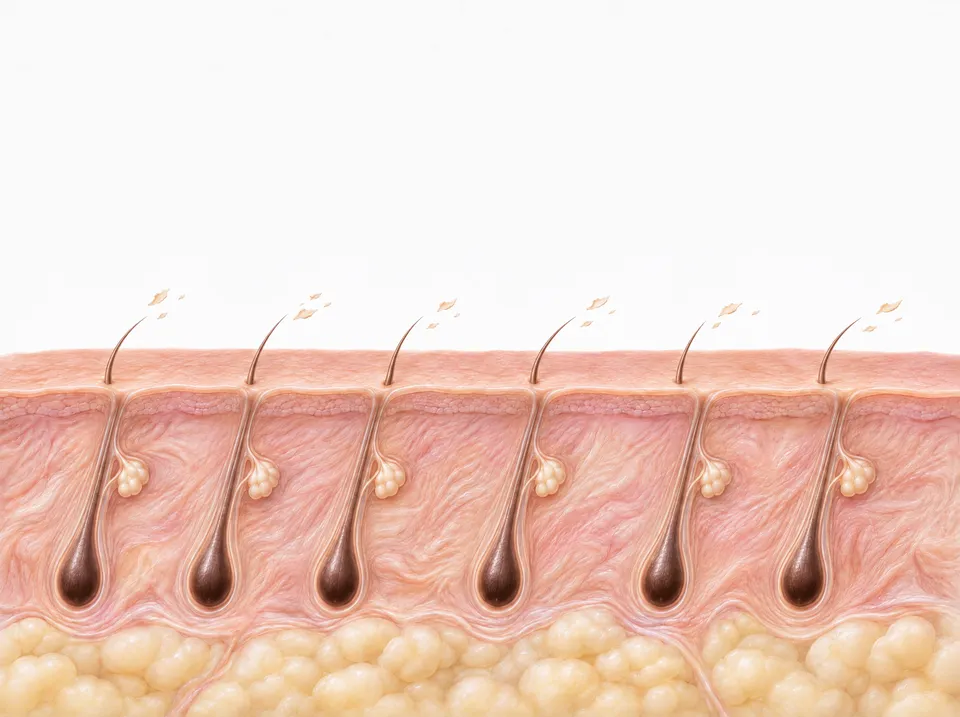
Shedding of transplanted hair
Some transplanted hairs may shed; the roots stay under the skin.


Over the months
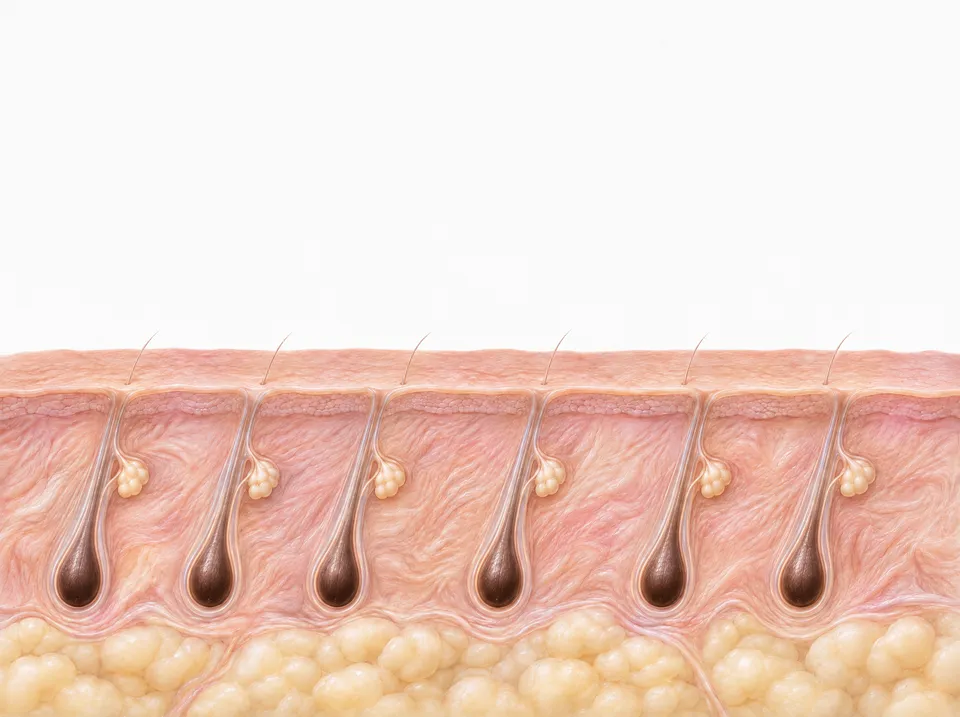
First growth
Fine new hairs start to appear between your existing hair.
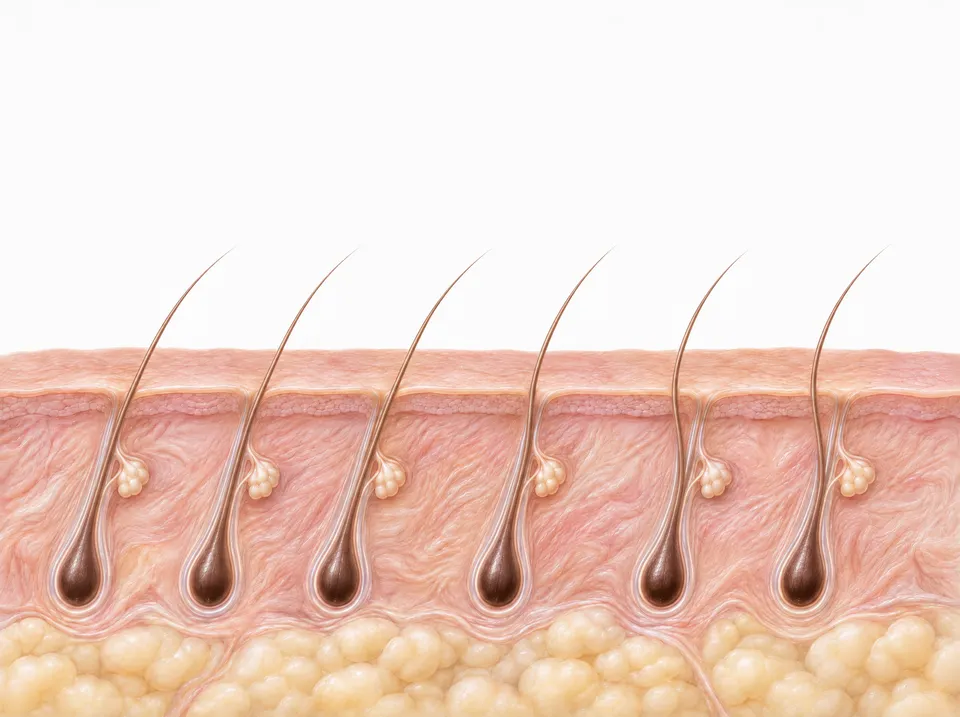
Visible growth
Hairs lengthen and begin to thicken.
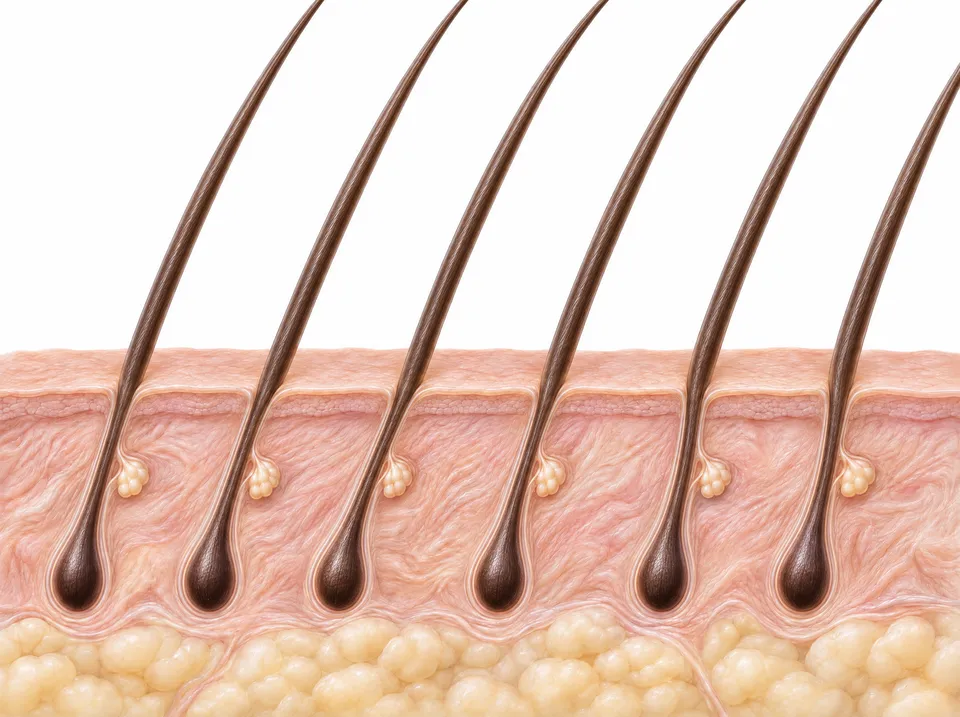
Density builds
Density increases and the hair matures.
Final assessment
The result is assessed with photos taken at the same angle and in the same light.


Representative images
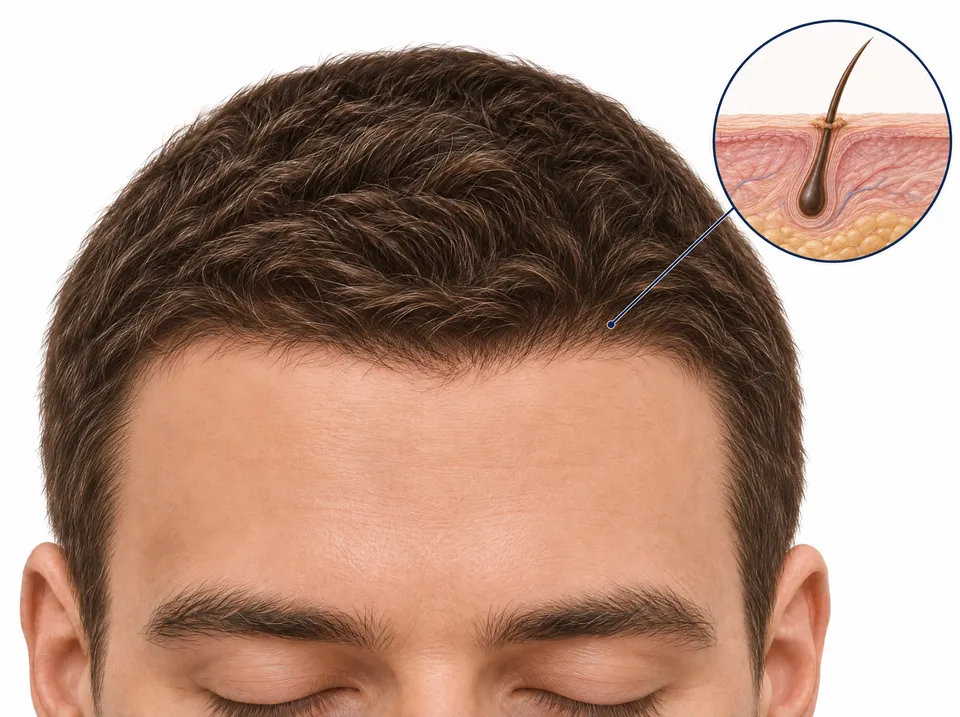
Timings are averages and vary from person to person. The drawings are schematic sections of the scalp.
Risks and side effects
Every procedure carries risks. Most are temporary; your doctor goes through each one with you before surgery.
Temporary shedding of surrounding hair
More common in women than in men. Your own hair in the treated area may shed temporarily in weeks 2–8; regrowth usually starts around month 3.
Swelling
It can appear around the forehead and eyes and usually settles on its own within 5–7 days. Message us if it becomes bad enough to close an eye.
Numbness
Reduced feeling in the donor or recipient area; it usually settles within weeks. Message us if you notice burning or increasing pain.
Folliculitis
Small, spot-like bumps at the hair follicles, often seen as new hairs come through. Message us if redness spreads or there is discharge.
Scarring
Small, round marks remain where grafts were taken. There is no such thing as scarless hair transplant surgery.
Infection
Rare; when it happens it is usually in the first 1–4 weeks. Message us without delay if you have a fever, increasing redness or discharge.
Frequently asked questions
Do I need to shave for the transplant?
In the recipient area, usually not; grafts are placed between your existing hair. A small patch of the donor area is usually trimmed to take the grafts; we decide together during planning which patch is trimmed.
Which tests are needed?
Your doctor decides which tests to request at the examination. Hormone levels and thyroid function are among the tests often checked when investigating female pattern hair loss.
Which method is used?
Because grafts go between existing hair, placement with an implanter pen or into fine channels opened beforehand is usually preferred. Your doctor decides based on the area being treated and your hair type.
How long does the procedure take?
It depends on the number of grafts; working without shaving takes longer. You are given the total time in writing during planning.
Will a transplant stop my hair loss?
No. A transplant moves hair to the thinning area; it does not stop hair loss itself. Because female pattern hair loss can progress over time, your doctor may also recommend medication alongside the transplant.
References
- 1.Ludwig E. Classification of the types of androgenetic alopecia (common baldness) occurring in the female sex. Br J Dermatol. 1977;97(3):247–254.
- 2.DermNet. Female pattern hair loss. Updated by Sinclair R; July 2015.
- 3.International Society of Hair Restoration Surgery (ISHRS). Ethnic and gender considerations in hair transplantation. Accessed 21 October 2026.
- 4.Yun D, Kim D, Juhyun C, et al. Clinical features of patients treated with hair transplants in female pattern hair loss. Ann Dermatol. 2024;36(6):341–347.
- 5.Park JH, You SH, Kim NR. Nonshaven follicular unit extraction: personal experience. Ann Plast Surg. 2019;82(3):262–268.
- 6.Park JH, Kim N, You SH. Hair transplantation versus scalp micropigmentation: a retrospective study of treatment selection in persons with female pattern hair loss. J Cosmet Dermatol. 2024;23(10):3347–3355.
- 7.Nusbaum BP, Fuentefria S. Naturally occurring female hairline patterns. Dermatol Surg. 2009;35(6):907–913.
- 8.International Society of Hair Restoration Surgery (ISHRS). Consumer advocacy. Accessed 21 October 2026.
- 9.Romera de Blas C, Vega Díez D, Ricart Vayá JM, Gómez Zubiaur A. Complications in follicular unit excision hair transplantation: current evidence and practical approaches. Front Med (Lausanne). 2026;13:1750989.
Let's review yourhair together.
Tell us about your hair in three short steps, and your hair transplant specialist will get back to you.
- Address
- Ataköy 7-8-9-10. Kısım Mahallesi, Çobançeşme E-5 Yan Yol Caddesi No: 20/1, Ataköy Towers A Blok, 5. Kat, Ofis No: 96, Bakırköy / İstanbul
- Opening hours
- 24/7, every day of the week
- Phone
- +90 (545) 209 55 51