



Hairline lowering and hairline design
For a high forehead or a receded hairline: a new front line drawn to your facial proportions and created with a hair transplant.

Who is hairline lowering for?
Hairline lowering is a personalised hair transplant considered especially for people whose hairline has receded, whose forehead is high, or who want their forehead to look more balanced and narrower.
At HED Health, the process is planned taking into account the person's facial anatomy, forehead height, current hairline, donor area capacity and facial features.
The new front hairline is designed according to anatomical measurements, facial proportions (the vertical thirds of the face) and principles of aesthetic balance, within an ethical and scientific approach. The aim is a more balanced, aesthetic and natural look at the forehead while keeping the natural proportions of the face.
How is the new hairline designed?
The face is assessed in three parts: from the hairline to the brows, from the brows to the base of the nose, and from the base of the nose to the chin. The forehead is the top of these three; if the hairline is high, this part looks clearly longer than the others. The place of the new line is chosen to balance the forehead with the rest of the face.
A natural hairline is not straight as if drawn with a ruler. At the front edge single hairs stand at irregular gaps, become closer towards the back, and the hairs leave the skin angled forwards. The new line is planned to follow this structure.
What is the difference between hairline lowering with a transplant and surgical forehead reduction?
The procedure on this page is done with a hair transplant: the skin of the forehead is not cut, and the new line is built with grafts placed one by one. The result appears over months as the hair grows; for large areas a second session may be needed for the density you want.
In surgical forehead reduction, part of the forehead skin along the hairline is removed and the scalp is brought forward. This is a separate operation; it leaves a scar along the hairline and depends on how flexible the scalp is. Which option suits a person is assessed according to their forehead, scalp and expectations.
How does the plan differ for women and men?
In women, hairline lowering is most often wanted for a naturally high hairline. The female hairline is planned more rounded and the temple corners are kept. In women whose hairline has receded later in life, the cause may be a hair condition such as frontal fibrosing alopecia, so this is assessed first.
In men, a receding hairline is most often part of male pattern hair loss. Because the loss can progress, the new line is drawn more conservatively, at a height that suits the person's age; the plan also takes into account future hair loss and the donor capacity.

How is the new hairline created, step by step?


- 1
Facial proportions
The height of the forehead, the proportions of the face and the current hairline are assessed; the balance of the forehead with the rest of the face is considered.
- 2
The new front line
The new line is drawn to your face; the temple corners and the shape of the line are set to your features.
- 3
A natural front edge
At the very front, single-hair grafts are placed sparsely at irregular gaps, so no straight, sharp line forms.
- 4
Density
Thicker grafts are placed closer together behind the front edge; the forehead is gradually framed by hair.
Who is it for?

May be suitable
- A naturally high forehead and hairline
- A receded hairline with stable hair loss
- Women and men who want a narrower, more balanced forehead
- Enough grafts in the donor area

May not be suitable
- Rapidly progressing hair loss without a long-term plan yet
- An active hair condition such as frontal fibrosing alopecia or alopecia areata
- An active infection or inflammation of the scalp (treated first)
- Not enough grafts in the donor area
Representative images
Your doctor decides whether it suits you after an examination.
Surgery day
Five steps in one day. The new front line is drawn to your face before the transplant and assessed together with you.
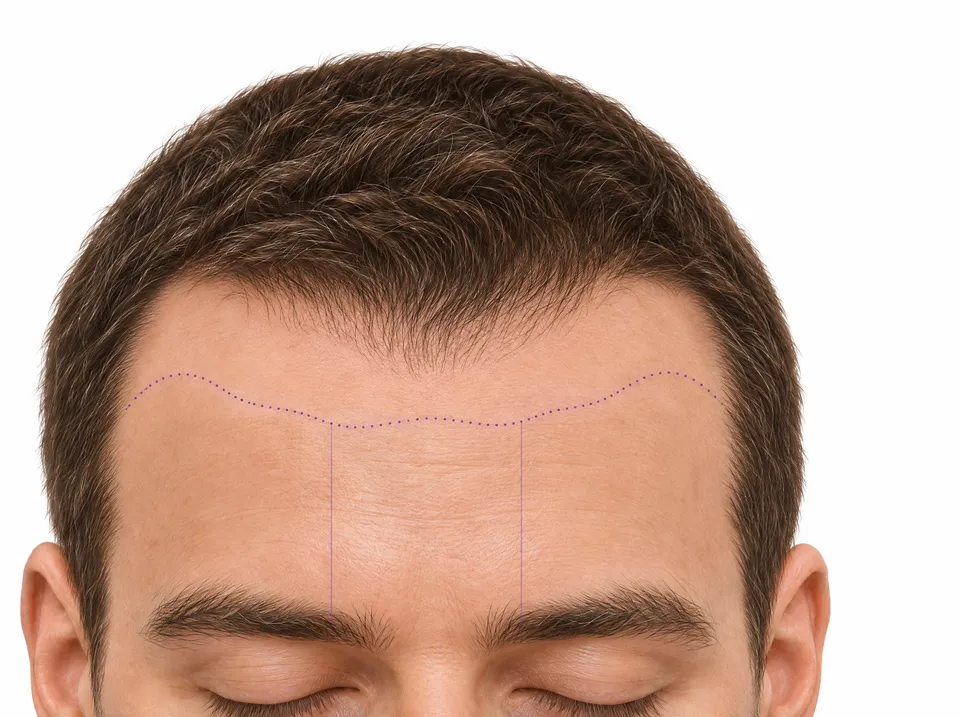 Step 1 · 45 min
Examination and hairline design
Your facial anatomy, forehead height, current hairline and donor capacity are assessed; the new front line is marked to your facial proportions.
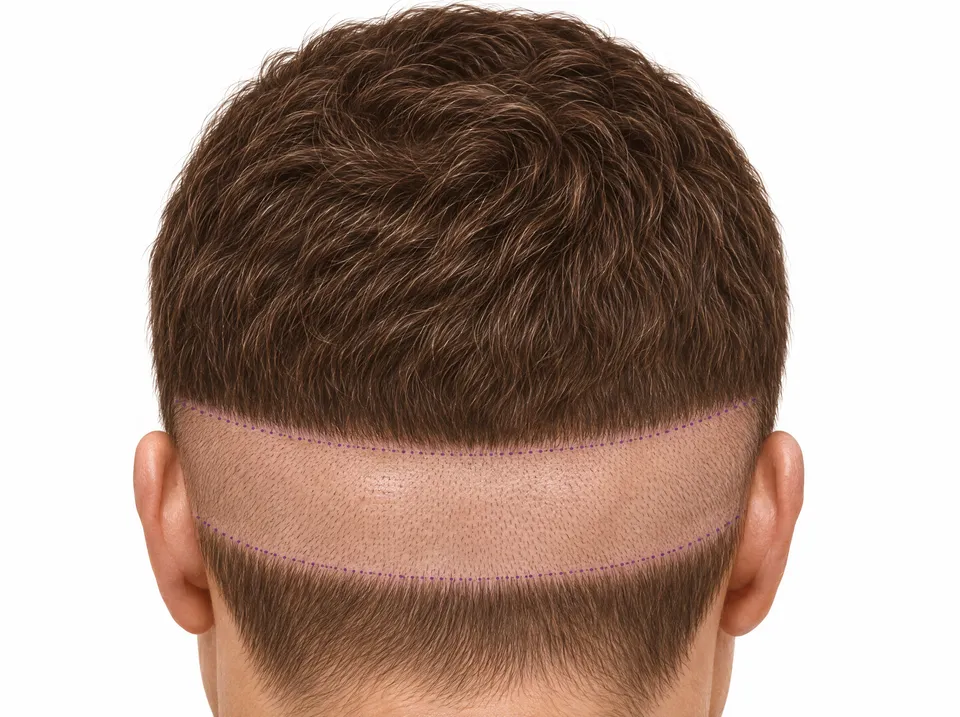 Step 2 · 20 min
Local anaesthesia
The donor and recipient areas are numbed; you stay awake throughout.
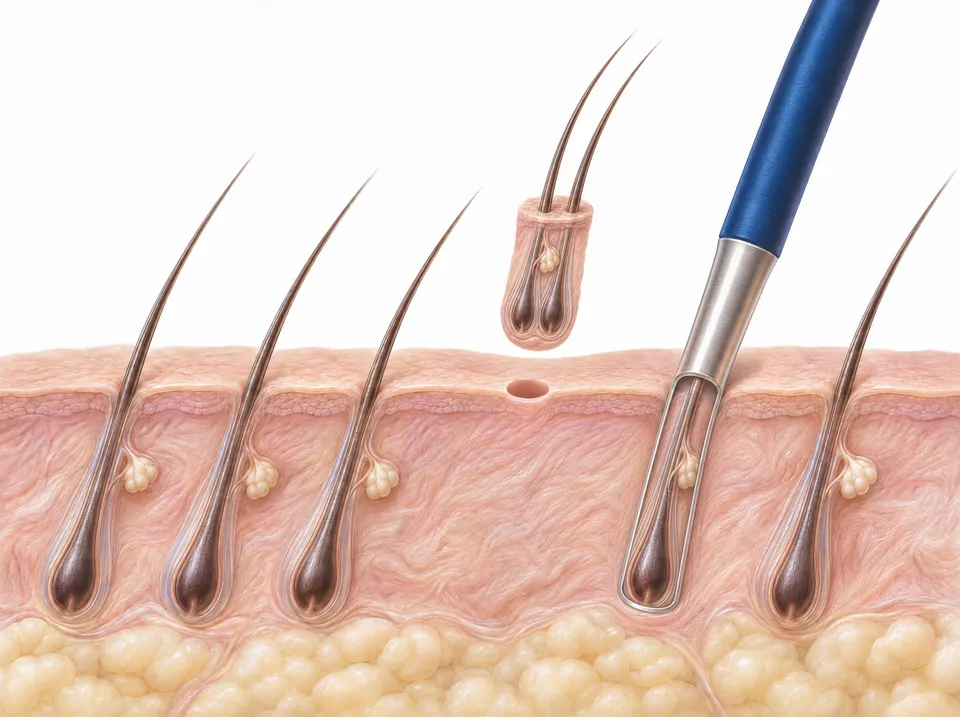 Step 3 · Depends on graft count
Graft extraction
Grafts are extracted one by one from the donor area; the finest single-hair grafts are set aside for the front edge.
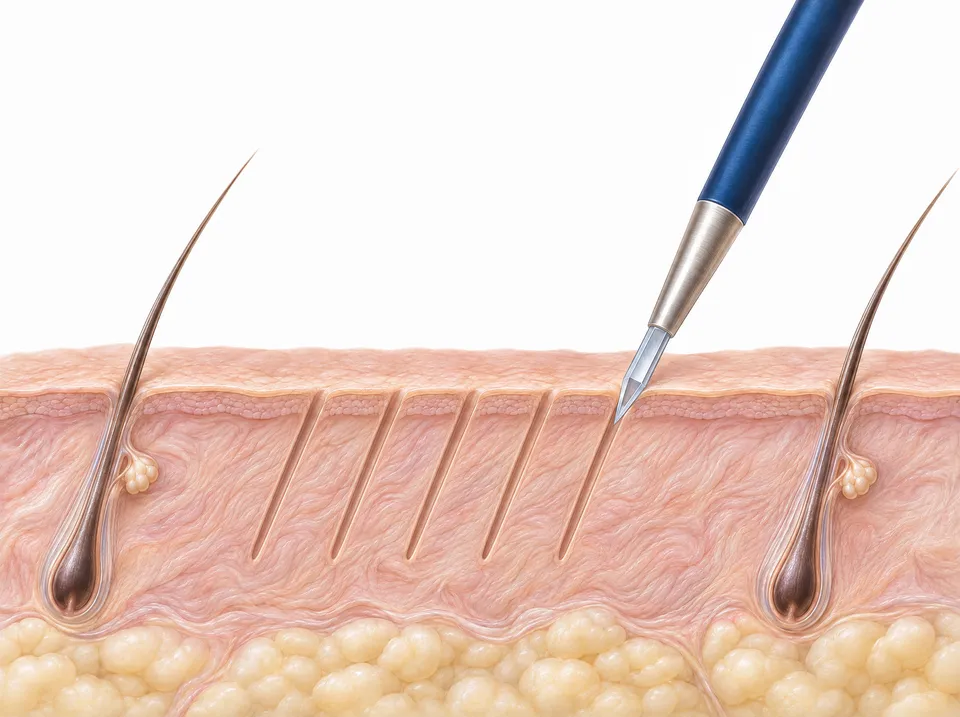 Step 4 · Depends on graft count
Placing grafts along the front line
The sites are made in the natural direction of the hair, angled forwards; single-hair grafts go at the very front, thicker grafts behind them.
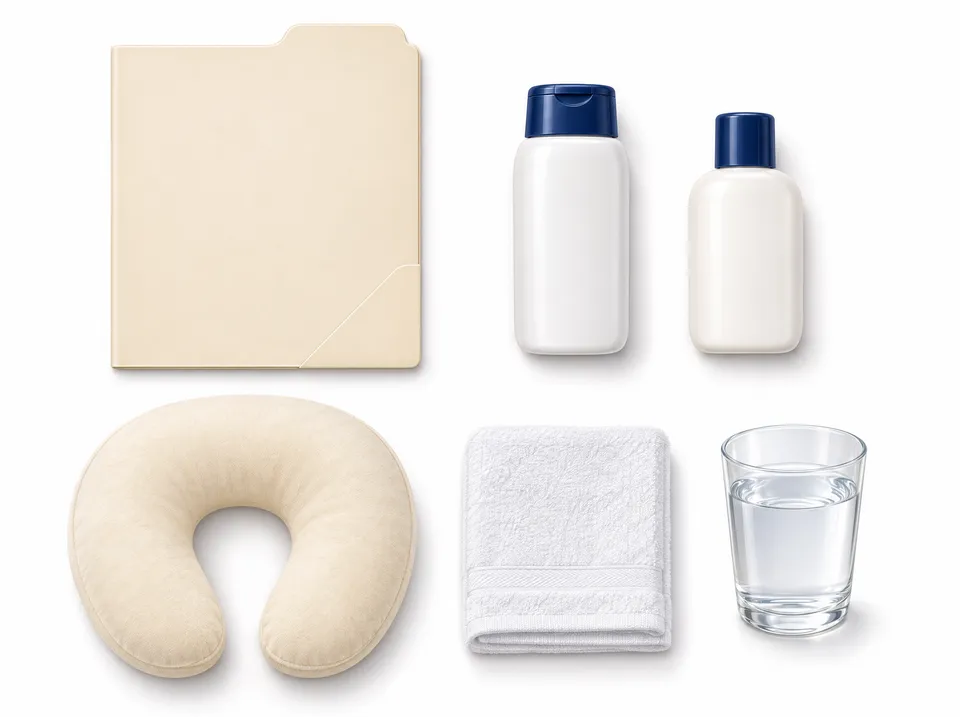 Step 5 · 30 min
Aftercare and discharge
A dressing is applied; you receive an aftercare kit and written instructions.


Representative images
The images are illustrations; no surgery photos are used.
Recovery timeline
The first two weeks
- Day 1
Operation
You leave at the end of the day with written aftercare instructions.
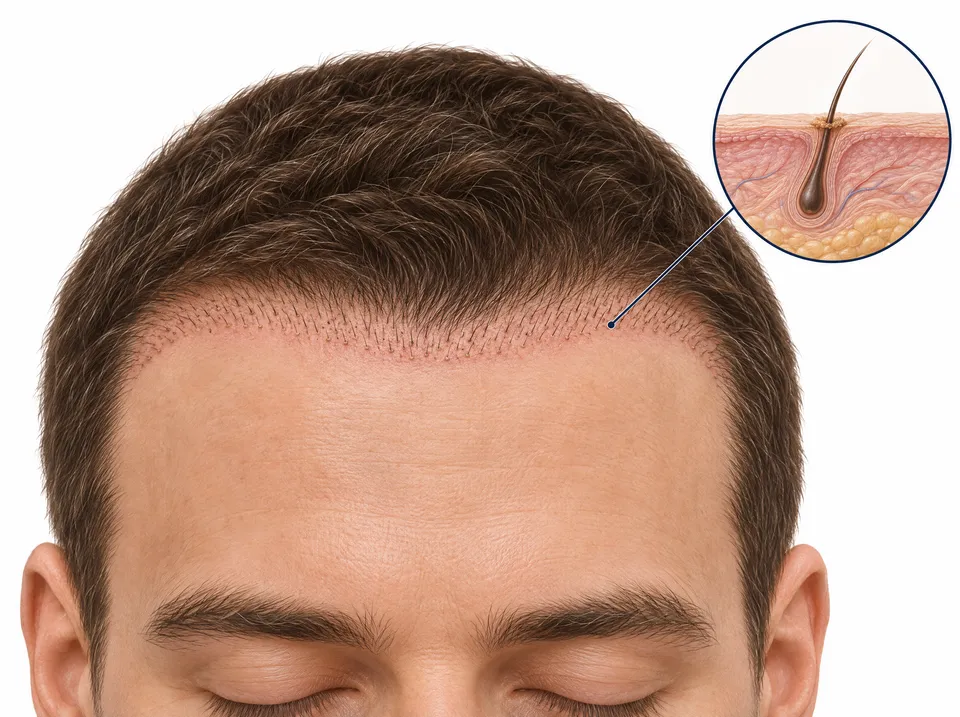
- Day 2
Dressing and check
The dressing comes off; the recipient and donor areas are checked.
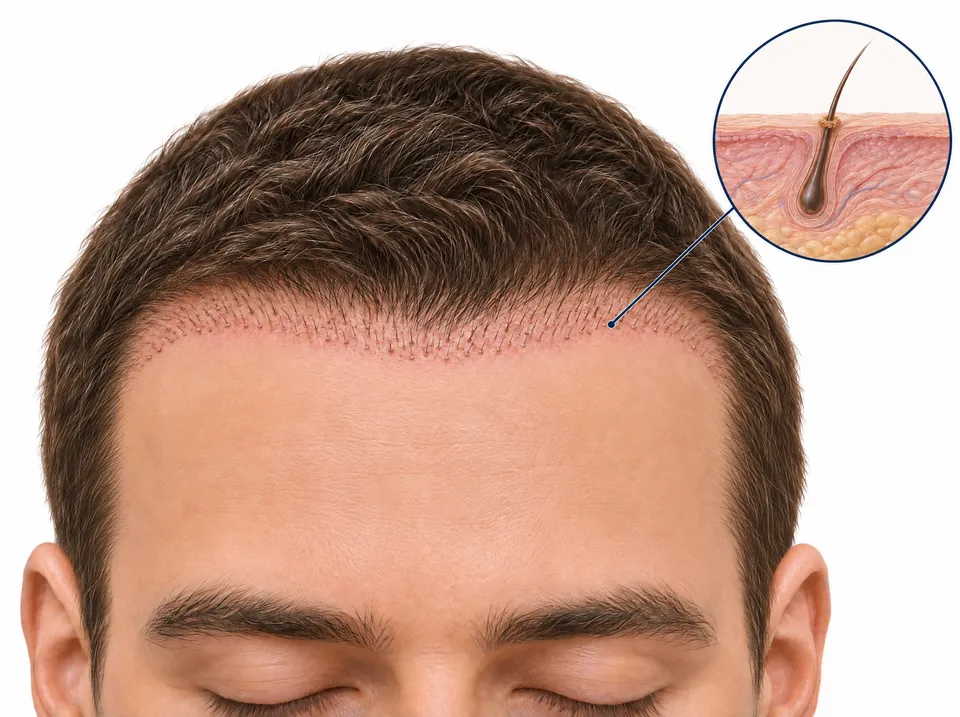
- Day 3
First wash
The first wash is done, and you are shown how to wash your hair at home.
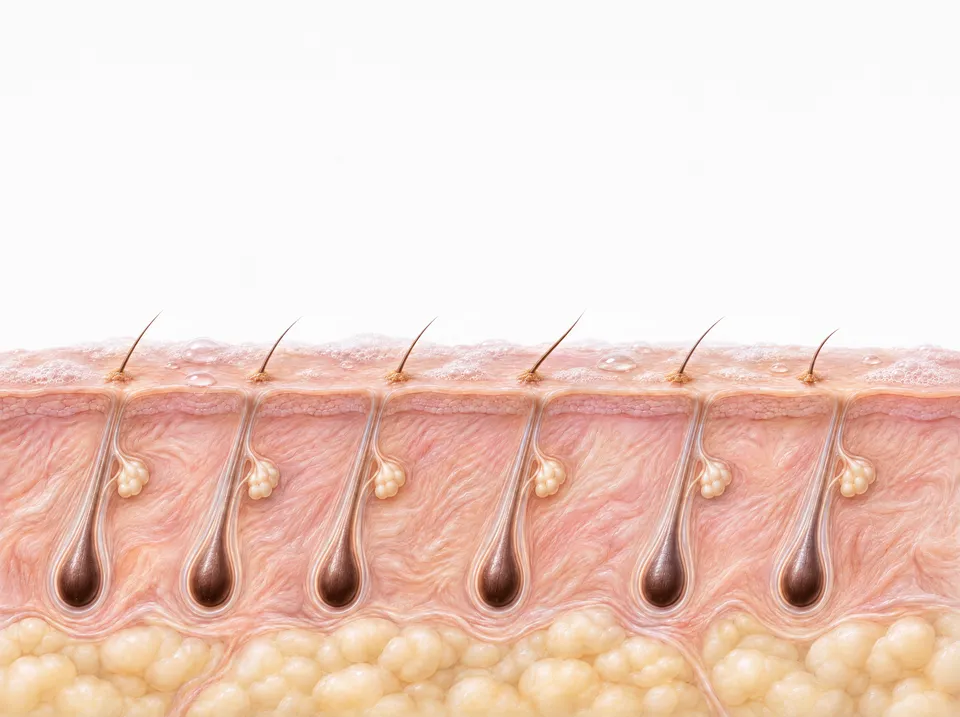
- Day 10
Scab wash
The scabs are washed off; redness starts to fade.
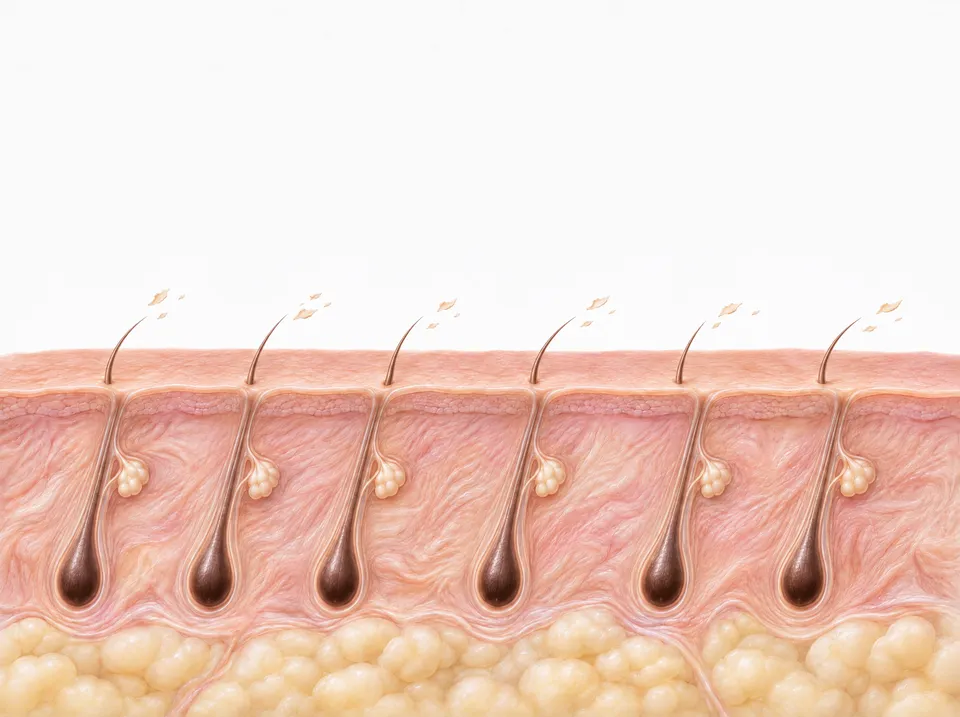
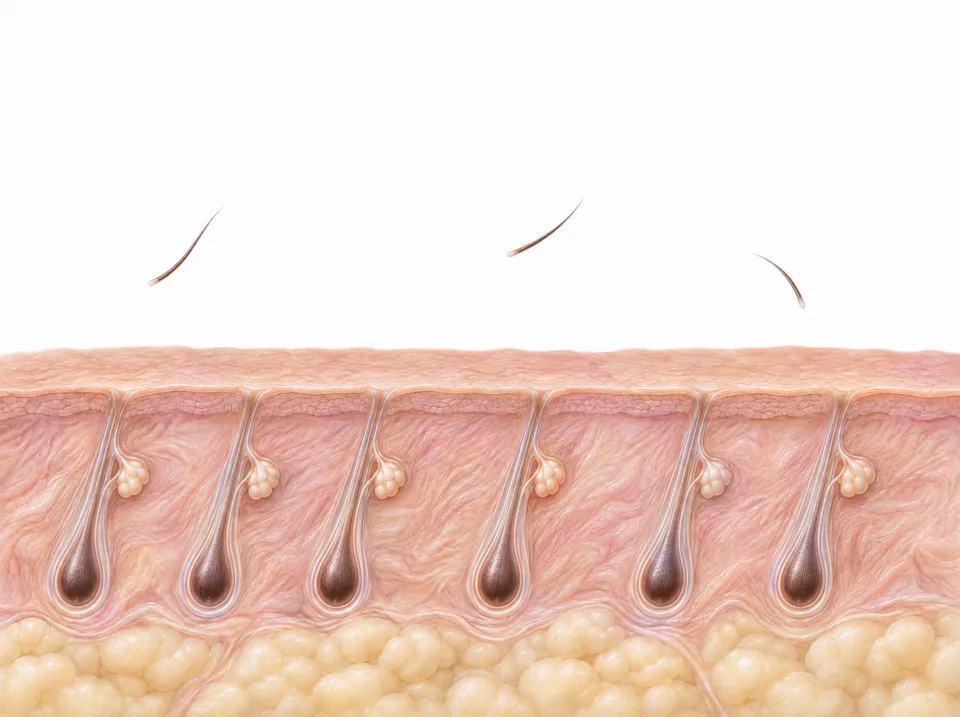
- ~Day 15
Shedding of transplanted hairs
Some transplanted hairs may shed; the follicles stay under the skin.


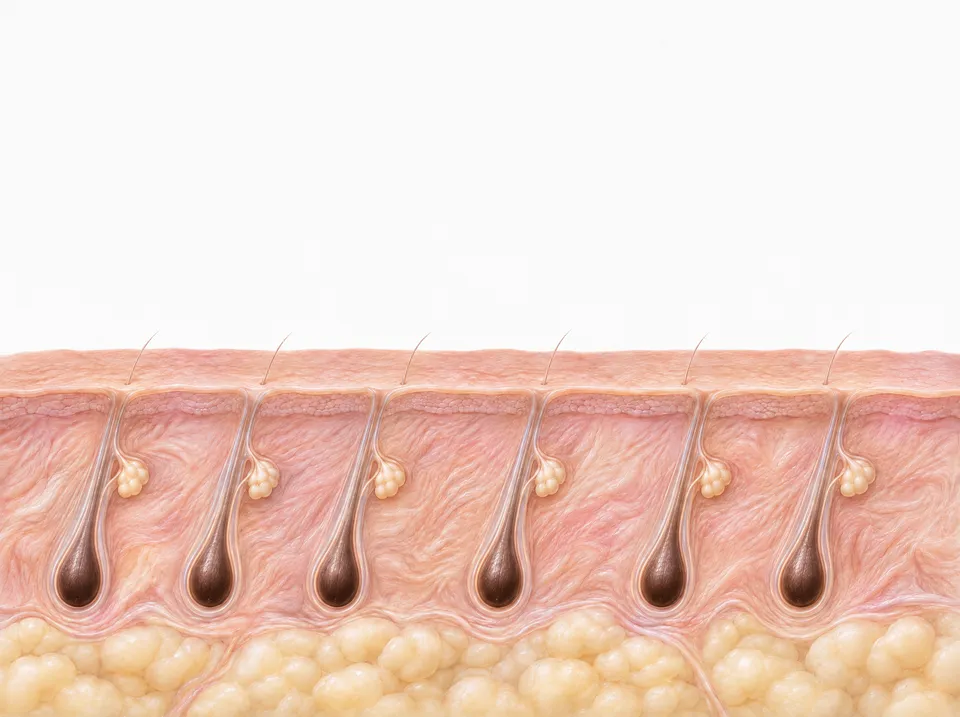
Over the months
- Month 3
First growth
New hairs start to appear.
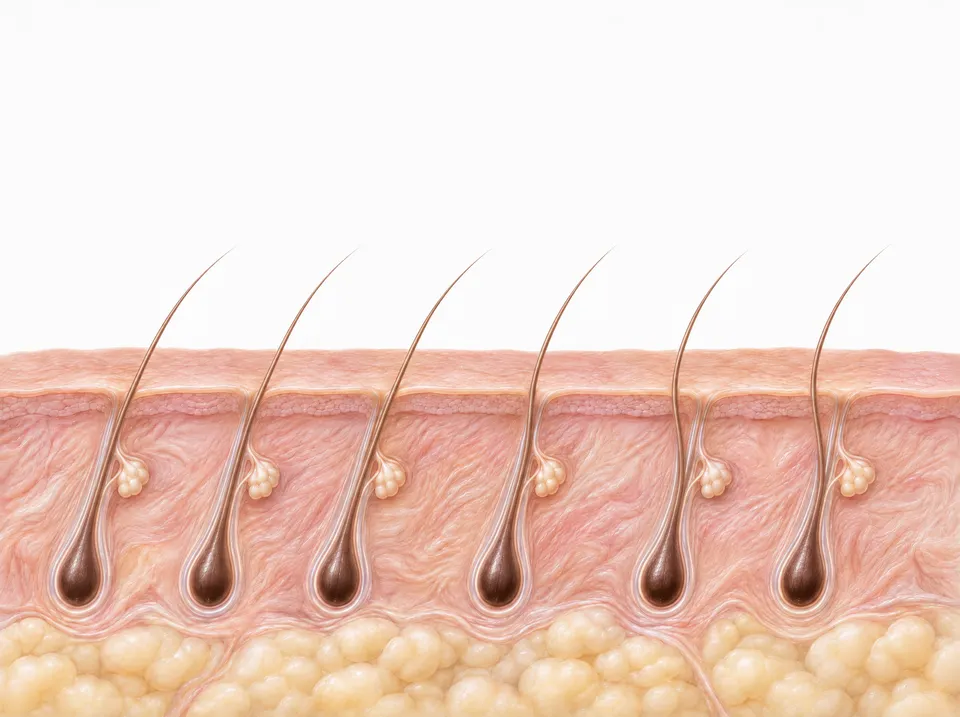
- Month 6
Visible growth
The hair grows longer; the new front line becomes clearer.
- Months 8–12
Increasing density
Density increases and the hair matures.
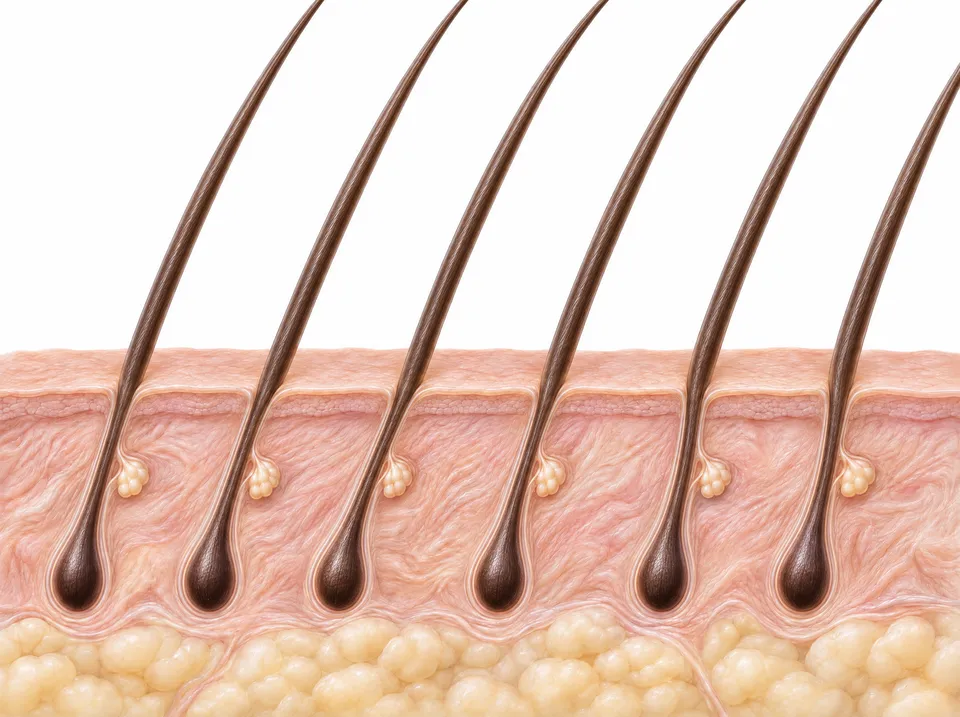
- ~Month 12
Final assessment
The result is assessed with photos taken at the same angle and in the same light; a second session for density is discussed if needed.
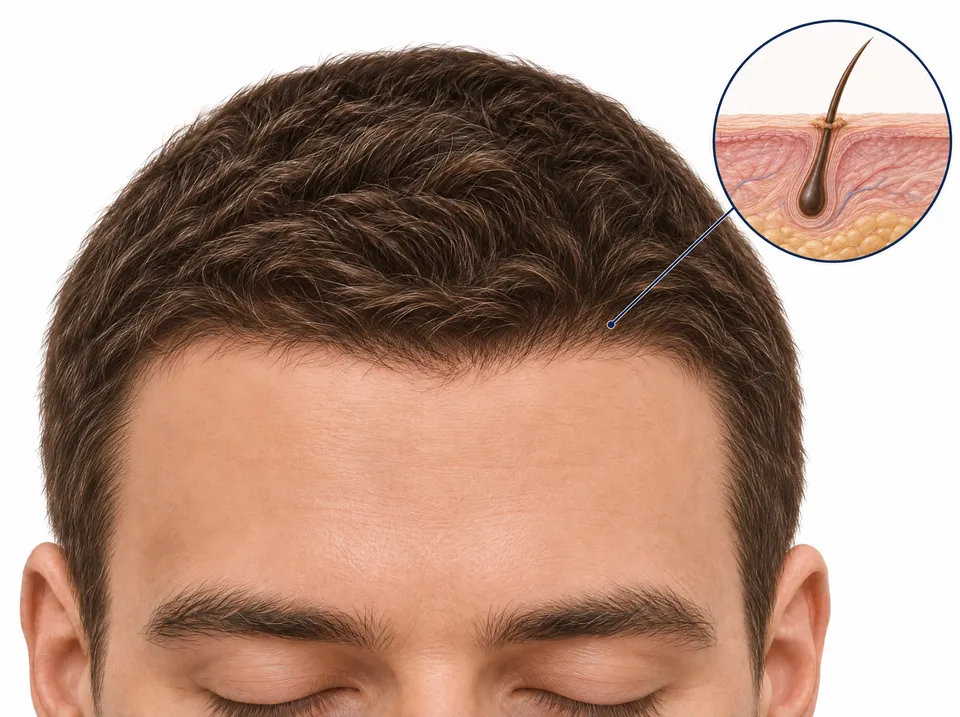


Representative images
Timings are averages and vary from person to person. The drawings are schematic sections of the scalp.
Risks and side effects
Every procedure carries risks. Most are temporary; your doctor goes through each one with you before surgery.
Unnatural line
A front edge made straight, too dense or with thick grafts can stand out. That is why single-hair grafts are placed at irregular gaps at the very front.
Temporary shedding
Existing hair around the recipient area may shed for a while; it usually grows back within a few months.
Swelling
It can affect the forehead and around the eyes and usually settles on its own within 5–7 days.
Scabbing
Small scabs form in the recipient area and wash off in about 10 days.
Numbness
There may be temporary numbness at the front of the forehead and in the donor area; it usually passes within a few weeks or months.
Infection
It is rare. If you have a fever, increasing redness or discharge, message us without delay.
Frequently asked questions
How much can the forehead be lowered?
Where the new line goes is set at the examination, based on your facial proportions, the height of your forehead and the capacity of the donor area. The aim is not to make the forehead as small as possible but to balance it with the face.
Is it done in one session?
Usually, yes. If the area is large or a higher density is wanted, a second session can be planned once the result of the first is clear.
Is hairline lowering done for women?
Yes. Women with a naturally high hairline are among the people most often assessed for it. In women the hairline is planned more rounded and the temple corners are kept.
How many grafts are needed?
The number of grafts is set at the examination, based on the size of the area to be lowered, the density you want and the capacity of the donor area.
When will I see the result?
New hairs usually start to appear in month 3 and become clearer after month 6. The result is assessed at about month 12 with photos taken at the same angle and in the same light.
References
- 1.Shapiro R. Principles and techniques used to create a natural hairline in surgical hair restoration. Facial Plast Surg Clin North Am. 2004;12(2):201–217.
- 2.Kabaker SS, Champagne JP. Hairline lowering. Facial Plast Surg Clin North Am. 2013;21(3):479–486.
- 3.Nusbaum B, Fuentefria S. Naturally occurring female hairline patterns. Dermatol Surg. 2009;35(6):907–913.
- 4.Park JH. Novel principles and techniques to create a natural design in female hairline correction surgery. Plast Reconstr Surg Glob Open. 2015;3(12):e589.
- 5.Vañó-Galván S, Molina-Ruiz AM, Serrano-Falcón C, et al. Frontal fibrosing alopecia: a multicenter review of 355 patients. J Am Acad Dermatol. 2014;70(4):670–678.
- 6.Jiménez F, Poblet E. Is hair transplantation indicated in frontal fibrosing alopecia? The results of test grafting in three patients. Dermatol Surg. 2013;39(7):1115–1118.
- 7.Kerure AS, Patwardhan N. Complications in hair transplantation. J Cutan Aesthet Surg. 2018;11(4):182–189.
- 8.American Academy of Dermatology (AAD). Hair loss: hair transplant. Accessed 21 October 2026.
Let's review yourhair together.
Tell us about your hair in three short steps, and your hair transplant specialist will get back to you.
- Address
- Ataköy 7-8-9-10. Kısım Mahallesi, Çobançeşme E-5 Yan Yol Caddesi No: 20/1, Ataköy Towers A Blok, 5. Kat, Ofis No: 96, Bakırköy / İstanbul
- Opening hours
- 24/7, every day of the week
- Phone
- +90 (545) 209 55 51