



Afro hair transplant
A transplant for hair whose root also curls beneath the skin, with graft extraction and channels planned individually around that structure.

Why is a transplant planned differently for afro hair?
An afro hair transplant calls for different expertise and technical precision from a standard hair transplant because of the anatomy of the hair roots. In afro hair the roots, unlike straight hair roots, can have an oval, curled structure beneath the skin, shaped like the letter C.
The principles of a transplant are the same: grafts are taken from the donor area and placed where the hair is thinning. The difference is that the curl does not stop at the hair shaft but continues in the root beneath the skin, and this affects graft extraction, channel planning and healing.
Afro hair is not a single type: the degree of curl and the nature of the skin vary from person to person. That is why your plan is built around the features of your own hair and skin.
Why is the cause of hair loss investigated first?
One of the most common causes of hair loss in afro hair is traction alopecia: hair loss caused by styles that pull on the hair, such as braids, weaves and ponytails. Caught early, it can be reversed; if the style is kept up, it can turn into permanent, scarring hair loss.
Another important cause is CCCA, a scarring type of hair loss that starts at the crown and spreads outwards. With this kind of hair loss, a transplant is only considered once the condition has been stable for a long time and this has been confirmed by biopsy; published studies mention a quiet period of at least 9–12 months. Graft survival in scar tissue is less predictable.
Why is the follicle different in curly hair?
In afro hair both the hair and the follicle are curved relative to the skin; the lower end of the follicle is often bent back like a golf club. Hair density is lower than in other hair types, but the curl, the number of hairs in each follicular unit and the small contrast between hair and skin colour together give a fuller look.
That is why afro hair can give more coverage from fewer grafts. On the other hand, the curl can make the donor area look denser than it really is, so donor capacity is assessed carefully during the examination.
How are grafts extracted?
Because of this anatomical difference, the operation has to proceed with great care and control, especially at the graft extraction stage. Extracting the roots with a technique suited to their anatomy is essential to keep graft loss and damage to the roots to a minimum.
Because the follicle curves beneath the skin, it is more likely to be cut during FUE extraction. To reduce the risk, the first incision is kept shallow and the punch is sized to take in the curve of the follicle. A larger punch can leave a larger scar, so this is a balance.
Some centres do a test extraction of a small number of grafts before the main procedure to see how intact the follicles come out. The choice between FUE and FUT is made individually; men who keep their hair very short often prefer to avoid the linear scar left by strip surgery.
How is keloid risk assessed?
A keloid is a thick scar that grows beyond the edges of the wound, and it is more common in darker skin. Most patients with afro hair do not develop keloids after a transplant; even so, you are always asked about any history of keloids beforehand, and any scars on your body are examined.
If you have a history of keloids, a small test transplant is recommended first. If the donor and recipient areas heal normally within about 3 months, the main procedure is planned. Keloids can develop after FUE, not only after strip surgery.
How are the hairline and channels planned?
At the implantation stage, the channels are planned individually, taking into account the exit direction and angles of the hair roots, the thickness and size of the grafts and the structure of the surrounding tissue. With the right technique and careful precision, the aim is a result that suits the hair's natural exit direction, density and anatomy.
In afro hair the hairline is often straighter and more horizontal, and male patients also tend to want less recession at the temples. Your hairline is drawn to suit this preference and the proportions of your face.
Channel size is chosen according to the degree of curl; for tightly curled hair, published studies mention sizes of 1.2–2 mm. As new hairs come through, the curl can cause ingrown hairs; these can be treated and are reviewed at your check-ups.

How are grafts extracted around the curve of the root?


- 1
The root curls beneath the skin too
In afro hair, unlike straight hair, the root can run beneath the skin in an oval curve shaped like the letter C.
- 2
A straight path can cut the root
If extraction follows the hair's direction above the skin in a straight line, it can damage the lower part of the curve; that means a lost graft.
- 3
The first cut stays shallow
The punch passes only the upper layer of the skin and stops before it reaches the curve of the root.
- 4
The graft comes out whole
The graft is removed undamaged, together with its curved root and the tissue around it.
- 5
The channel follows the exit direction
In the recipient area the channel is opened to match the root's exit direction, its angle and the graft's thickness; the graft is placed in it.
Who is it for?

May be suitable
- Male or female pattern hair loss with a sufficient donor area
- Permanent thinning from tight hairstyles that you no longer wear
- Scarring hair loss that has been stable for a long time (confirmed by biopsy and a doctor's assessment)
- No history of keloids, or healing without problems after a test transplant

May not be suitable
- Active scarring hair loss (such as CCCA)
- Still wearing tight braids, weaves or ponytails
- A history of keloids and no test transplant yet
- An insufficient donor area
Representative images
Your doctor decides whether it suits you after an examination.
Surgery day
Five steps in one day. Graft extraction and channel size are adapted to the curl of your hair.
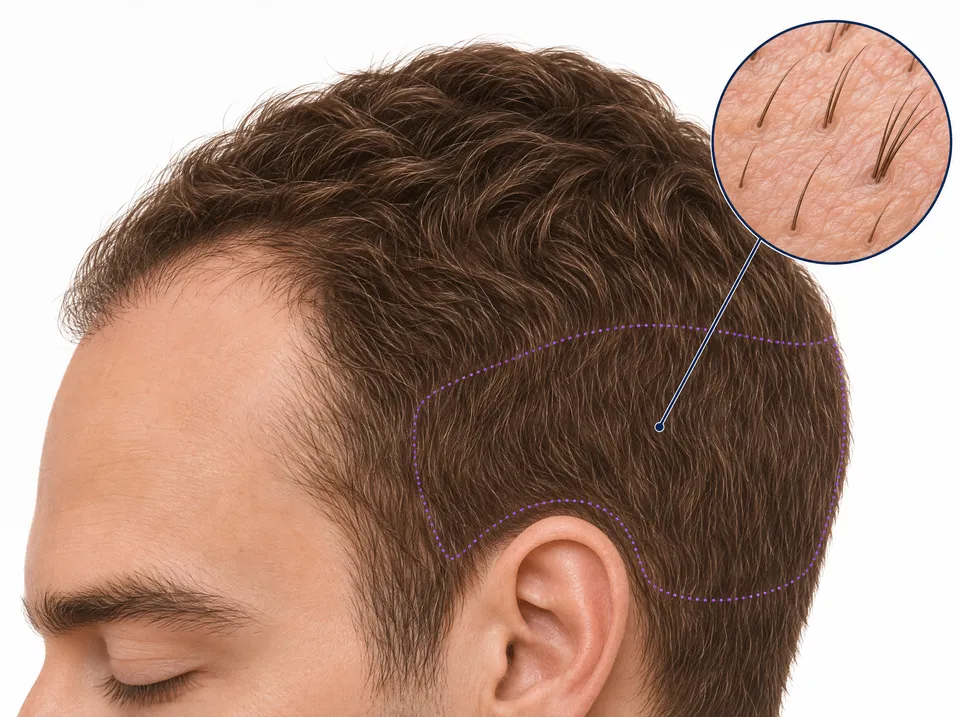 Step 1 · 45 min
Examination and assessment
The cause of hair loss, the true density of the donor area and any history of keloids are assessed. Your scalp is examined with a hair analysis device, and blood tests are done if needed.
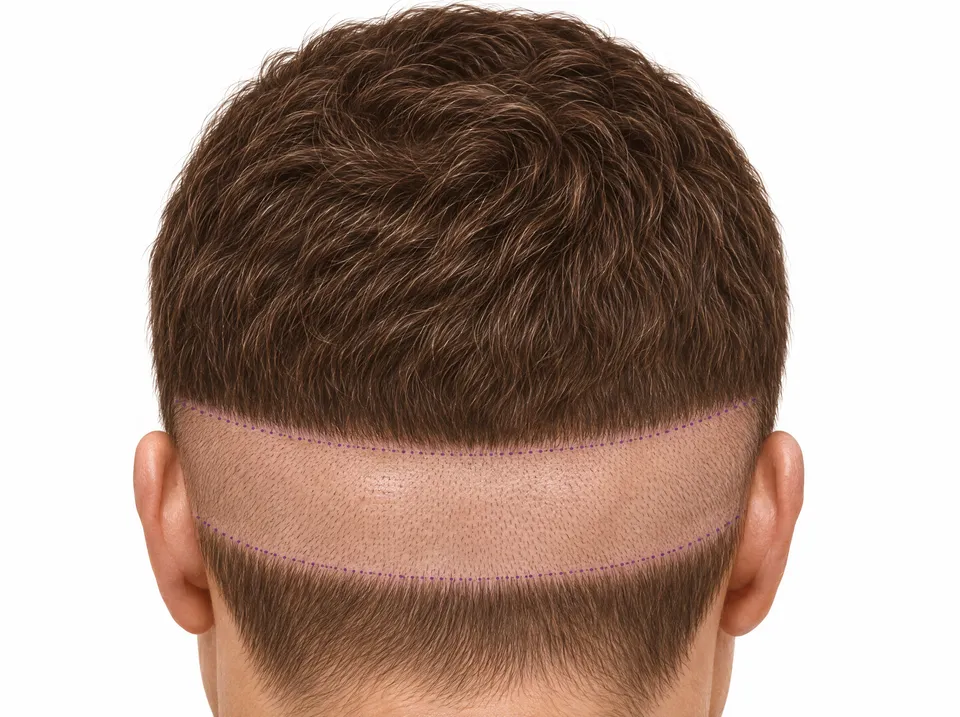 Step 2 · 20 min
Local anaesthesia
The donor and recipient areas are numbed; you stay awake throughout.
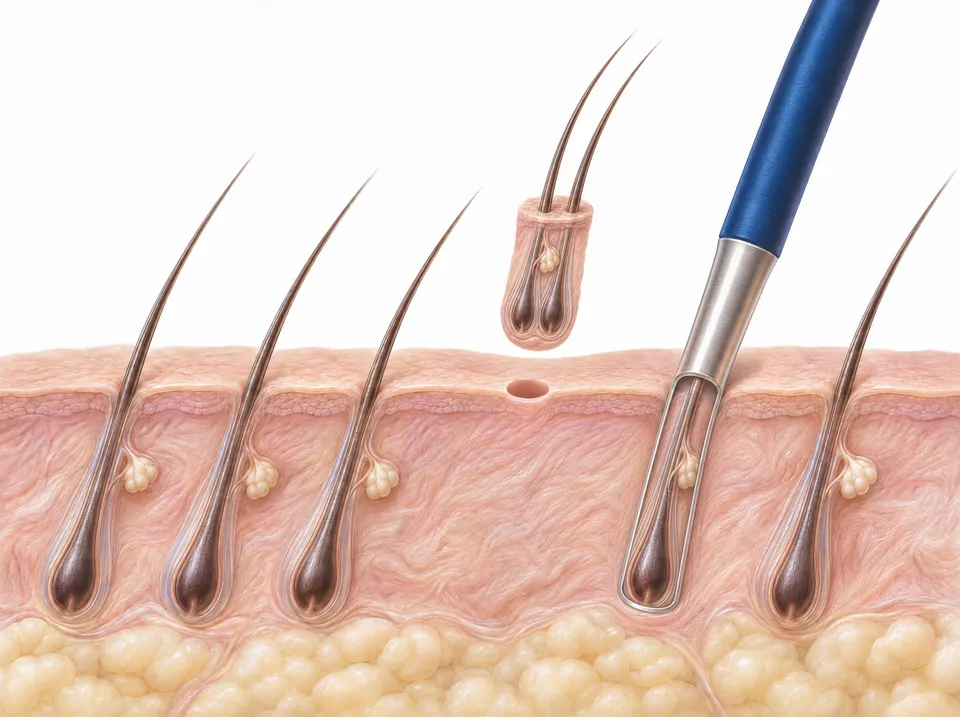 Step 3 · Depends on graft count
Adapted graft extraction
Grafts are removed one by one with a technique adapted to the curve of the follicle beneath the skin. The first incision is kept shallow to reduce damage to the follicle.
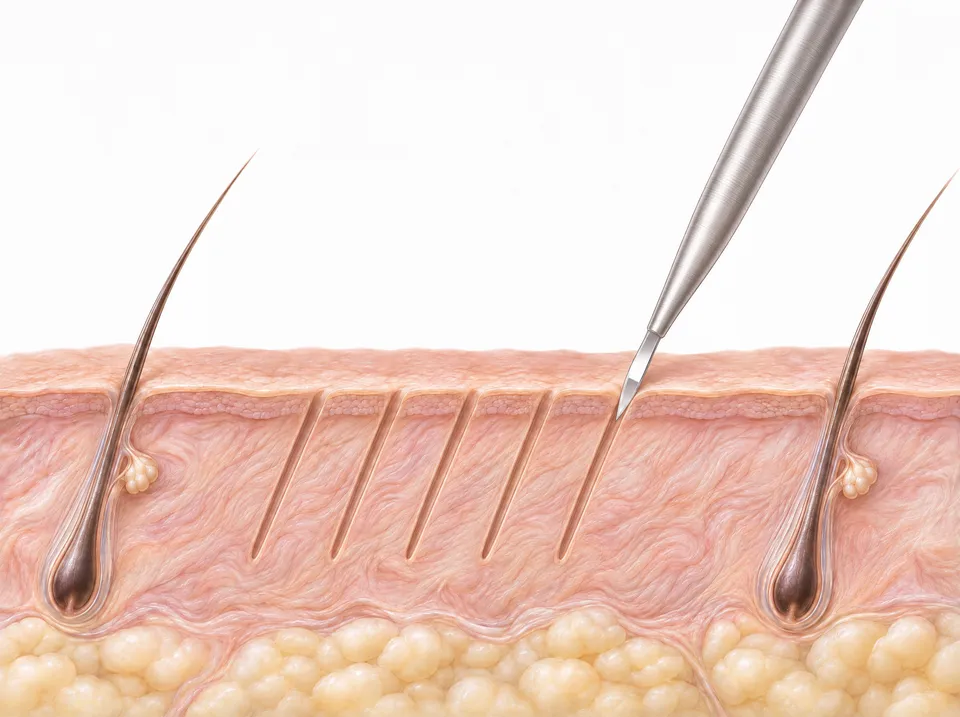 Step 4 · Depends on graft count
Channels sized for the curl
Channels are opened at a size that suits the width of curly hair; grafts are placed one by one.
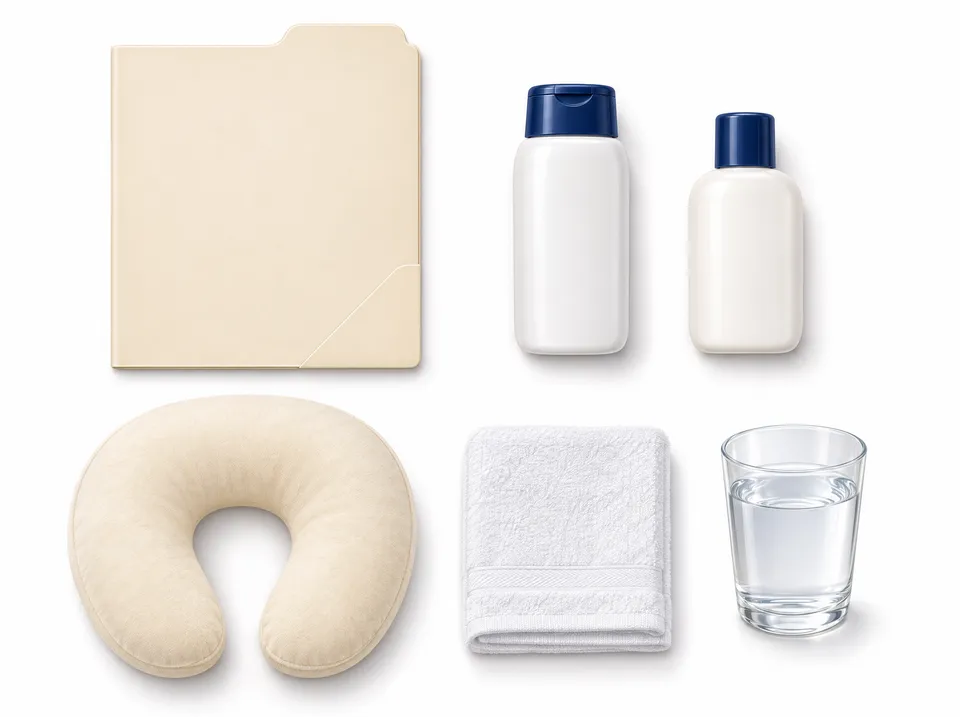 Step 5 · 30 min
Aftercare and discharge
A dressing is applied; you receive an aftercare kit and written instructions.


Representative images
The images are illustrations; no surgery photos are used.
Recovery timeline
The first two weeks
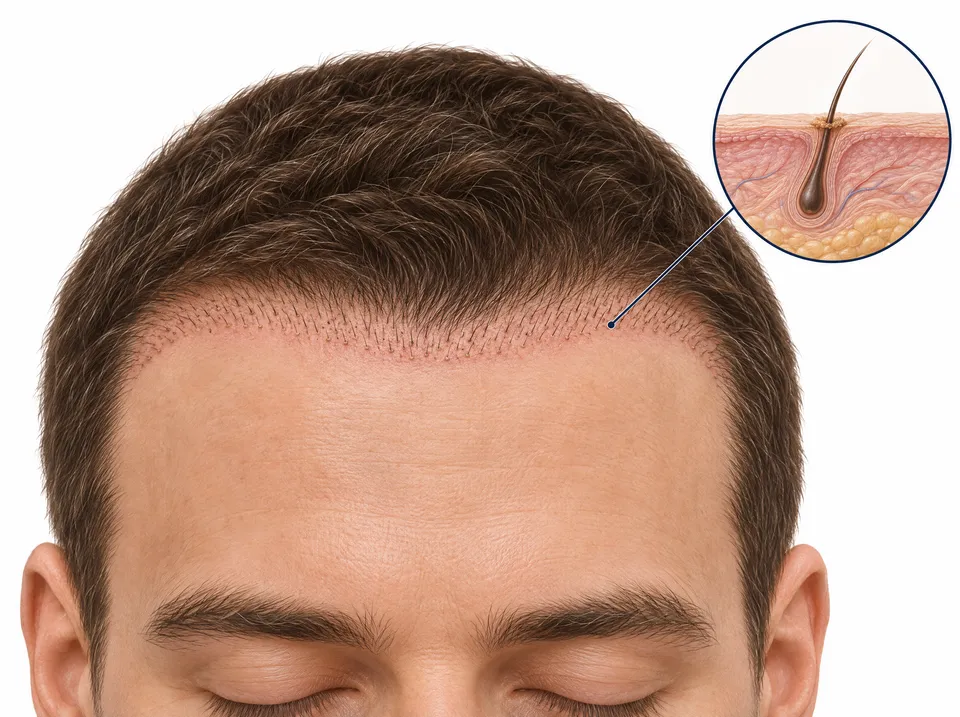
Surgery
You leave at the end of the day with written aftercare instructions.
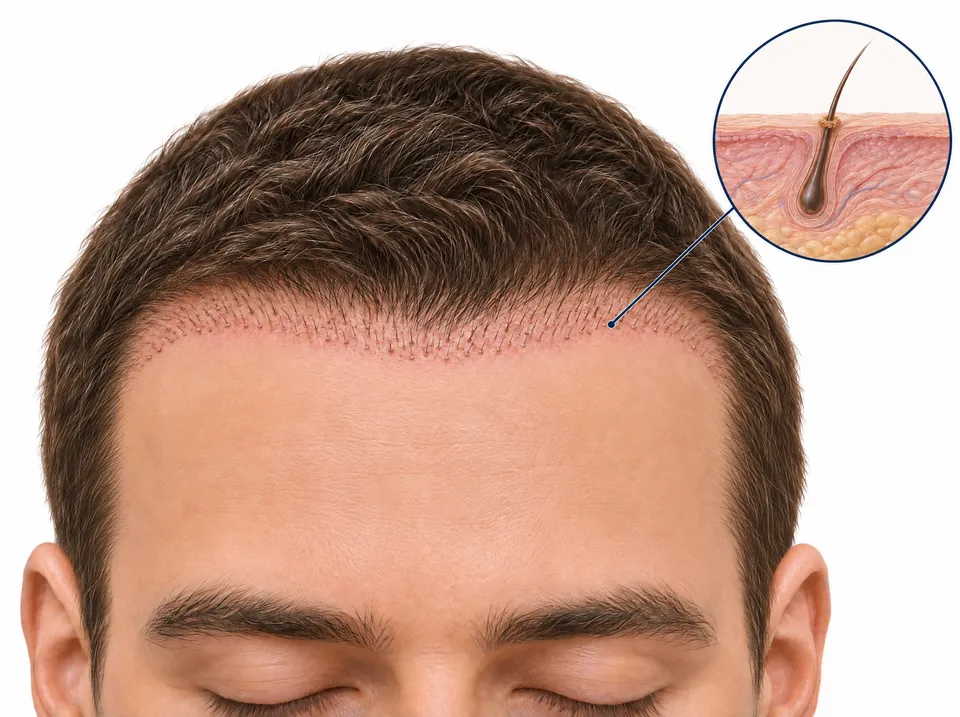
Dressing and check-up
The dressing comes off; the recipient and donor areas are checked.
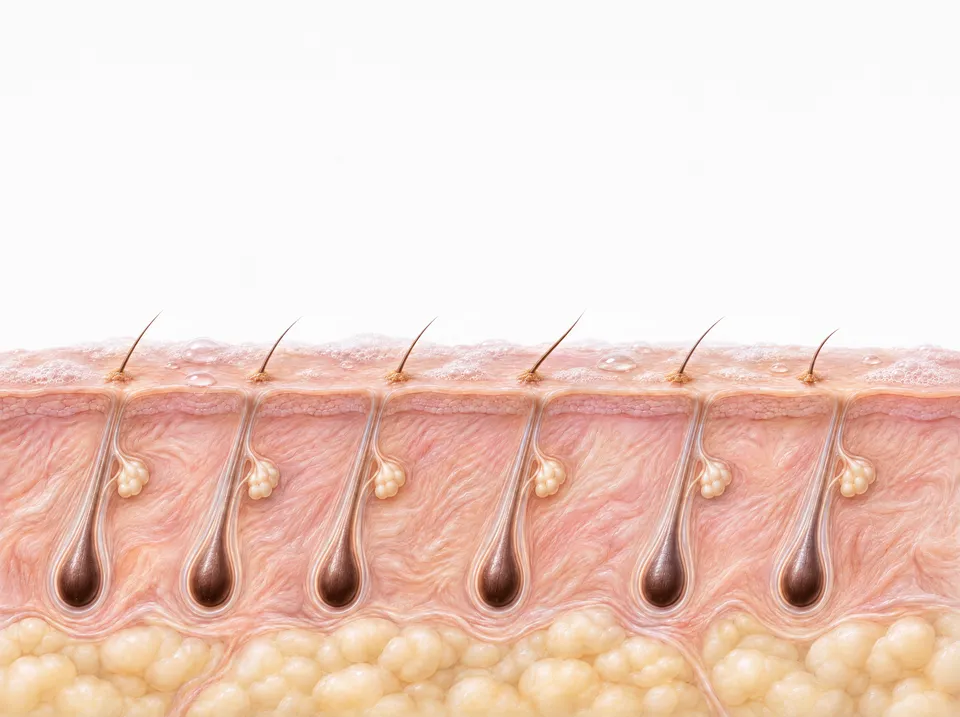
First wash
The first wash is done, and you are shown how to wash your hair at home.
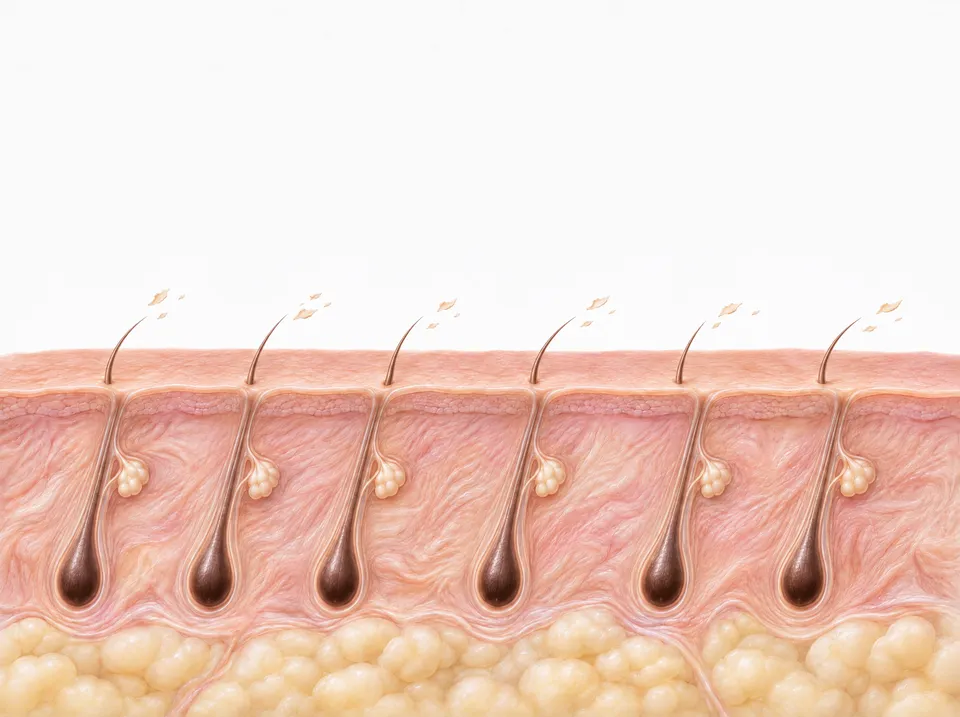
Scab wash
The scabs are washed off; redness starts to fade.
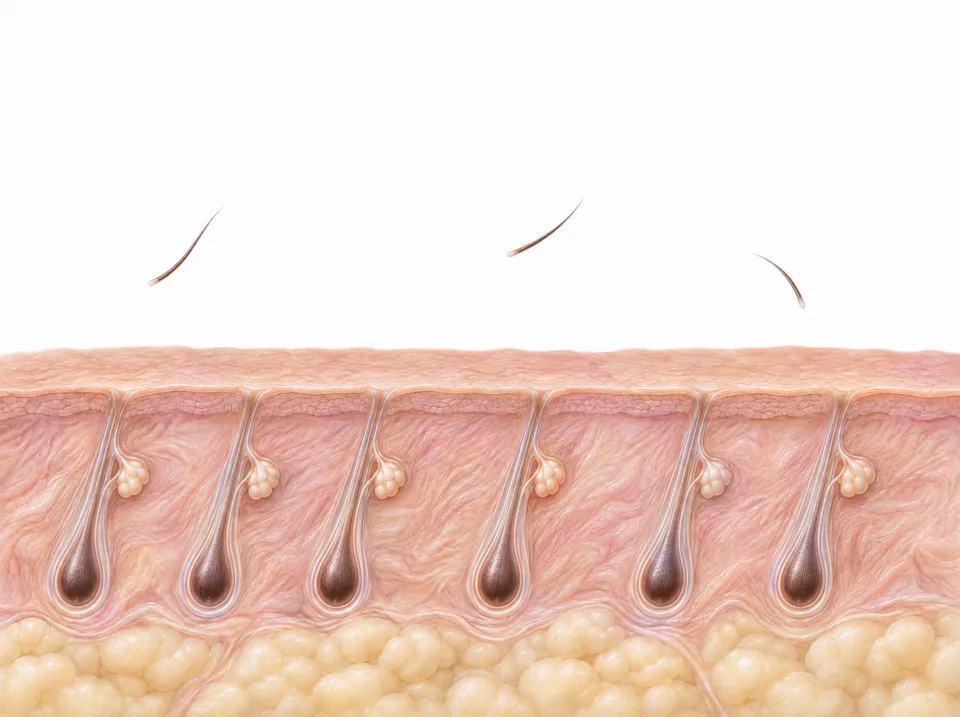
Shedding of transplanted hair
Some transplanted hairs may shed; the follicles stay under the skin.


Over the months
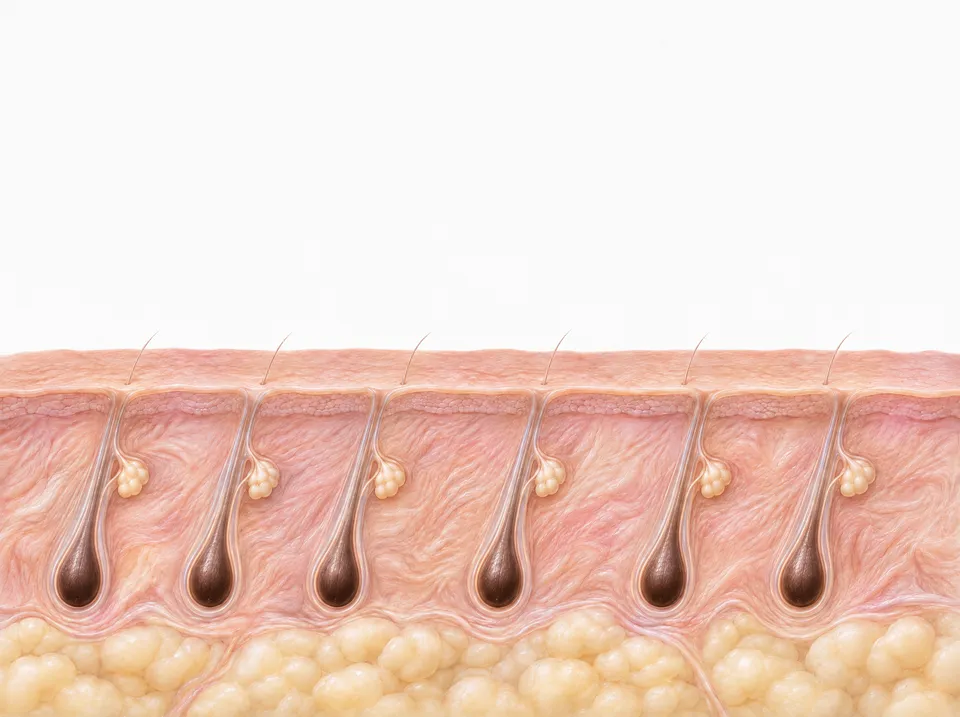
First growth
New hairs start to appear. As curly hairs come through, ingrown hairs can occur; if they do, message us.
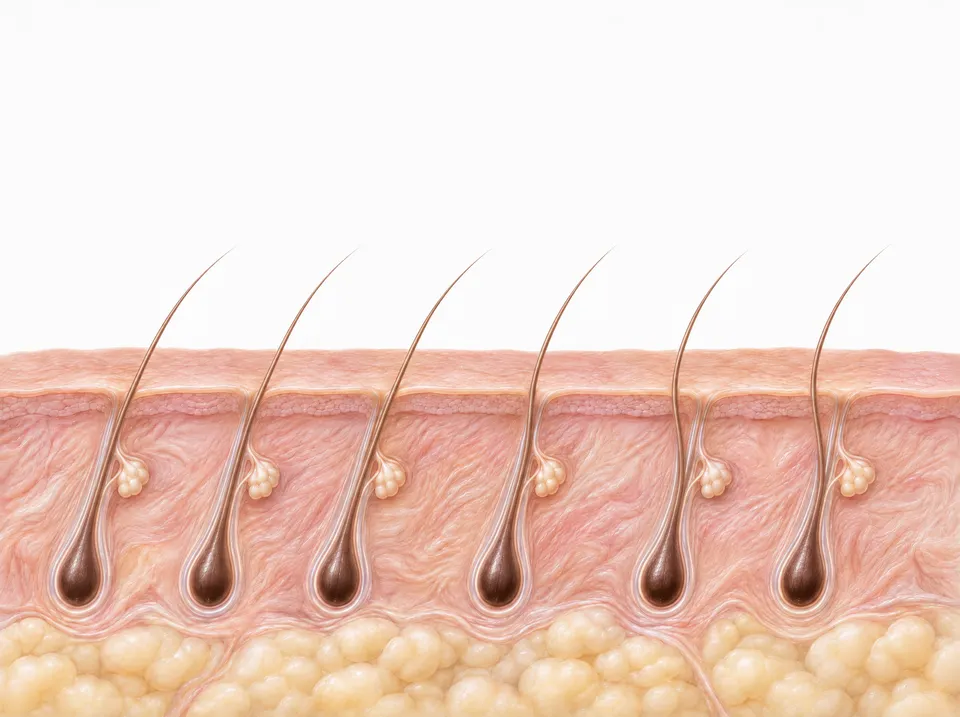
Visible growth
The hair grows longer and the coverage becomes more visible.
Density builds
Density increases and the hair matures.
Final assessment
The result is assessed with photos taken at the same angle and in the same light.


Representative images
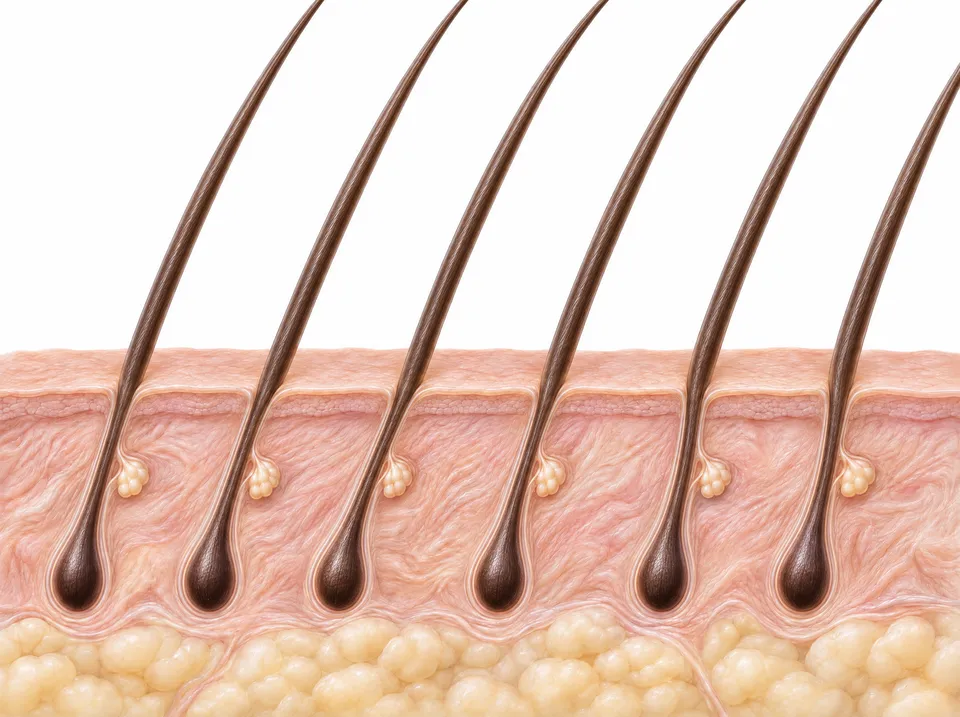
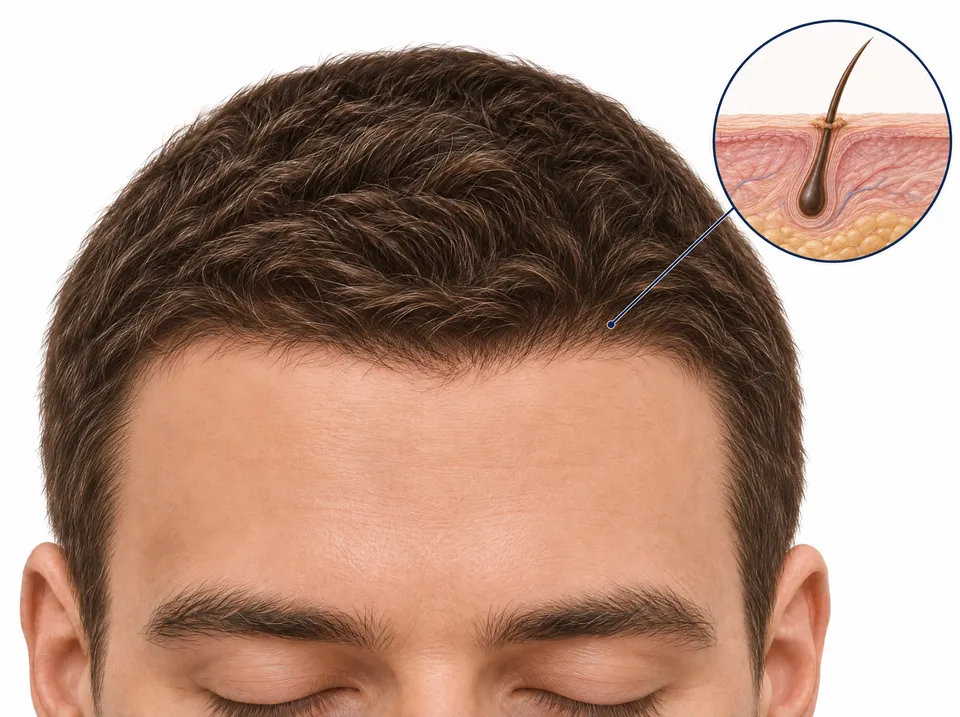
Timings are averages and vary from person to person. The drawings are schematic sections of the scalp.
Risks and side effects
Every procedure carries risks. Most are temporary; your doctor goes through each one with you before surgery.
Keloids and thick scars
Keloids are more common in darker skin and can develop after FUE, not only after strip surgery. If you have a history of keloids, a test transplant comes first.
Ingrown hairs and folliculitis
As new hairs come through, usually in months 2–3, the curl can cause ingrown hairs and inflammation. These can be treated; if they occur, message us.
Follicle damage during extraction
Because the follicle curves beneath the skin, it is at greater risk of damage during extraction. That is why the technique is adapted to the curl, with a test extraction first if needed.
Darkening of the skin
The skin in the donor and recipient areas may darken temporarily.
Swelling
Swelling may appear around the forehead and eyes; it usually settles on its own within 5–7 days.
Infection
Rare. If you have a fever, increasing redness or discharge, message us without delay.
Frequently asked questions
Do I need a test transplant?
It is recommended if you have a history of keloids or scarring hair loss. A small number of grafts is transplanted first; if the donor and recipient areas heal without problems within about 3 months, the main procedure is planned.
Will fewer grafts be enough with curly hair?
Curly hair, and the smaller contrast between hair and skin colour, can give more coverage from the same number of grafts. But the curl can also make the donor area look denser than it is; your doctor assesses its true capacity during your examination.
Will the transplanted hair grow curly?
Yes. Transplanted hair keeps the characteristics of the hair in the donor area it came from, including its curl, thickness and colour. That is why the direction and angle of the channels are planned to follow the natural exit direction of curly hair.
FUE or FUT?
The decision is made individually, weighing up the degree of hair loss, the flexibility of the scalp and the structure of the follicle. Men who keep their hair very short often prefer to avoid the linear scar left by strip surgery.
Can I have braids or weaves after the transplant?
Styles that pull on the hair, such as braids, weaves and ponytails, can strain the follicles and lead to hair loss. Ask your doctor which styles you can return to after the transplant, and when.
What should I do if I get ingrown hairs?
Message us with a photo. Ingrown hairs and inflammation are more common in curly hair as new hairs come through, and they can be treated.
References
- 1.Okereke UR, Simmons A, Callender VD. Current and emerging treatment strategies for hair loss in women of color. Int J Womens Dermatol. 2019;5(1):37–45.
- 2.Yates WD. Hair restoration in African-Americans. International Society of Hair Restoration Surgery (ISHRS); 2019. Accessed 21 October 2026.
- 3.Umar S. Comparative study of a novel tool for follicular unit extraction for individuals with afro-textured hair. Plast Reconstr Surg Glob Open. 2016;4(9):e1069.
- 4.Marwah MK, Mysore V. Recipient area. J Cutan Aesthet Surg. 2018;11(4):202–210.
- 5.Herskovitz I, Miteva M. Central centrifugal cicatricial alopecia: challenges and solutions. Clin Cosmet Investig Dermatol. 2016;9:175–181.
- 6.Sperling LC. Hair density in African Americans. Arch Dermatol. 1999;135(6):656–658.
- 7.Callender VD, Lawson CN, Onwudiwe OC. Hair transplantation in the surgical treatment of central centrifugal cicatricial alopecia. Dermatol Surg. 2014;40(10):1125–1131.
- 8.Singh S, Muthuvel K. Role of hair transplantation in scarring alopecia: to do or not to do. Indian J Plast Surg. 2021;54(4):501–506.
- 9.Alhamzawi NK. Keloid scars arising after follicular unit extraction hair transplantation. J Cutan Aesthet Surg. 2020;13(3):237–239.
- 10.Sharquie KE, Schwartz RA, Aljanabi WK, Janniger CK. Traction alopecia: clinical and cultural patterns. Indian J Dermatol. 2021;66(4):445.
- 11.American Academy of Dermatology (AAD). Hairstyles that pull can lead to hair loss. Updated 6 November 2024.
- 12.DermNet. Central centrifugal cicatricial alopecia. March 2014.
- 13.Orentreich N. Autografts in alopecias and other selected dermatological conditions. Ann N Y Acad Sci. 1959;83:463–479.
- 14.Gauglitz GG, Korting HC, Pavicic T, Ruzicka T, Jeschke MG. Hypertrophic scarring and keloids: pathomechanisms and current and emerging treatment strategies. Mol Med. 2011;17(1–2):113–125.
Let's review yourhair together.
Tell us about your hair in three short steps, and your hair transplant specialist will get back to you.
- Address
- Ataköy 7-8-9-10. Kısım Mahallesi, Çobançeşme E-5 Yan Yol Caddesi No: 20/1, Ataköy Towers A Blok, 5. Kat, Ofis No: 96, Bakırköy / İstanbul
- Opening hours
- 24/7, every day of the week
- Phone
- +90 (545) 209 55 51