



Beard and moustache transplant
Mostly single-hair grafts from the scalp, placed along the direction of the hair in each area of the face and at a low angle to the skin.

Why is a beard transplant different from a hair transplant?


In a beard transplant, grafts are also taken and placed one by one. The difference lies in the face itself: beard hairs grow at a very low angle to the skin, point in a different direction in each area of the face, and need soft, natural edges. In addition, the transplanted hair usually comes from the scalp and carries its characteristics.
The face is planned in two zones: the moustache and goatee at the front, and the sideburns, cheeks, jawline and the area under the chin at the sides.
Why is the cause of patchiness investigated first?
Gaps in a beard are usually there from birth or caused by scars, and a transplant can be considered in these cases. But the most common causes of patchy loss also include alopecia areata, shaving-related ingrown-hair inflammation and fungal infection.
A transplant is not recommended while alopecia areata is active; the transplanted grafts can be affected by the disease too. Active acne or inflammation on the face is treated first. If needed, a small skin sample is taken to confirm the diagnosis and whether the condition is active.
Where do the grafts come from?
The main donor area is the back and sides of the head, which are not affected by hair loss. Hair from the middle of the back of the head is closest in thickness and texture to beard and moustache hair. Beard hair from under the chin can also be used; its quality is ideal, but only a few grafts can be taken from there.
Grafts taken from the scalp cannot be replaced; they come from a supply you might need for a hair transplant later. Small, pale dots also remain where grafts were taken, so if you might want to cut your hair very short in future, discuss this during planning.
How are hair direction and angle planned?
Channels are opened as close to parallel with the skin as possible, in the direction of the hair in that area; one review gives this angle as 10–20 degrees. In the moustache, hairs point slightly outwards and downwards; in the goatee, downwards; on the cheeks, sideways and downwards. Under the chin the direction varies a great deal from person to person. Where no hair remains, the opposite cheek is used as a guide.
Edges should not look ruler-straight. Along the cheek line, sparser single-hair grafts create a soft transition; a line that is too straight makes a transplant noticeable.
Will transplanted hair look like beard hair?
A transplanted hair keeps the characteristics of the place it came from. Beard hair is thicker and coarser than scalp hair, with a larger root; hair from the back of the head is finer and sometimes a slightly different colour. A beard transplanted from the scalp may therefore look a little softer than your own beard.
This difference is discussed openly at the examination. Where you already have some beard, the transplanted hairs sit among your own and the difference is less noticeable.
When can I shave?
In the first days the grafted area is kept moist and scabs are not picked; they usually come away within the first week. Published studies allow shaving from anywhere between day 8 and week 2. Your doctor will tell you in writing when and how to shave.
Transplanted hairs start to shed within 1–2 weeks; this is normal. New hairs appear in months 3–4, and growth continues for up to a year. In the first months, you are advised to protect the grafted area from strong sun.
Representative images
Who is it for?

May be suitable
- A beard that has been sparse or patchy since it first grew
- Gaps in the beard caused by scars from burns, accidents, acne or lip surgery
- Permanent gaps from alopecia areata that has been inactive for a long time (with a doctor's assessment)
- Enough donor hair at the back and sides of the head

May not be suitable
- Active alopecia areata
- Active acne, inflammation or infection on the face (treated first)
- A beard that has not finished developing (the literature suggests waiting until after 25)
- Too little donor hair at the back and sides of the head
Representative images
Your doctor decides whether it suits you after an examination.
Surgery day
Five steps in one day. The beard shape is drawn in advance, and grafts follow the hair direction in each area of the face.
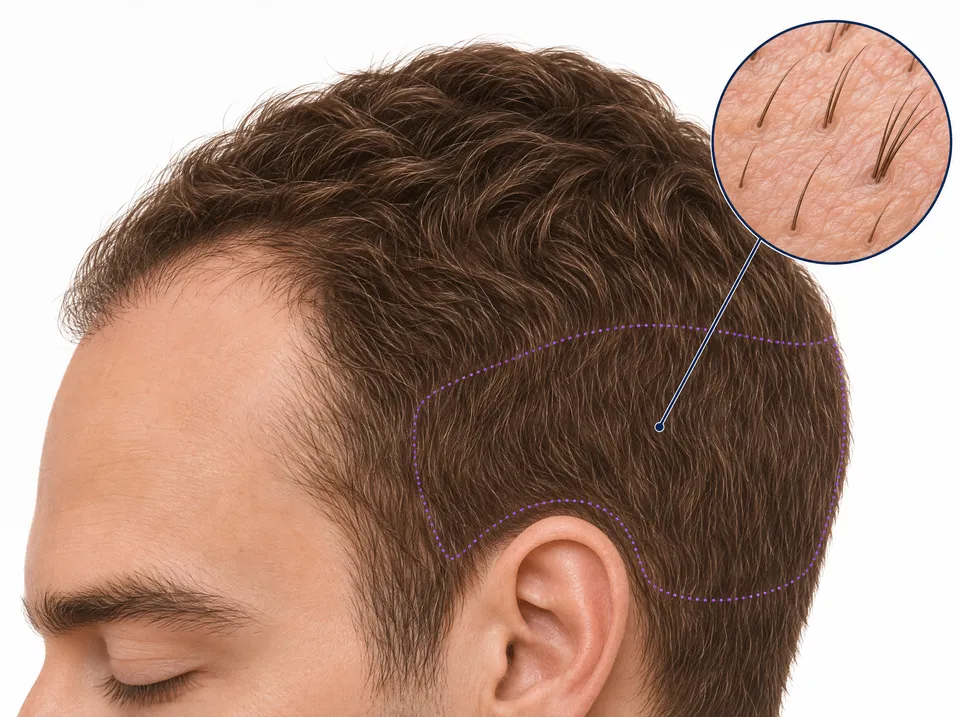 Step 1 · 45 min
Examination and beard design
The cause of patchiness is assessed; the beard line, moustache and sideburns are drawn together to suit your face.
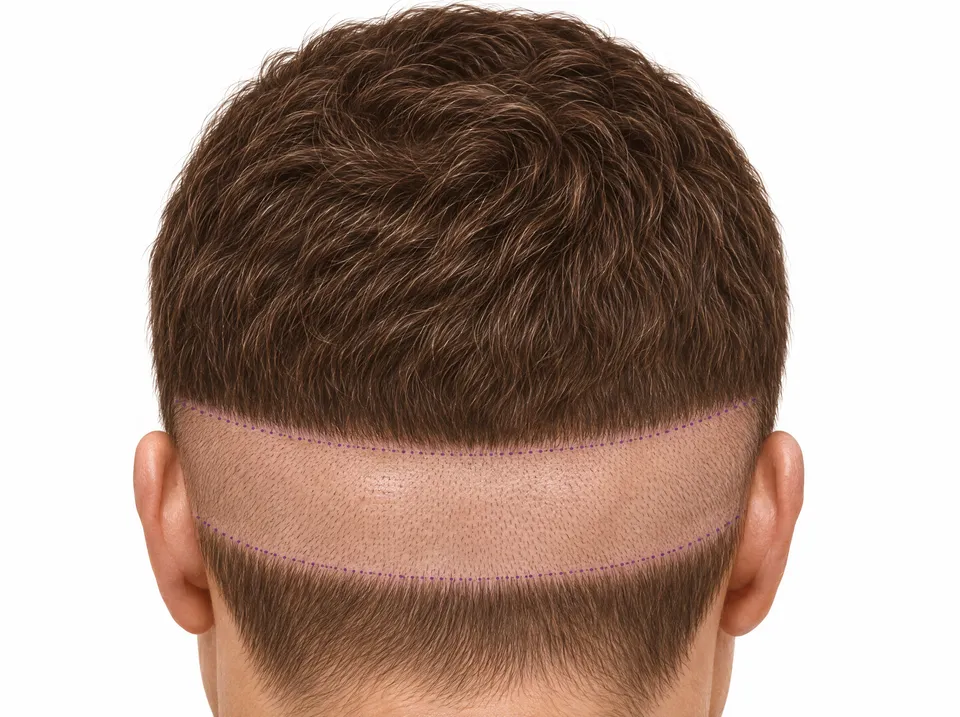 Step 2 · 20 min
Local anaesthesia
The donor area and the face are numbed; you stay awake throughout.
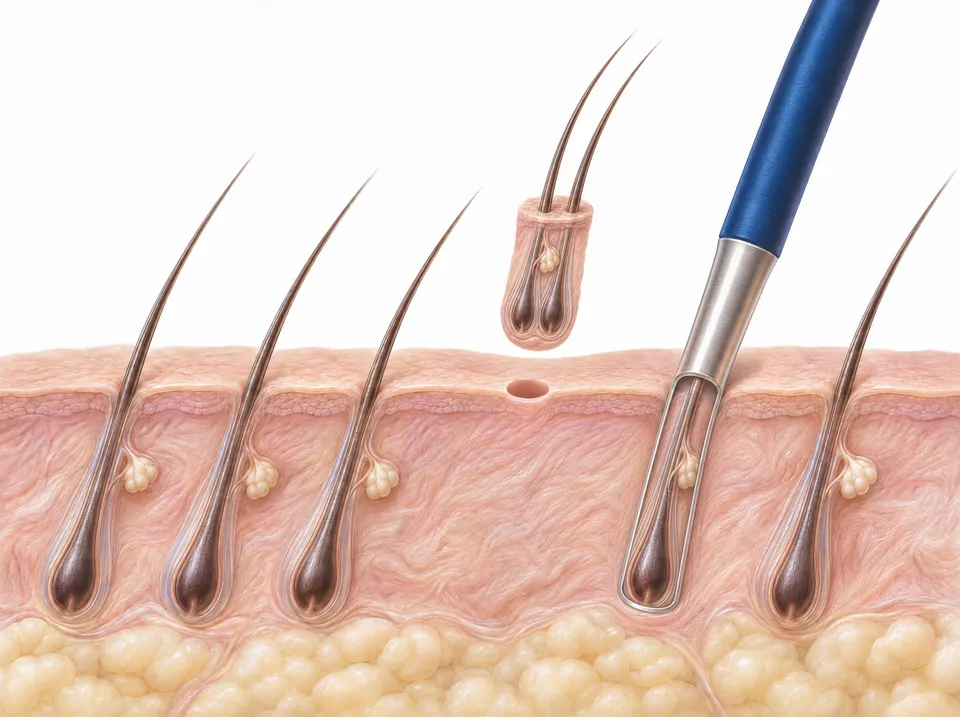 Step 3 · Depends on graft count
Graft extraction
Grafts are taken one by one from the back and sides of the head. Single-hair grafts are set aside for the upper beard line, two- and three-hair grafts for the cheeks.
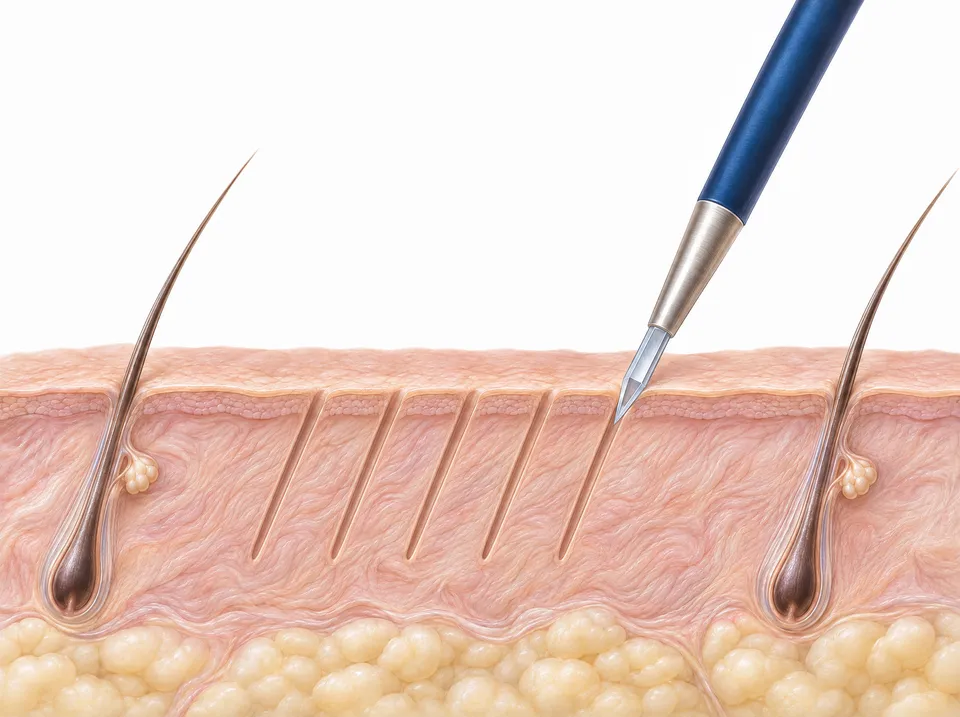 Step 4 · Depends on graft count
Placing grafts by direction
Very fine channels are opened at a low angle to the skin, following the hair direction in each area; grafts are placed one by one.
 Step 5 · 30 min
Aftercare and discharge
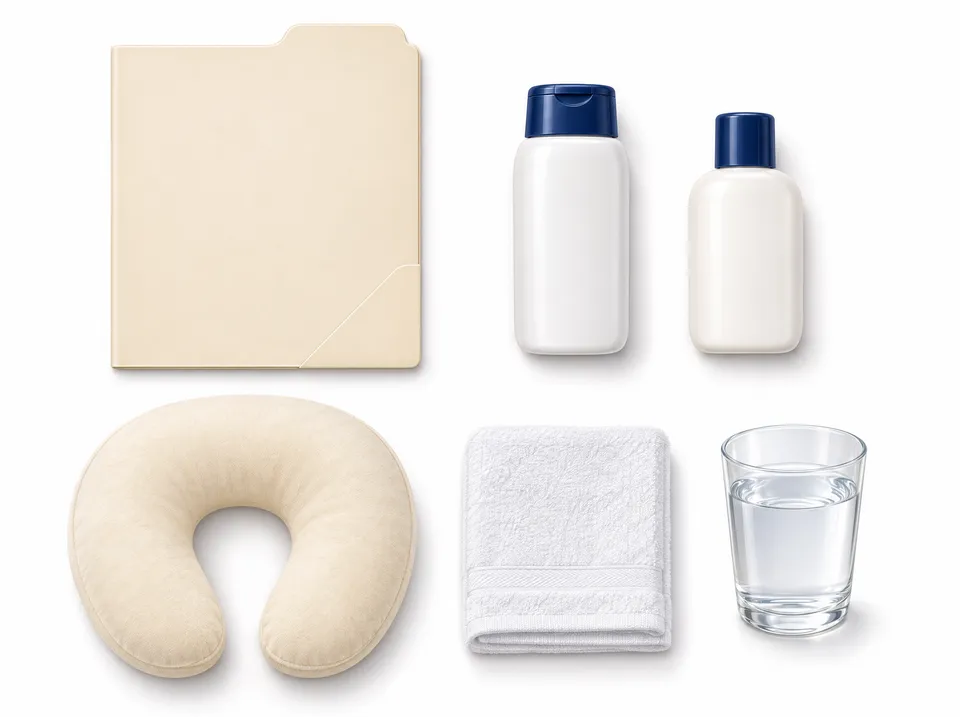
You receive written aftercare instructions. Because the face is numb, liquids or soft foods are recommended on the first day.


Representative images
The images are illustrations; no surgery photos are used.
Recovery timeline
The first two weeks
Surgery
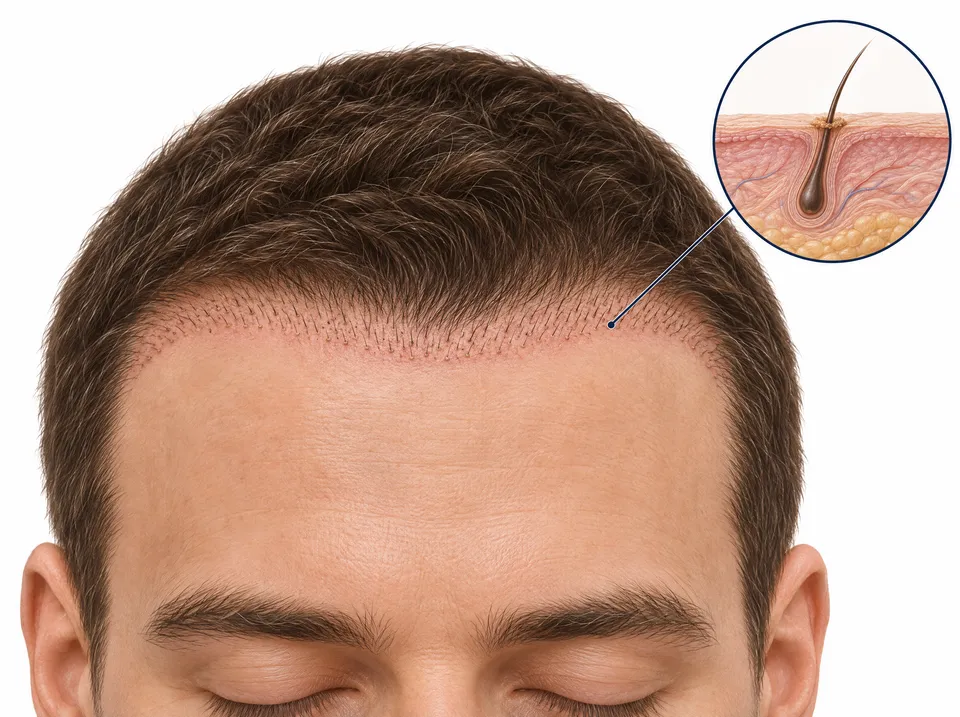
You leave at the end of the day with written aftercare instructions. Avoid pressing on the grafted area.
Check-up
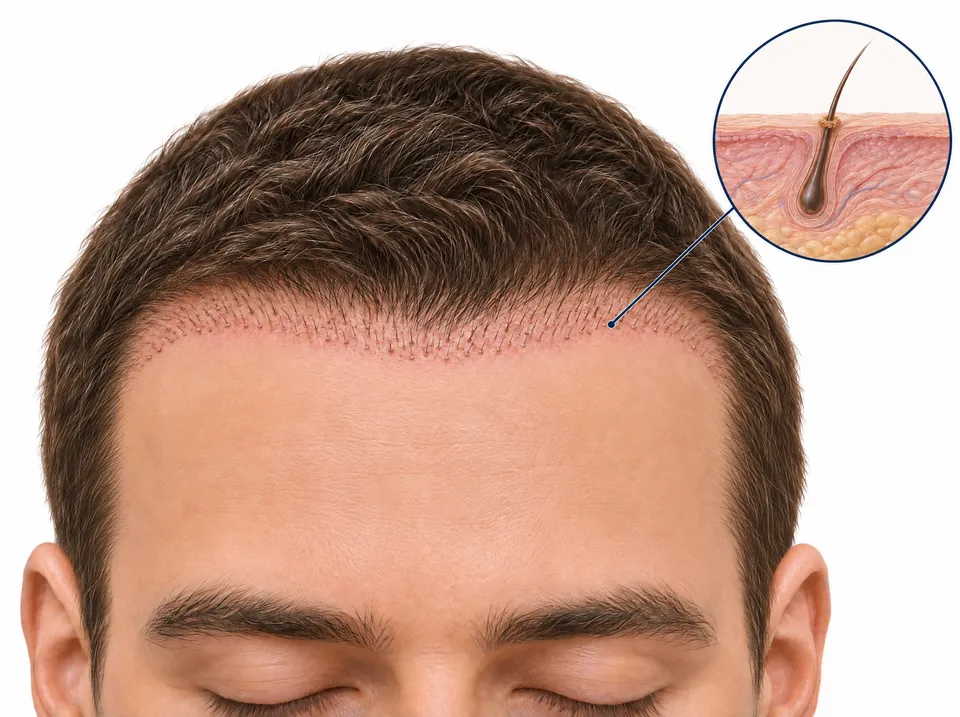
The face and the donor area are checked. Mild redness and swelling are normal and usually ease within 2–3 days.
First wash
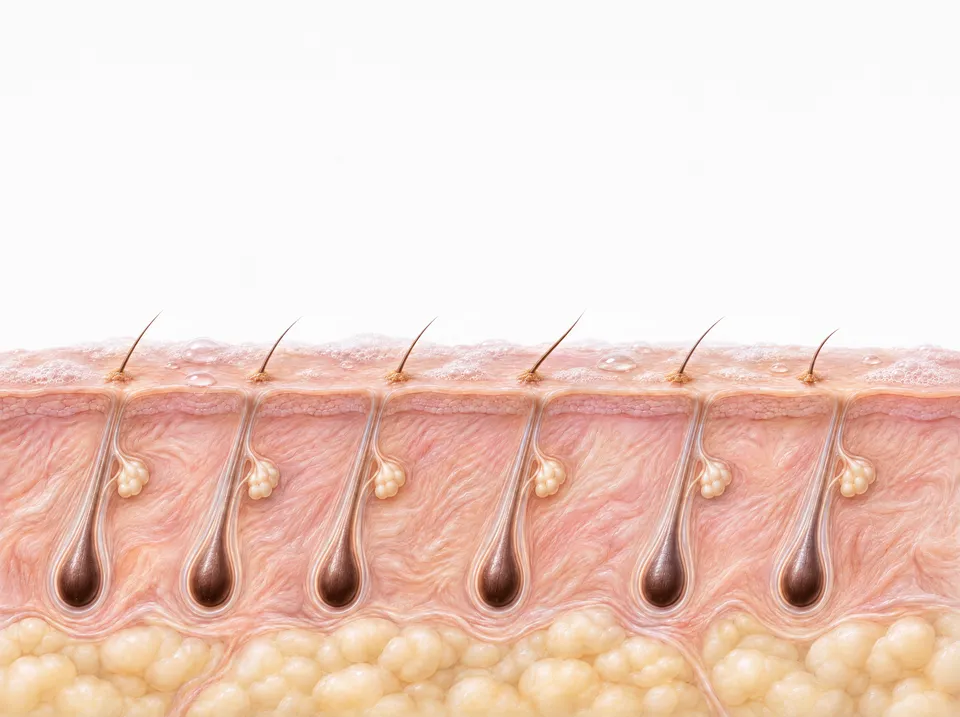
The first wash is done; you are shown how to keep the grafted area moist without picking at the scabs.
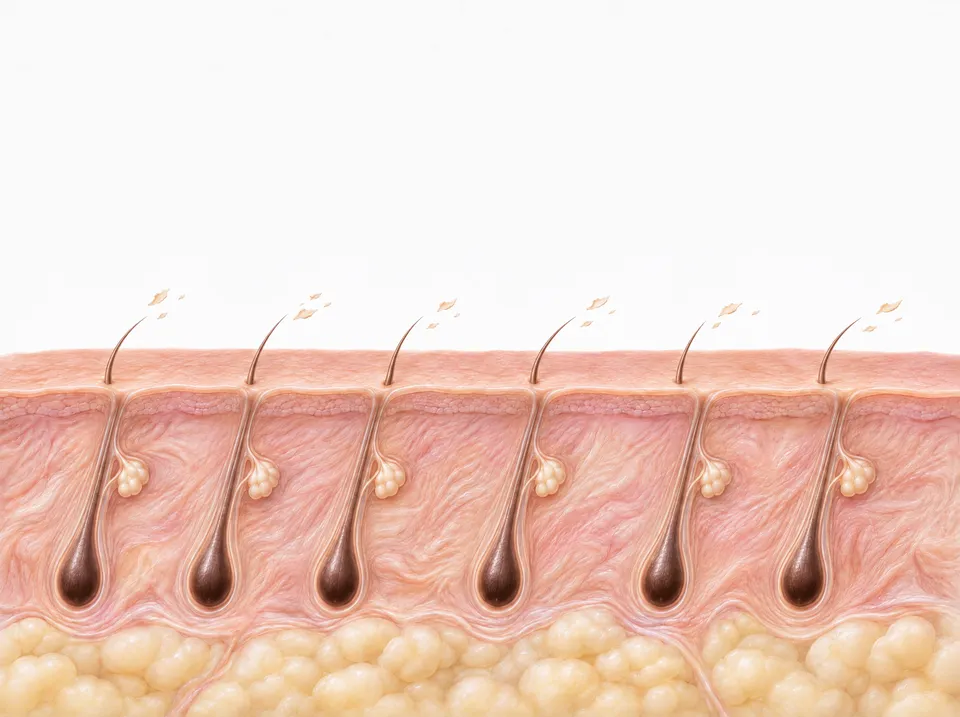
Scabs and first shave
Scabs are washed off. Published studies allow shaving from anywhere between day 8 and week 2; your doctor will tell you when to start.
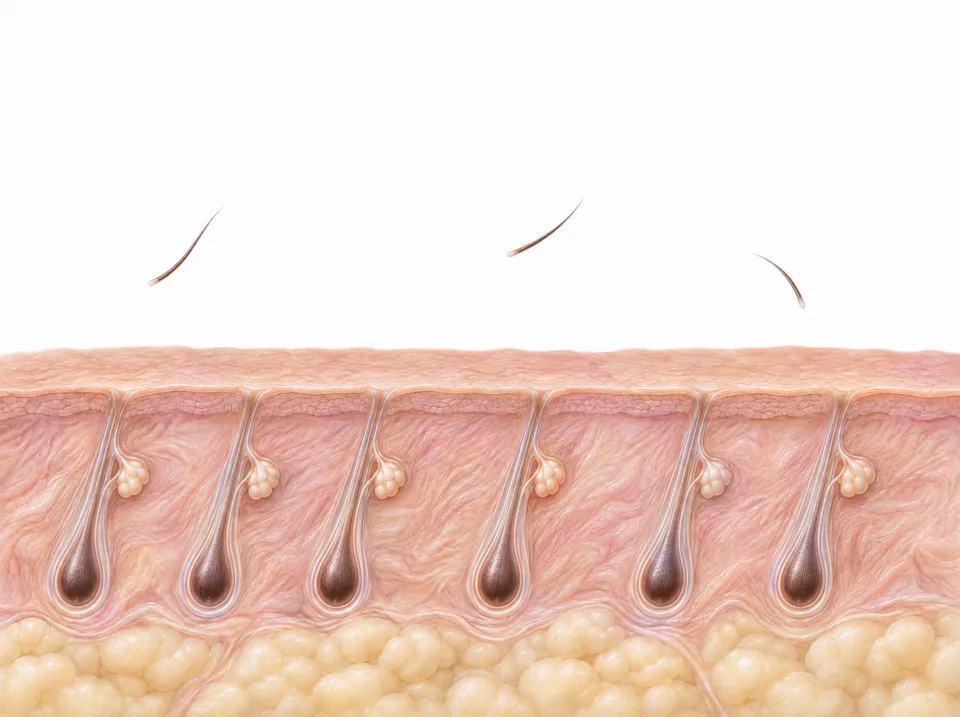
Shedding of transplanted hair
Some transplanted hairs may shed; the roots stay under the skin.


Over the months
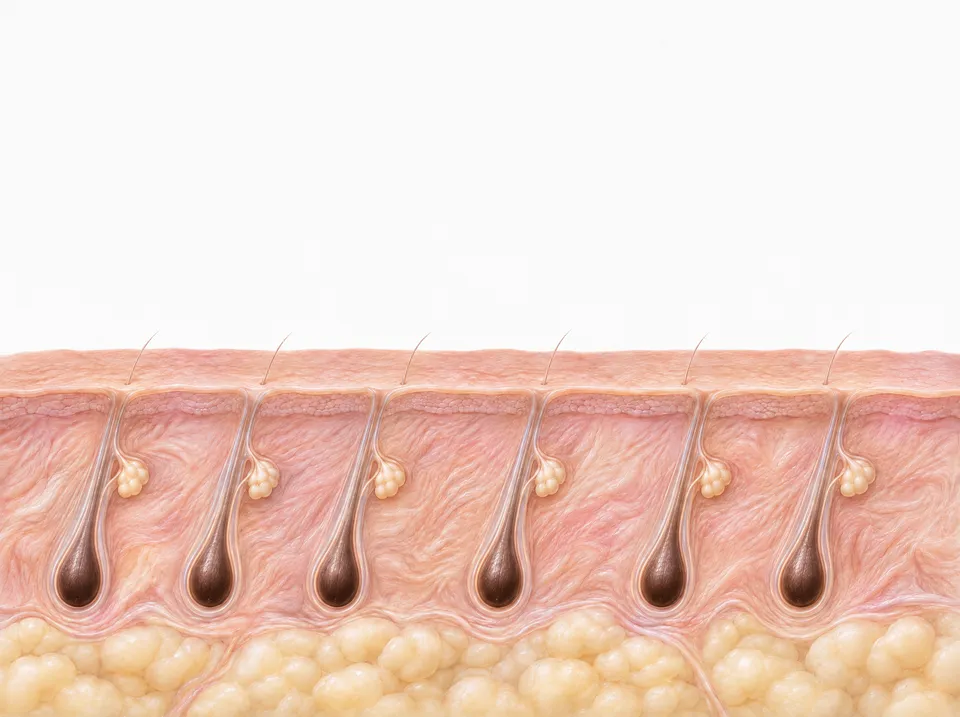
First growth
New hairs start to appear, often in months 3–4.
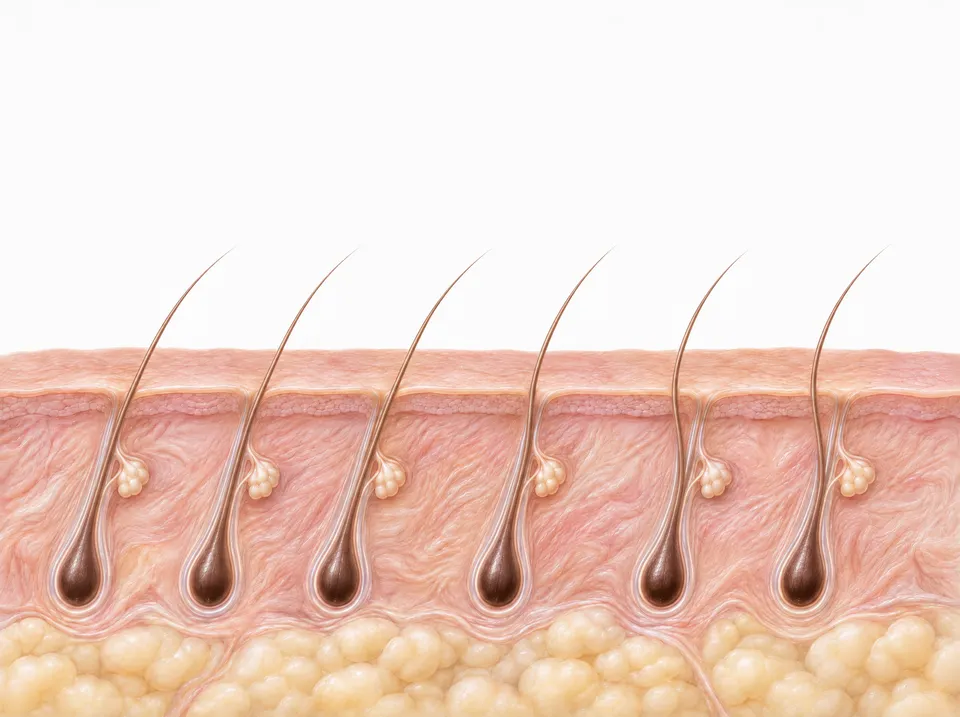
Taking shape
The shape of the beard becomes clear.
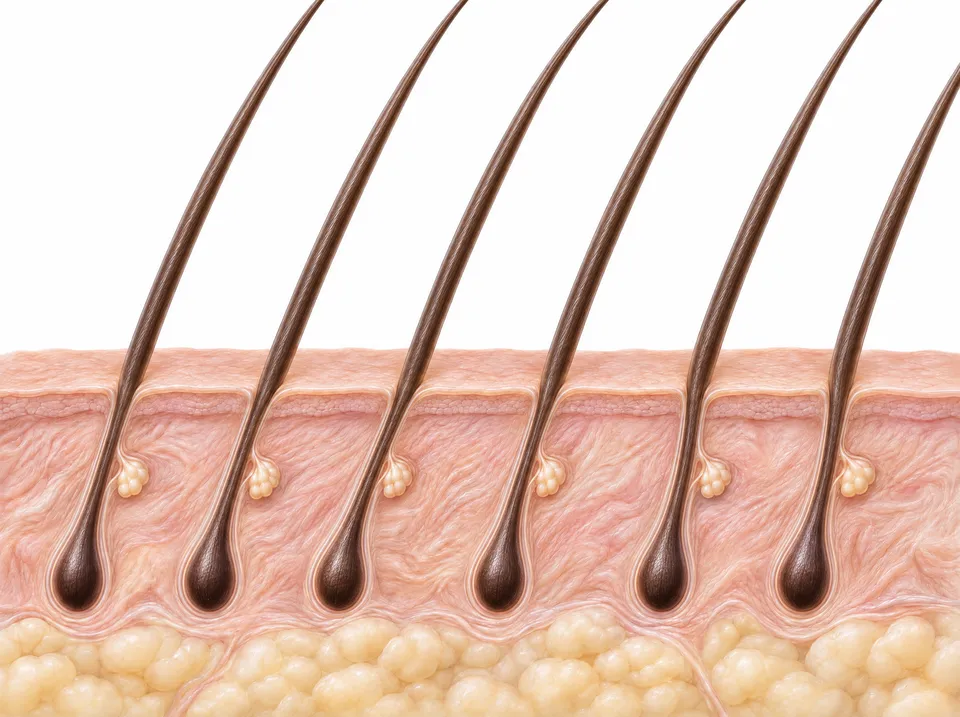
Density builds
Density increases and the hairs mature.
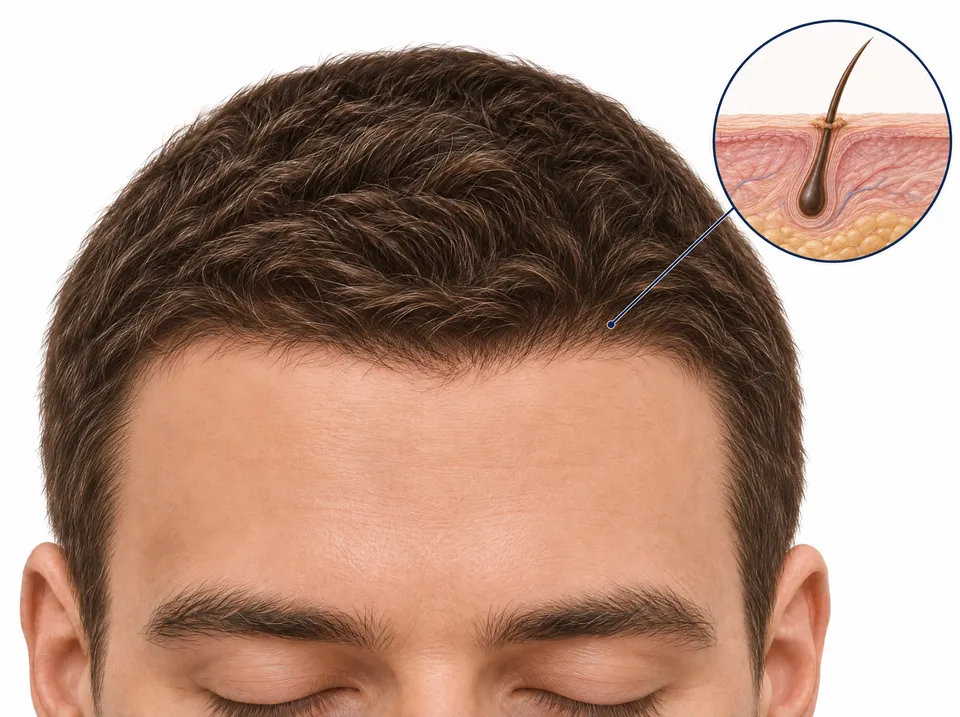
Final assessment
The result is assessed with photos taken at the same angle and in the same light; a second session is discussed if needed.


Representative images
Timings are averages and vary from person to person. The drawings are schematic sections of the scalp.
Risks and side effects
Every procedure carries risks. Most are temporary; your doctor goes through each one with you before surgery.
Bumps
Small bumps can form around the grafts, especially under the lower lip and on the chin.
Folliculitis
Spot-like inflammation in the grafted area is uncommon and most often appears under the lower lip. Message us if it spreads.
Direction and angle problems
Some hairs may grow in a different direction from the one planned. Facial skin is loose, so grafts can shift slightly while healing.
Swelling and bruising
The face may swell and bruise; this usually settles within a week.
Colour changes
Especially in darker skin, the grafted area may darken temporarily, and small pale marks may appear where grafts were taken.
Numbness
Feeling in the face may be reduced for a while. Rarely, temporary weakness of the facial muscles has been reported when superficial nerves are affected.
Frequently asked questions
How many grafts does a beard transplant need?
It depends on the area. As examples, the literature gives 300–400 for each half of the moustache, 600–700 for a goatee, about 200 for each sideburn and 2,000–2,500 for a full beard that has always been sparse. Your doctor decides the number after the examination.
At what age can it be done?
In men, the beard keeps developing between the ages of 15 and 25. The literature therefore suggests considering a transplant from the age of 25, once the beard has finished developing.
Can I eat on surgery day?
Because the face is numb, chewing can be difficult. Liquids or soft foods are recommended that day.
Can I shave my transplanted beard?
Yes, once healing is complete you can trim or shave your beard as you like. The beard line created by the transplant cannot easily be changed later, so the design takes into account whether you may want to keep your beard short in future.
Will I need a second session?
Some people need a second, and rarely a third, session for density. The decision is made once the result of the first transplant is clear, usually around a year later.
References
- 1.Dua K, Verma V, Dua A. Beard and moustache reconstruction. Indian J Plast Surg. 2021;54(4):483–488.
- 2.Yaseen U, Ahmed S, Ahmed M. Beard reconstruction. Int J Trichology. 2021;13(6):4–8.
- 3.Noori A, Rabiee M, Mehrabani D, Namazi MR. Head and neck restoration in scar alopecia: hair transplantation in scalp, eyebrows, beard and mustache. World J Plast Surg. 2021;10(3):90–98.
- 4.Kerure AS, Deshmukh N, Agrawal S, Patwardhan NG. Follicular unit extraction (FUE): one procedure, many uses. Indian Dermatol Online J. 2021;12(3):381–388.
- 5.Farjo B, Farjo N, Williams G. Hair transplantation in burn scar alopecia. Scars Burn Heal. 2015;1:2059513115607764.
- 6.Kaiser M, Abdin R, Yaghi M, et al. Beard alopecia: an updated and comprehensive review of etiologies, presentation and treatment. J Clin Med. 2023;12(14):4793.
- 7.Patel V, Nolan IT, Card E, Morrison SD, Bared A. Facial hair transplantation for transgender patients: a literature review and guidelines for practice. Aesthet Surg J. 2021;41(3):NP42–NP51.
- 8.García M, Garces M. Beard and mustache transplant. International Society of Hair Restoration Surgery (ISHRS); updated 10 August 2024.
- 9.International Society of Hair Restoration Surgery (ISHRS). Everything you need to know about a beard transplant. Updated 30 September 2025.
Let's review yourhair together.
Tell us about your hair in three short steps, and your hair transplant specialist will get back to you.
- Address
- Ataköy 7-8-9-10. Kısım Mahallesi, Çobançeşme E-5 Yan Yol Caddesi No: 20/1, Ataköy Towers A Blok, 5. Kat, Ofis No: 96, Bakırköy / İstanbul
- Opening hours
- 24/7, every day of the week
- Phone
- +90 (545) 209 55 51