



Eyebrow transplant
Single-hair grafts placed along the natural direction of each part of the brow, almost flat against the skin.

Why is an eyebrow transplant different from a hair transplant?


In an eyebrow transplant, grafts are also taken from the scalp and placed one by one. But a brow is built very differently from scalp hair: its hairs grow singly, lie almost flat against the skin and change direction across the brow. That is why direction and angle matter more than density.
The brow has three parts: the head at the inner end, the body in the middle and the tail that tapers outwards. Planning follows these three parts.
Why is the cause of brow loss investigated first?
Over-plucking, burns and accidents can cause permanent loss, and a transplant can be considered in these cases. But brow loss is sometimes a sign of an underlying condition: loss of the outer third of the brow, for example, can be linked to an underactive thyroid.
With conditions such as alopecia areata or frontal fibrosing alopecia, it must be clear before a transplant that the disease is not active; the literature suggests at least 1–2 years without disease activity. If there is a hair-pulling habit (trichotillomania), it is treated first. That is why the cause of loss is assessed at the examination, with blood tests if needed.
Why do direction and angle matter so much?
At the head of the brow the hairs point straight up; along the body they run upwards and outwards; in the tail they lie flatter and point outwards. Hairs in the upper and lower rows angle towards each other, forming a light criss-cross pattern.
Channels are opened almost parallel to the skin; one study gives this angle as 5–10 degrees. If a hair is placed slightly too upright, it will not lie flat and grows outwards, away from the face. Because brows are made of single-hair follicular units, the transplant also uses single-hair grafts.
Where do the grafts come from?
Grafts are usually taken from the back of the head or from behind the ears, choosing the area whose hair is closest in thickness to eyebrow hair. Only single-hair grafts are used for the brow; body hair is not considered a suitable donor for eyebrows.
Why do transplanted brows need regular trimming?
A transplanted hair keeps the characteristics of the place it came from. Hair from the scalp is thicker and grows faster than eyebrow hair, so regular trimming is needed. The literature notes that trimming may be needed every 2–3 weeks at first, and that over time the hairs may adapt to the brow so that trimming is needed less often.
Using a brow gel or wax to keep longer hairs lying in the direction of the brow also helps. Because transplanted hairs are thicker, they are hard to shape with tweezers or threading. Accepting regular trimming is part of deciding on an eyebrow transplant.
An eyebrow transplant or semi-permanent make-up?
Techniques such as microblading put pigment into the brow in fine strokes. They are not surgery, but they are temporary: because the pigment sits close to the surface of the skin, it fades within a few years and needs touch-ups.
With a transplant, your own hairs grow; the trade-off is a surgical procedure and regular trimming. Which option suits you is discussed based on the cause of brow loss, the condition of the skin around the brow and what you are hoping for.
Representative images
Who is it for?

May be suitable
- Sparse or missing brows from over-plucking, burns, accidents or surgical scars
- A cause of brow loss that is clear and has been stable for some time
- Willingness to trim the transplanted brows regularly
- A sufficient donor area (back of the head or behind the ears)

May not be suitable
- Active alopecia areata or frontal fibrosing alopecia
- A hair-pulling habit (trichotillomania) that has not yet been treated
- A cause of brow loss (such as thyroid disease) that has not been investigated or treated
- Burn scars or other scars that have not yet matured
Representative images
Your doctor decides whether it suits you after an examination.
Surgery day
Five steps in one day. The shape of the brow is drawn together before the procedure, and grafts follow that drawing.
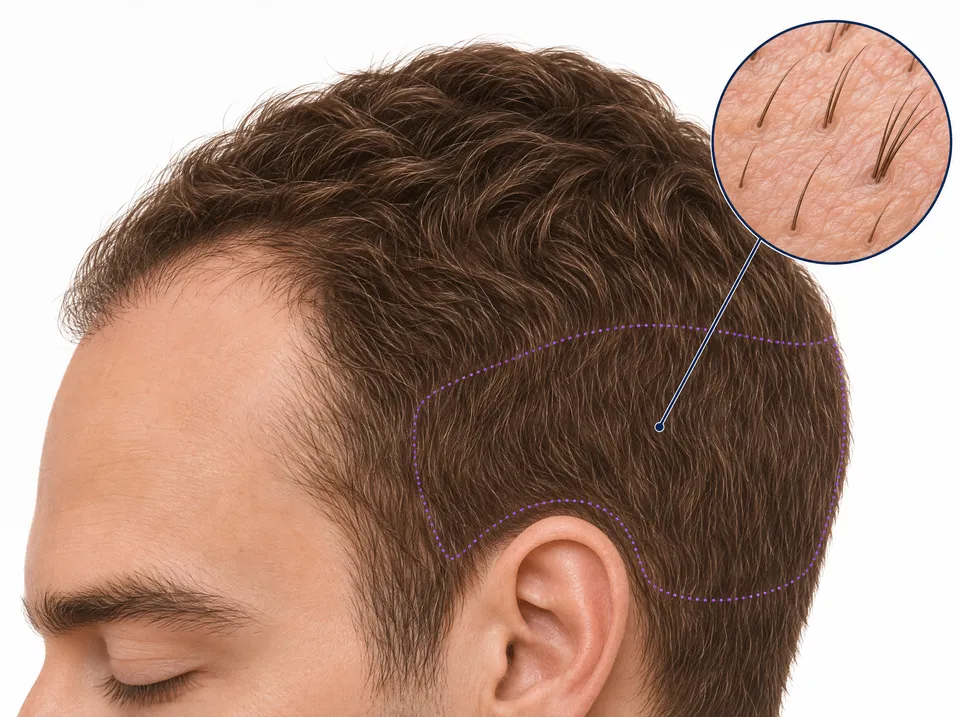 Step 1 · 45 min
Examination and brow design
The cause of brow loss is assessed; the brow shape is drawn together, using the other brow or an old photo as a guide.
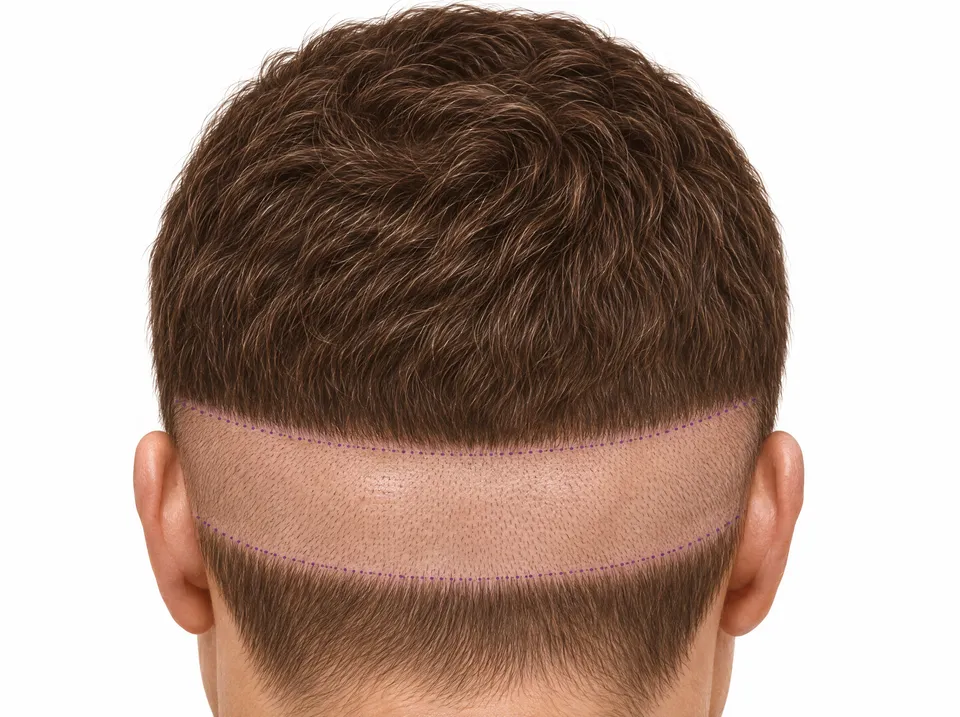 Step 2 · 20 min
Local anaesthesia
The donor area and the brow are numbed; you stay awake throughout.
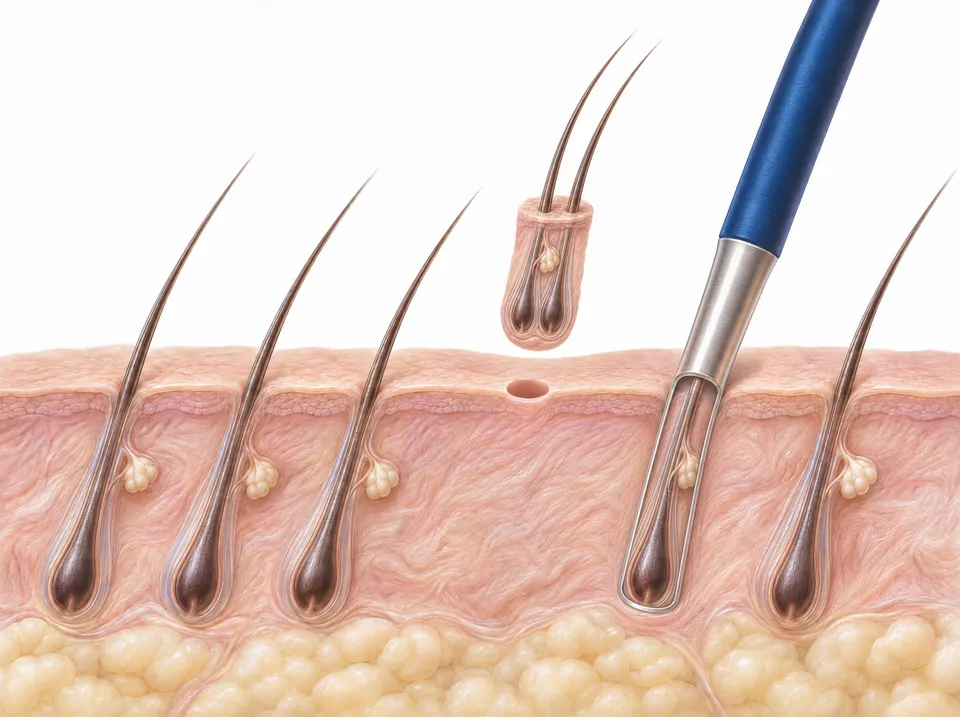 Step 3 · Depends on graft count
Extracting single-hair grafts
Grafts are taken one by one from the back of the head or behind the ears; only single-hair grafts are used for the brow.
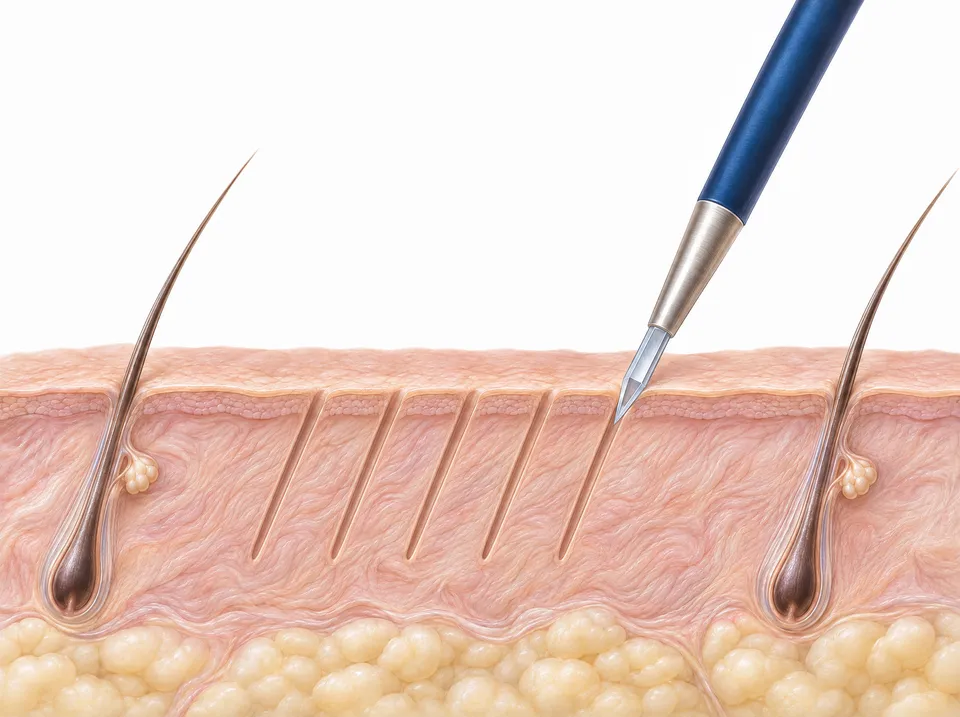 Step 4 · Depends on graft count
Placing grafts by direction and angle
Very fine channels are opened almost parallel to the skin, following the natural direction of each part of the brow; grafts are placed one by one.
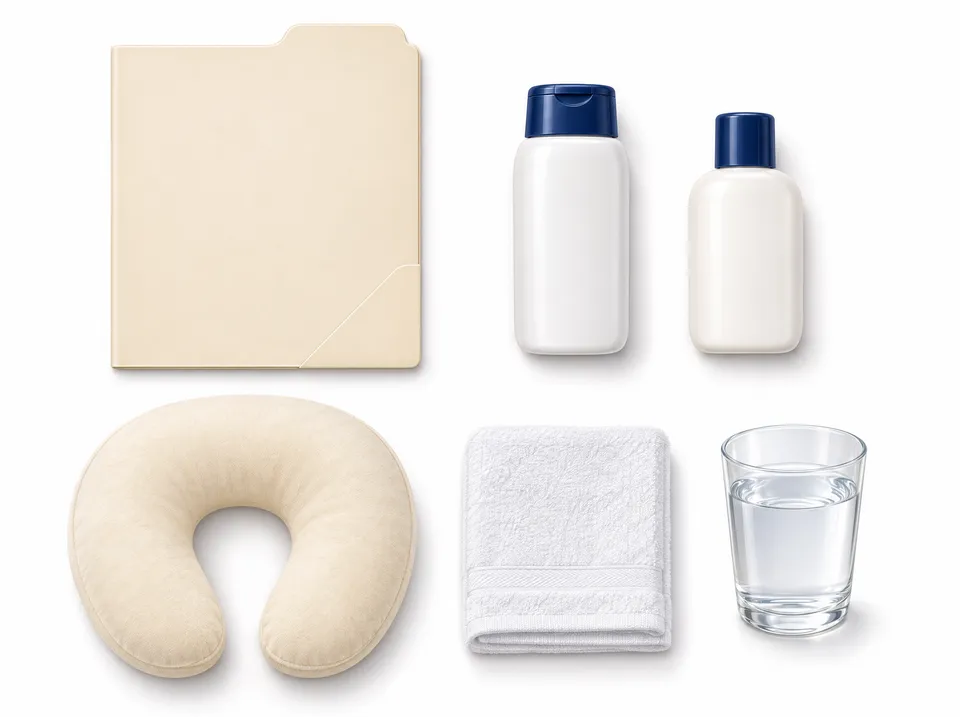 Step 5 · 30 min
Aftercare and discharge
You receive written aftercare instructions and are shown how to wash your face without rubbing the brows.


Representative images
The images are illustrations; no surgery photos are used.
Recovery timeline
The first two weeks
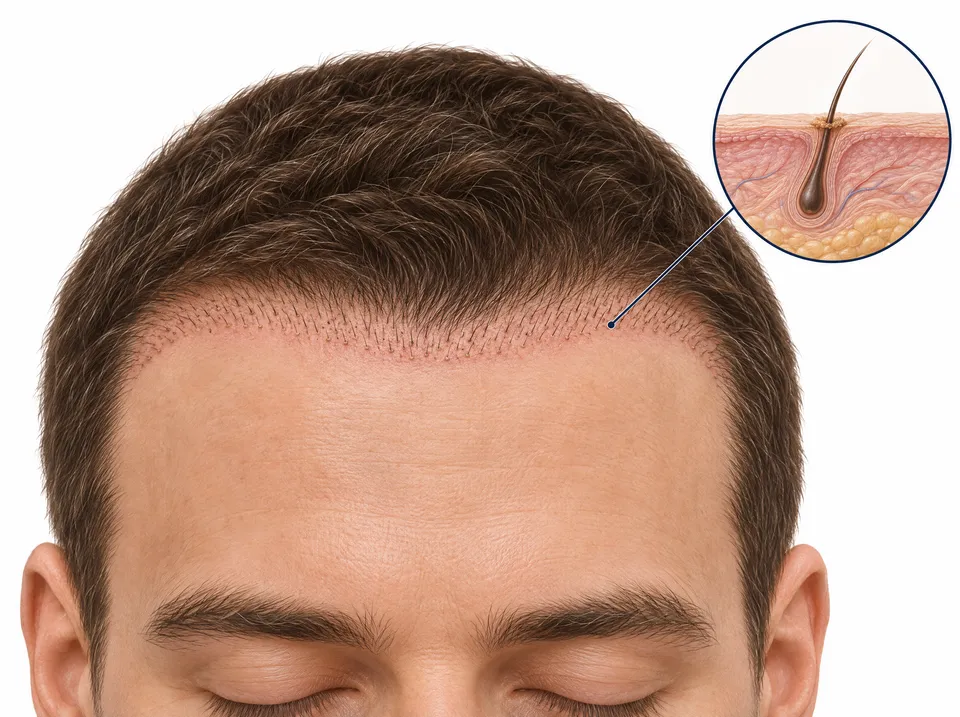
Surgery
You leave at the end of the day with written aftercare instructions.
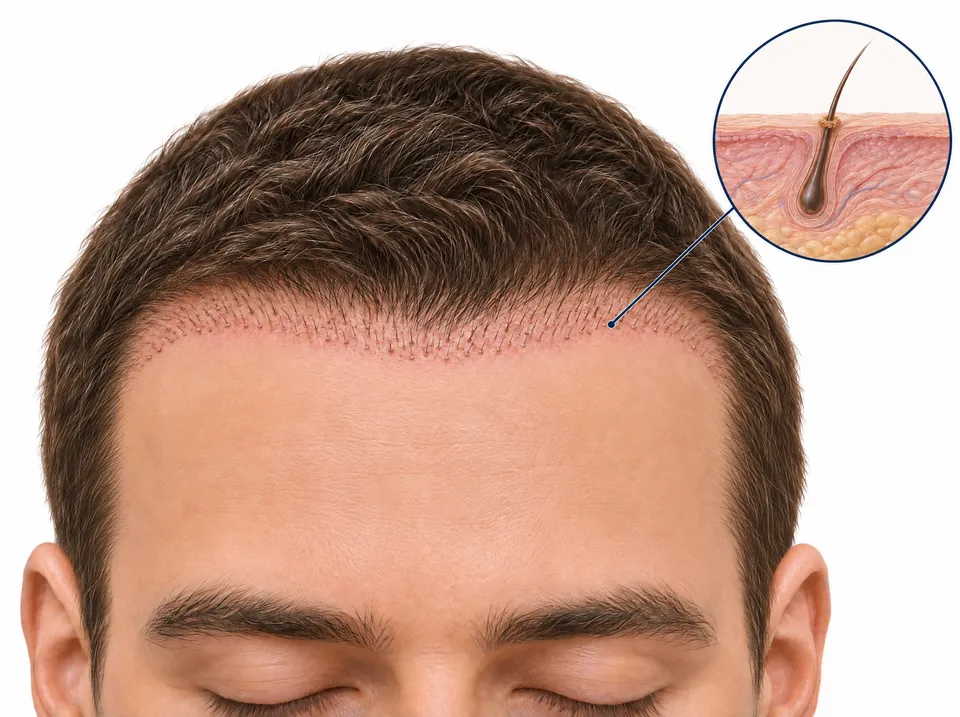
Check-up
The brows and the donor area are checked. The upper eyelids may be swollen; this usually settles within a few days.
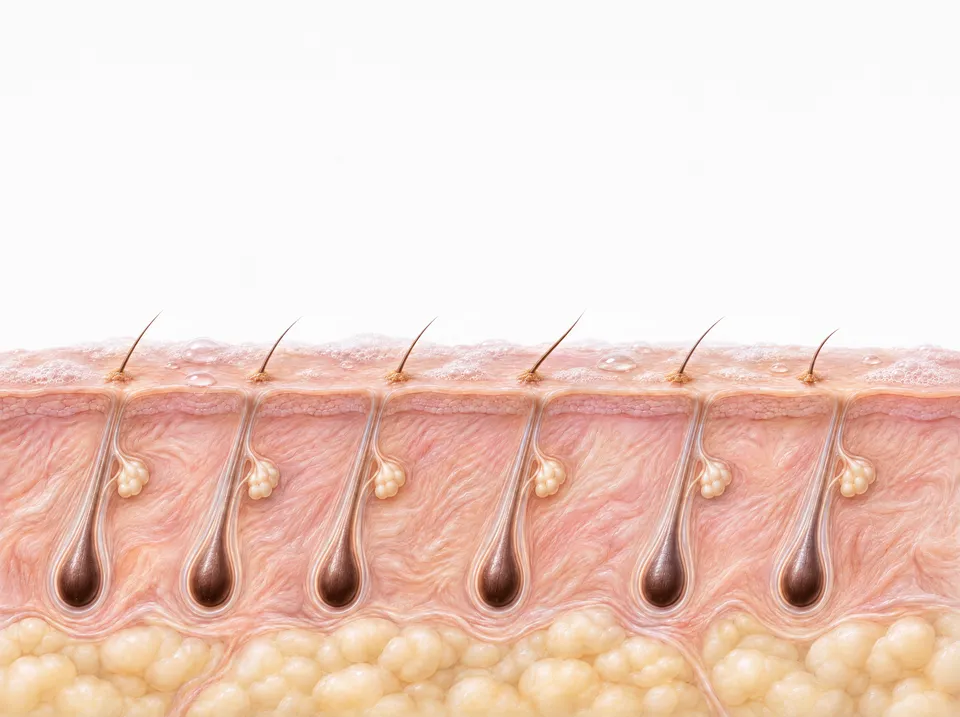
First wash
The first wash is done; you are shown how to wash gently in the direction of the hair, without rubbing.
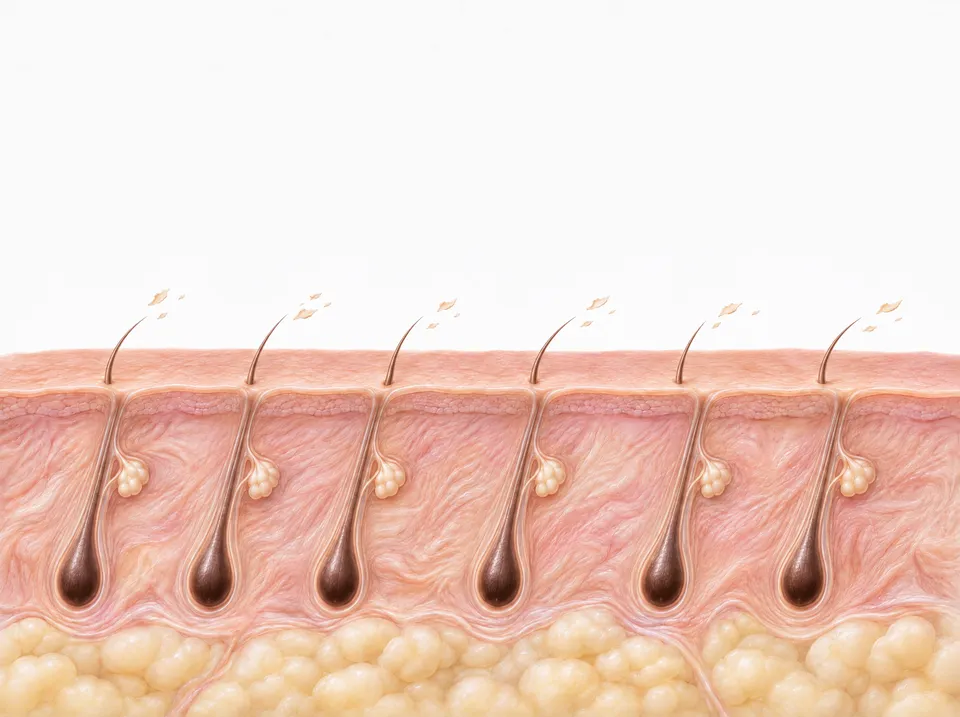
Clearing the scabs
Scabs are washed off; some hairs may come away with them.
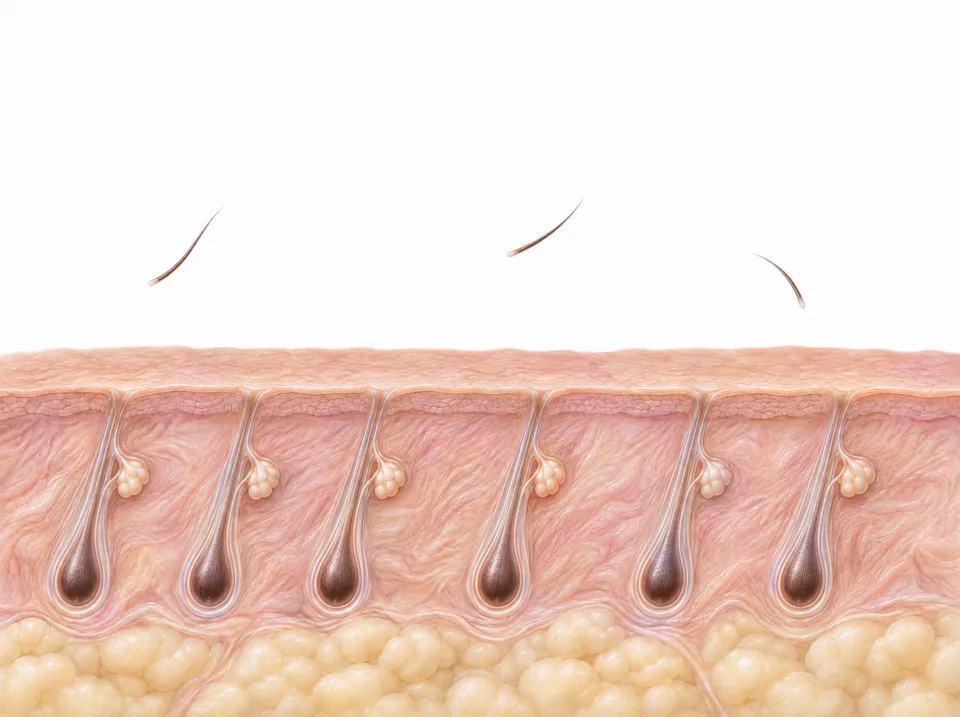
Shedding of transplanted hair
Some transplanted hairs may shed; the roots stay under the skin.


Over the months
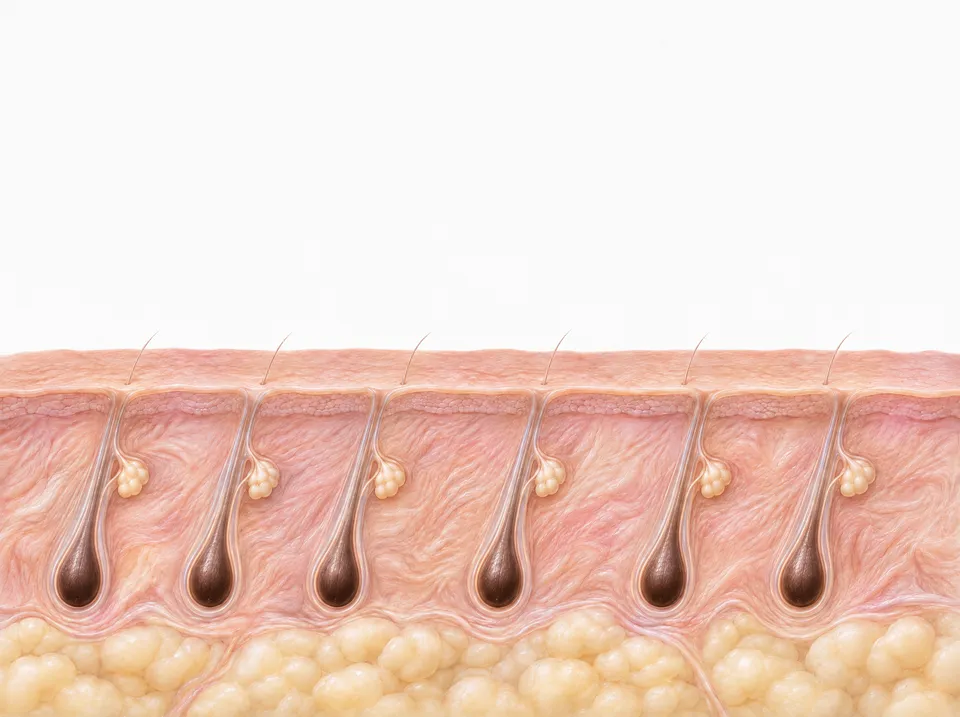
First growth
New hairs start to appear.
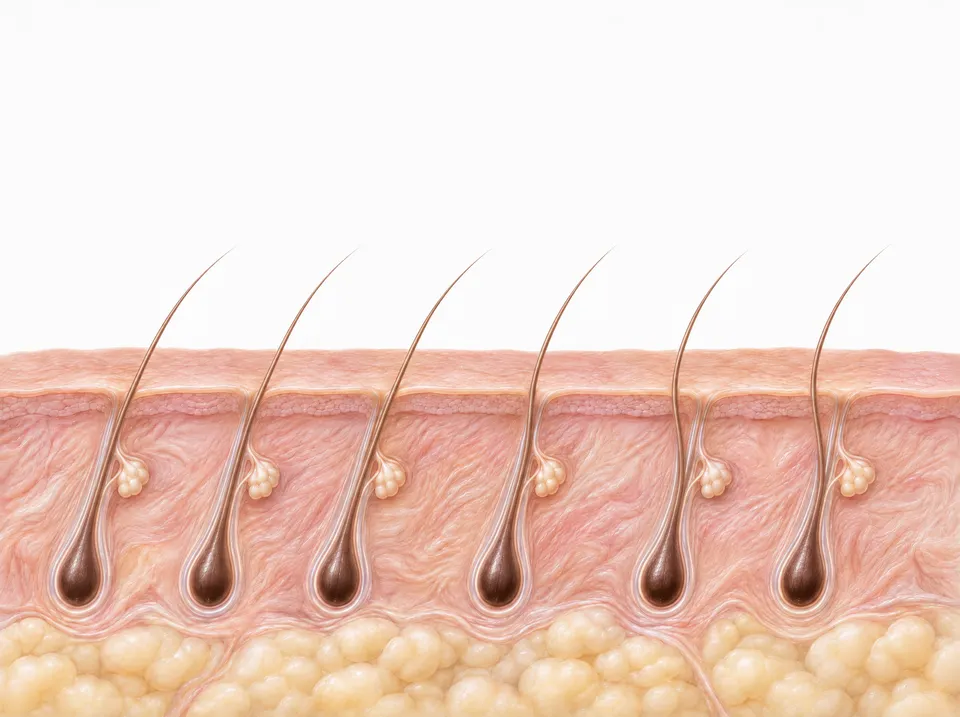
Visible growth
The brow shape becomes clear and regular trimming begins.
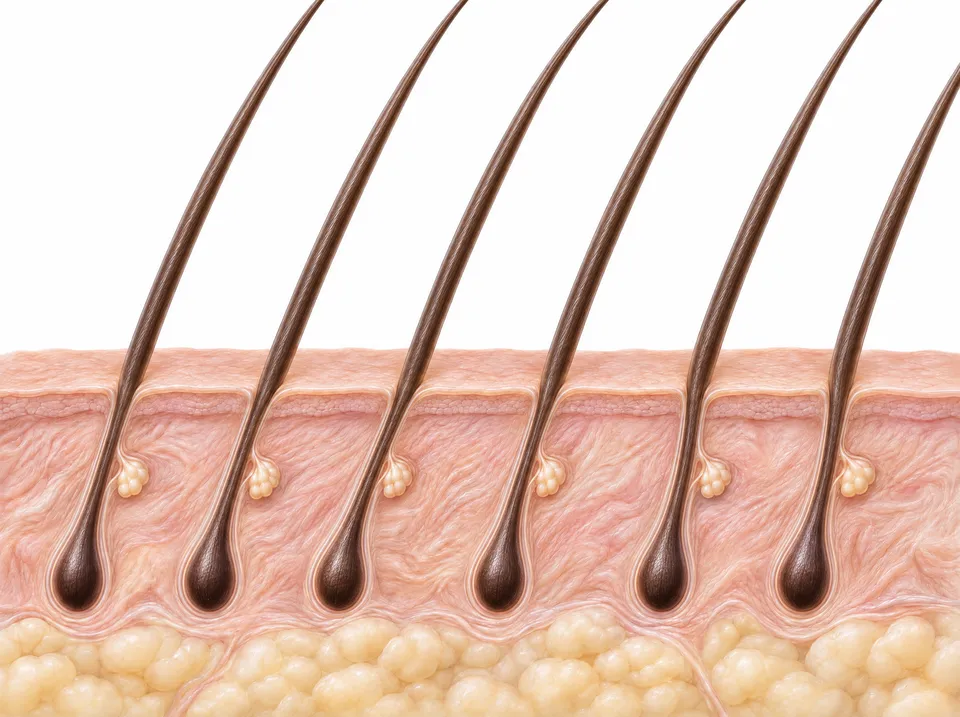
Maturing
The full look of the brows often appears around this time.
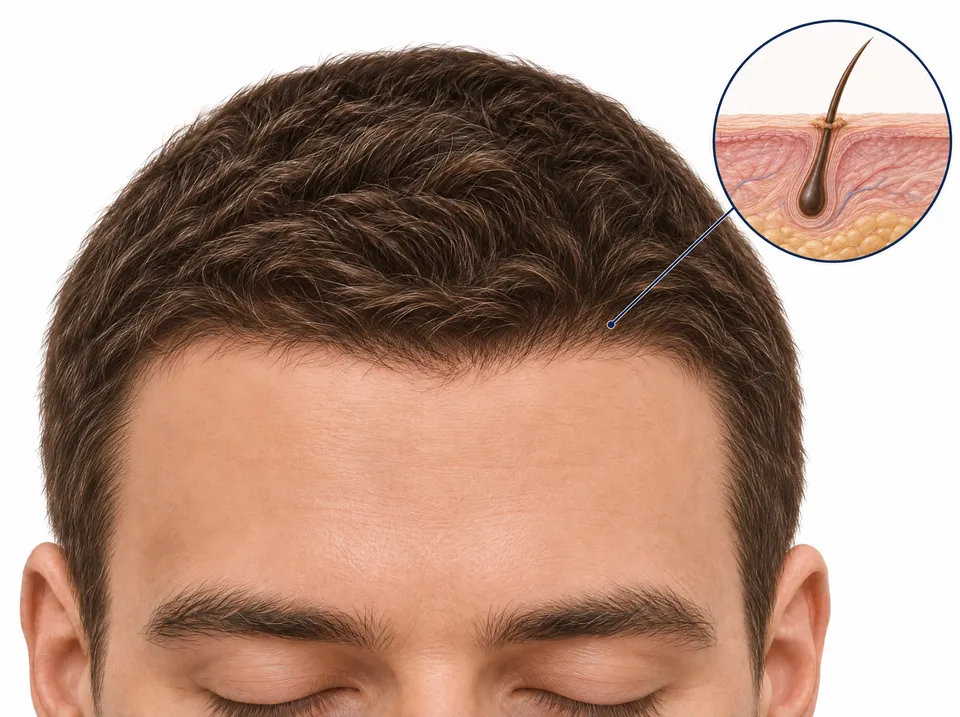
Final assessment
The result is assessed with photos taken at the same angle and in the same light; a second session for density is discussed if needed.


Representative images
Timings are averages and vary from person to person. The drawings are schematic sections of the scalp.
Risks and side effects
Every procedure carries risks. Most are temporary; your doctor goes through each one with you before surgery.
Curling and misdirected hairs
Some transplanted hairs may grow curled or in a different direction from the one planned. This often improves over a few months; combing the hairs flat in their natural direction also helps.
Uneven density
Some parts of the brow may stay sparser than others. A second session can be planned for density; the literature suggests waiting 9–10 months after the first transplant.
Eyelid swelling
Swelling of the upper eyelids is common and usually lasts 3–4 days.
Fast growth
Transplanted hairs come from the scalp, so they are thicker and grow faster than eyebrow hair; regular trimming is needed.
Folliculitis, cysts and infection
Rare. Message us without delay if redness spreads, or if you have a fever or discharge.
Donor-area marks
Small marks remain where grafts were taken; there is no such thing as scarless hair transplant surgery.
Frequently asked questions
How many grafts does an eyebrow transplant need?
It depends on how much of the brow is treated. The literature gives about 70–90 grafts for a female brow and 150–200 for a full male brow as examples; your doctor decides the number after the examination.
Can I choose the shape of my brows?
Yes. The brow shape is drawn with you before the procedure, and the grafts follow that drawing. Your other brow or an old photo makes a good guide.
Is it painful?
The procedure is done under local anaesthesia. Afterwards there is usually only mild pain and swelling.
How often will I need to trim my brows?
Transplanted hairs come from the scalp, so they grow faster than eyebrow hair. The literature notes that trimming may be needed every 2–3 weeks at first, and that the need may lessen over time. Transplanted hairs are also hard to shape with tweezers or threading.
Will I need a second session?
Some people need a second session to add density. The decision is made once the result of the first transplant is clear, about 9–10 months later.
References
- 1.Rajput RJ. Hair transplant for eyebrow restoration. Indian J Plast Surg. 2021;54(4):489–494.
- 2.Kumar A, Karthikeyan K. Madarosis: a marker of many maladies. Int J Trichology. 2012;4(1):3–18.
- 3.Starace M, Cedirian S, Alessandrini AM, et al. Impact and management of loss of eyebrows and eyelashes. Dermatol Ther (Heidelb). 2023;13(6):1243–1253.
- 4.Chen J, Qu Q, Ye K, et al. Natural reconstruction: a comprehensive standardized operating procedure for restoring eyebrow loss due to scarring. Plast Reconstr Surg. 2022;150(4):877–886.
- 5.Zhang R, Tu H, Xiang H, Hu X, Chen Z. The evolving landscape of eyebrow reconstruction: from traditional flaps to minimally invasive techniques and regenerative medicine. Front Surg. 2026;13:1865502.
- 6.Shishak M, Kuthial M. Eyebrow microblading: science, art, and complications. Skin Appendage Disord. 2025;11(4):355–359.
- 7.International Society of Hair Restoration Surgery (ISHRS). Eyebrow & eyelash hair restoration surgery. Accessed 21 October 2026.
Let's review yourhair together.
Tell us about your hair in three short steps, and your hair transplant specialist will get back to you.
- Address
- Ataköy 7-8-9-10. Kısım Mahallesi, Çobançeşme E-5 Yan Yol Caddesi No: 20/1, Ataköy Towers A Blok, 5. Kat, Ofis No: 96, Bakırköy / İstanbul
- Opening hours
- 24/7, every day of the week
- Phone
- +90 (545) 209 55 51